Step Ⅰ Key Vocabulary This activity introduces the key vocabulary words. Show the following vocabulary on the screen by a projector. overweight adj. & n.超重 weight n. 重量,分量 official n. 政府官员,高级职员 release v.发布 figure n. 数字 roughly adv. 粗略地,大体上 double v. 是--的两倍,使加倍 potato n.土豆 chip n. 片 spoil v. 宠爱,溺爱 chocolate n. 巧克力 sugar n.糖,食糖 coke n. 可乐 fresh adj. 新的.新鲜的 catch up 赶上,追上 Say the words and have the students repeat several times until they can pronounce them fluently and accurately Step Ⅱ Part 1 This activity allows students to activate their background knowledge before attempting the reading. Read the title to the students first and ask them to predict what they think the article is about based on the title. Say, Look at the two pictures on this page. Try to say something about them to tell what is happening. Then ask two students to describe the pictures to the class. Correct the sentences if they’ve made some mistakes. Read the instructions for Activity I to the students. Be sure they know what to do. Go over the five questions with them and choose five students to answer them individually. Then ask them to work in pairs, discussing the five questions. The answers will vary. Tell them not to look at the reading and give the answers by themselves before they begin. As students work, walk around the classroom, listen to them and offer any help they may need. When all the pairs finish discussing, ask one or two pairs to ask and answer the questions. The others listen to them to see if they’ve made any mistakes and help them to correct their sentences. Suggested answers1. Yes, always 查看更多


题目列表(包括答案和解析)

Shaking It Off
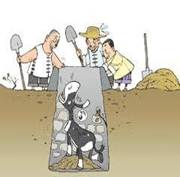
One day, a farmer’s donkey fell into a dry well(井). The poor animal cried for hours before his       finally found him. The farmer tried hard to pull him out from the well but failed. He felt       for the donkey but after carefully thinking about the situation, he       that he would save neither the donkey nor the well. Since the donkey was too       and it was not worth(值得) the trouble of saving. So he invited his neighbors to help him bury(埋葬) the old donkey in the __    so that it would make him end his pain.

      many people coming to help, the old donkey was excited at first. As they began to scoop the dirt into the well with shovels(铲子), he soon       what was happening. He felt upset and cried sadly again. As the farmer and his neighbors continued throwing the dirt on his      , he suddenly had a good idea. Some time later, when the farmer finally looked down into the well, he was surprised at what he saw:      the dirt landed on his back, he would shake it off and take a step up!

Soon, everyone was amazed when the donkey stepped       over the edge of the well and ran away quickly! It seemed that it would       him at first, but it actually helped him later because of the manner in which he faced his adversity(逆境).

That is life! Just like the donkey, life is going to throw dirt on us, all kinds of dirt.      we face our problems in an active way, and refuse to       to any trouble, each dirt is like a stepping stone with which we get out of the deepest wells. This is a key       one of the secrets of life.      stop and never give up. Success is just in its way.

1.A. neighbor                 B. owner                                C. relative                   D. kid

2.A. sorry                    B. lucky                                 C. dangerous                      D. worried

3.A. complained                  B. decided                            C. agreed                         D. meant

4.A. strong                           B. tall                                     C. old                                     D. poor

5.A. water                            B. hole                                  C. well                               D. house

6.A. Heard                            B. Hearing                            C. To hear                    D. Hears

7.A. realized                        B. remembered                  C. discovered                  D. found

8.A. leg                            B. stomach                   C. tail                                     D. back

9.A. any time                  B. every time                        C. one time                          D. some time

10.A. angrily                        B. heavily           C. proudly                    D. sadly

11.A. save                            B. bother                              C. fill                             D. bury

12.A. as soon as                  B. as long as                         C. as far as                            D. as well as

13.A. give up                       B. give out                            C. give in                               D. give off

14.A. to                                 B. of                             C. on                                      D. from

15.A. Always                        B. Never                          C. Sometimes                        D. Hardly


查看答案和解析>>

阅读理解

阅读下面短文,根据短文内容回答问题。

  I love to write!Ever since I was a five-year-old girl, I wrote stories in my notebooks and on small pieces of paper.I told stories to my friends.As a grown-up, I have written over 100 books!That's a lot!As a teacher, it's my goal to encourage all of my students to love to write.

  Writing is easy if you're careful enough, I told them.Everyone I meet is a possible character.

  Everything I see or do is a possible scene in a book.Start looking around you.You'll be amazed at what you discover.

  Anyone can be a writer.You just put your pencil on your paper and write what you like to read, step by step:

●Create great characters.If you know your characters well, they'll write the story for you.

●Interest the reader right at the beginning.You can start your stories with dialogue or action.If you can make the reader ask questions, then he has to keep reading to find out the answers.

●Follow the steps.The steps for every story are almost the same:Introduce the characters and the conflict(争端);things get worse; all seems lost; the hero saves the day!

●Balance is the key.

Remember, when writing, it doesn't hurt to add some humor(幽默).

1.What did the writer begin to do when she was five years old?

___________________________

2.What's the writer's goal as a teacher?

___________________________

3.How many steps are mentioned about writing according to this passage?

___________________________

4.Does the writer think it hurts to add some humor when writing?

___________________________

5.What does the passage mainly talk about?

___________________________

查看答案和解析>>

完形填空

  Long, long ago, a donkey(驴)fell in a dry well.The animal cried for hours as the farmer tried to think out what to do.Finally, the farmer thought the animal was too old and the well needed to be covered up anyway, so he decided not to try to save the donkey.

  The farmer invited his neighbors to   1   him.They began to shovel(铲)dirt into the well.The donkey cried harder.Then a few shovelfuls later, he quieted down.The farmer looked   2   the well, and was surprised by what he saw.

  While every shovelful of dirt hit his   3  , the donkey would shake(抖)it off and take a step up on the new layer(层)of dirt.  4   the farmer's neighbors continued to shovel dirt on top of the animal, the donkey would shake it off and take another step up.

  Soon the donkey stepped up out of the well and ran away, to the   5   of all the neighbors.

  The   6   we get from this story is that if life shovels some dirt on us, we must get out of the well and not let it cover us.We must learn to shake it off and take a step up.Each of our   7   is a stepping-sone(石头).We can get out of the deepest well by never   8  !

(1)

[  ]

A.

beat

B.

save

C.

care

D.

help

(2)

[  ]

A.

into

B.

down

C.

up

D.

at

(3)

[  ]

A.

legs

B.

back

C.

feet

D.

stomach

(4)

[  ]

A.

Because

B.

Since

C.

As

D.

For

(5)

[  ]

A.

anger

B.

surprise

C.

joy

D.

excitement

(6)

[  ]

A.

lesson

B.

key

C.

rule

D.

idea

(7)

[  ]

A.

practice

B.

business

C.

decisions

D.

troubles

(8)

[  ]

A.

putting down

B.

turning down

C.

giving up

D.

keeping up

查看答案和解析>>

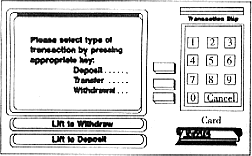
How to Use an ATM(自动取款机)

  Pat Brown went to her bank to ask for an ATM card.It looks like a credit card(信用卡).A few weeks later, the bank posted her a card and a four-number personal identification number(PIN)Her PIN is 1234.

  As Pat was getting ready for bed one night, she remembered that she had only $2 in her bag.The next day she had to give $10 for a lunch for a co-worker.She didn’t want to get up early to go to the bank.So she had to go to the bank that night.She used her ATM card to withdraw(take out)$50 from her checking account(现金账户).

  These are the steps she followed to withdraw money.First, she put her card in the lower slot(狭孔)on the right side of the machine.She made sure her card was facing the right way.Second, the computer screen(window)said,“Please enter(put in)your PIN.”Pat pressed(按)the numbers 1,2,3, and 4.Next, the screen said,“Please select type of transaction(交易)you want by pressing other keys.”Pat pressed the bottom key for withdrawing money.

  Then the screen said,“From which account?”The choices it gave were Checking, Savings, and Money market.Pat pressed the key for Checking.Next, the screen said, “Please select(choose)amount of transaction.”Pat pushed the number 5 and then 0 three times, until the screen read,“50.00.”The screen then read,“Please wait.”In less than a minute, it read,“Please lift(put up)the lid and take your money.”

  Pat lifted the lid market Withdraw.She counted her $50 to make sure the ATM hadn’t made a mistake.Then she waited for her withdrawal slip to come out of the slot at the upper right corner of the machine.Pat checked the slip to make sure it was correct.Then her ATM card was returned through the card slot.She put it in her bag and walked away.If Pat had made a mistake at any point by pressing the wrong button(number), she could have pressed Cancel and started over again.

(1)

What was Pat’s first step?

[  ]

A.

Pressing the withdrawal button

B.

Inserting(put…into)her ATM card

C.

Counting her money

D.

Getting her withdrawal slip

(2)

What did Pat do immediately after choosing the account?

[  ]

A.

Selected whether to withdraw, deposit, or transfer money

B.

Lifted the lid and removed her money

C.

Selected the amount of money she wanted to withdraw

D.

Got away her ATM card

(3)

When did Pat enter her PIN?

[  ]

A.

Right after inserting her card

B.

Right before selecting the account

C.

Right before selecting the amount of money

D.

Right after selecting withdrawal

(4)

When did Pat select the type of transaction?

[  ]

A.

Right after selecting which account she wants.

B.

Right before receiving her withdrawal slip.

C.

Right before selecting the amount

D.

Right after recording her PIN.

(5)

What did Pat do when the screen said,“Please lift the lid…”

[  ]

A.

Got out her card

B.

Took her $50

C.

Selected the type of transaction she wanted

D.

Picked up her withdrawal slip

查看答案和解析>>

阅读短文,根据其内容回答问题。

Self-images are our own mind’s pictures of ourselves. These images(意象)include the way we look, the way we act, the way we talk and the way we think. When we find that believing in ourselves is a bit hard, it is time we build positive(积极的)self-images and learn to have happy lives.

 Interestingly, our self-images are often quite different from the images others hold about us. Unluckily, most of these images are more negative(消极的)than they should be. Thus changing the way we think about ourselves is the key to change our self-images and our whole world.

The best way to destroy a passive(被动的)self-image is to step back and decide to pay attention to our successes. That is, make a list if we need to, but write down all of the great things we do every day. Don’t allow doubts to happen on us.

It very well might be that we are experiencing negative self-images because we can’t move past the weakness that we see about ourselves. Well, make a change of it as our primary tasks. If we think we’re silly because we aren’t good at math, find someone to help us. If we think we’re weak because we can’t run a mile, get more practice. But remember, what we think doesn’t mean it’s true.

The best way to get rid of a negative self-image is to realize that our images are far from the goals, and to actively make ourselves believe that we have positive personalities. Changing the way we think and working on those we need to improve will go a long way to create new positive self-images. When we can pat ourselves on the back, we’ll know we’re well on our way.

64. What are self-images?

65. When do we need to build positive self-images?

66. What’s the key to change our self-images?

67. How can we destroy passive self-images?

68. What does the writer mainly want to tell us?

查看答案和解析>>


同步练习册答案