
题目列表(包括答案和解析)
English is very important in the modern world. Many people want to learn it well. Here are some things that I want to say about learning it.
To learn English well, you need two things-passion and good learning methods (方法). Passion is the more important one. Why? Because passion makes you want to learn English. Learning methods only tell you how to learn it better and faster.
If you love learning English, you will learn it regularly (有规律地) and spend much time on it. It will also be easy for you to remember new words and grammar rules. ________ For example, some people like history and know a lot about World War II. If you ask a person who doesn’t like history to memorize all the facts, he probably can’t do it.
When you don’t want to learn English, you can do the following things.
First, imagine that you can talk to native speakers just as you talk in your mother language. Imagine yourself to be a manager in a foreign company. Imagine you’re living in an English-speaking country.
Second, use English as much as possible. This is very important. The more you use English, the better you’ll learn it. English is very popular, so you can use it everywhere. You can watch American cartoons, write English diaries, and read interesting books written in English.
1.The underlined word “passion” means “______” in Chinese.
A. 态度??? B. 热情??? C. 步骤???? D. 情绪
2.The missing part in the Paragraph 3 can be ______.
A. You can’t memorize everything while learning English.
B. You will find it hard to learn English.
C. That’s because you can easily remember what you like.
D. Everyone likes to learn what they like most.
3.What can you do if you don’t want to learn English according to (根据) the passage?
A. Go to English-speaking countries.???
B. Read interesting English books.
C. Stop learning it for some time.??????
D. Listen to music or play sports.
4.Which of the following is NOT true according to the writer?
A.You need two things if you want to learn English well.
B. It’s difficult for a person to know a lot about World War II if he isn’t interested in history.
C. Learning methods are more important than passion.
D. It’s easy for you to remember new words or grammar rules if you’re an English lover.
5.The main idea of this passage is about ______.
A. the importance of learning English????
B. English in the modern world
C. how to write e-mails to other people???
D. some advice on how to learn English
| A.cheap clothes | B.fashionable clothes |
| C.second-hand clothes | D.clothes of special size |
| A.Taking shorter showers. |
| B.Buying products with unnecessary packaging. |
| C.Wearing clothes made from organic materials. |
| D.Using both sides of a piece of paw. |
| A.Some Methods to Live Happily. | B.Some Advice to Save Money in Daily Life. |
| C.Some Steps to Live a Healthy Life. | D.Some Ways to Make One's Life Green. |
Want to save the environment? You probably can’t fix everything on your own, but by taking small steps and keeping the environment in mind every day, you can make a difference,
1. Think Green. Challenge yourself to think about the environment as you live your life. If you shut off lights when you leave the room, turn off your TV when you’re not watching it, you’ll save energy. If you take shorter showers, you’ll save water.
2. Shop Green. Shopping is fun, but buying things you don’t need is wasteful and bad for the earth. Before you buy something, ask yourself how much you’ll really use it. Keep yourself away from buying products with unnecessary packaging (包装), and whenever possible, buy things that were locally made instead of those shipped from far away.
3. Dress Green. Wear green trousers and T-shirts if you want. But what really matters isn’t the colour, it’s how the clothes were made. If you want to help the environment, the best place to find clothes is at a vintage store, but you might not want to buy everything used. No matter where you shop, keep an eye out for products made from environmentally friendly materials like organic(有机的) cotton, which is grown without the use of pesticides ( 杀虫剂).
4. Study Green. What’s better than learning about the environment? Save it while you learn, It can be as simple as using both sides of a piece of paper before you recycle it, or reusing an old textbook :instead of buying a new one. If you want to do more, join an environmental group at your school, and encourage your friends to join, too.
【小题1】The underlined phrase "a vintage store" in this passage refers to (是指) a place where you can buy .
| A.cheap clothes | B.fashionable clothes |
| C.second-hand clothes | D.clothes of special size |
| A.Taking shorter showers. |
| B.Buying products with unnecessary packaging. |
| C.Wearing clothes made from organic materials. |
| D.Using both sides of a piece of paw. |
| A.Some Methods to Live Happily. | B.Some Advice to Save Money in Daily Life. |
| C.Some Steps to Live a Healthy Life. | D.Some Ways to Make One’s Life Green. |
Tony Buzan’s grades were going down at university. Disappointed with his low marks, he went to the library to find a book on how to use his brain. He was directed to the medical section. Confused, he said to the librarian, “I don’t want to take my brain out, I just want to learn how to use it.” Her reply was simple: “There’s no book on that.”
“I thought to myself,” says Buzan, “if I buy a little radio, I get an instruction manual (说明书). If I buy a microwave, I get an instruction manual. But for the most important machine in the world, no instruction manual?”
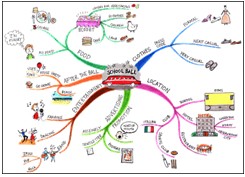
Fifty years later, Buzan has become the world’s leading speaker on the brain and learning. In the late 1960s, he invented the mind map, a visual representation of thought processes.
This kind of thinking has become a popular tool for planning, organizing, problem solving, and communicating across the world. He has since authored and co-authored over 100 books that have appeared in more than 30 languages.
“I think in most cases, people use less than 1 percent of their brains,” he says.
But how do you expand this 1 percent? How do you become the best student you can be?
According to Buzan, the answer is simple. You take a section of whatever it is that you are trying to learn, he says, and you read it for its essence (精髓、要素). Then you make a mind map of all the important details. For a truly effective mind map, you start with a colored image in the center of your page. Draw the first image that comes to mind on the topic you are mind mapping. Branch off from your central image and create one of your main ideas. From your main branches draw some sub-branches and from those sub-branches you can draw even more branches. He emphasizes that you should use plenty of images and colors as these help with memory recall and encourage creativity.
By using this visual format (形式), according to Buzan, your mind will begin to make associations that will help you remember more information for longer periods of time.
Buzan believes that traditional note-taking methods, such as lists and summaries, do not stimulate the brain’s recall capacity or ability in the same way. Because of this, students will often find themselves locked away in their rooms for hours, trying hard to memorize separate details. Buzan believes that for a more effective and lasting way of studying, you must first understand how your brain works.
“Everyone is born smart,” he says. “You just have to learn how to learn.”
【小题1】What is the main purpose of the first two paragraphs?
| A.To show that Tony Buzan was worried about his study. |
| B.To invite us to think about the importance of manuals. |
| C.To prove that the mind map is a useful tool for the brain. |
| D.To show why Tony Buzan studies the brain and learning. |
| A.Excite. | B.Improve. | C.Encourage. | D.Affect. |
| A.If we learn the mind map, we will become the best student. |
| B.The mind map will help your brain connect separate details. |
| C.The mind map will be more effective if we put more details in it. |
| D.We will solve the problem if we make connections between ideas. |
| A.How to make the mind map? |
| B.Is the mind map widely used? |
| C.Can your memory be mapped? |
| D.Is the mind map helpful in thinking? |
Tony Buzan’s grades were going down at university. Disappointed with his low marks, he went to the library to find a book on how to use his brain. He was directed to the medical section. Confused, he said to the librarian, “I don’t want to take my brain out, I just want to learn how to use it.” Her reply was simple: “There’s no book on that.”
“I thought to myself,” says Buzan, “if I buy a little radio, I get an instruction manual (说明书). If I buy a microwave, I get an instruction manual. But for the most important machine in the world, no instruction manual?”
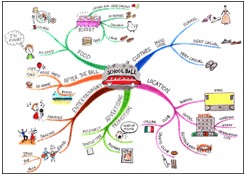
Fifty years later, Buzan has become the world’s leading speaker on the brain and learning. In the late 1960s, he invented the mind map, a visual representation of thought processes.
This kind of thinking has become a popular tool for planning, organizing, problem solving, and communicating across the world. He has since authored and co-authored over 100 books that have appeared in more than 30 languages.
“I think in most cases, people use less than 1 percent of their brains,” he says.
But how do you expand this 1 percent? How do you become the best student you can be?
According to Buzan, the answer is simple. You take a section of whatever it is that you are trying to learn, he says, and you read it for its essence (精髓、要素). Then you make a mind map of all the important details. For a truly effective mind map, you start with a colored image in the center of your page. Draw the first image that comes to mind on the topic you are mind mapping. Branch off from your central image and create one of your main ideas. From your main branches draw some sub-branches and from those sub-branches you can draw even more branches. He emphasizes that you should use plenty of images and colors as these help with memory recall and encourage creativity.
By using this visual format (形式), according to Buzan, your mind will begin to make associations that will help you remember more information for longer periods of time.
Buzan believes that traditional note-taking methods, such as lists and summaries, do not stimulate the brain’s recall capacity or ability in the same way. Because of this, students will often find themselves locked away in their rooms for hours, trying hard to memorize separate details. Buzan believes that for a more effective and lasting way of studying, you must first understand how your brain works.
“Everyone is born smart,” he says. “You just have to learn how to learn.”
1.What is the main purpose of the first two paragraphs?
A.To show that Tony Buzan was worried about his study.
B.To invite us to think about the importance of manuals.
C.To prove that the mind map is a useful tool for the brain.
D.To show why Tony Buzan studies the brain and learning.
2.What does the word “stimulate” mean in the passage?
A.Excite. B.Improve. C.Encourage. D.Affect.
3.What can we infer from the passage?
A.If we learn the mind map, we will become the best student.
B.The mind map will help your brain connect separate details.
C.The mind map will be more effective if we put more details in it.
D.We will solve the problem if we make connections between ideas.
4.What is the best title for the passage?
A.How to make the mind map?
B.Is the mind map widely used?
C.Can your memory be mapped?
D.Is the mind map helpful in thinking?
湖北省互联网违法和不良信息举报平台 | 网上有害信息举报专区 | 电信诈骗举报专区 | 涉历史虚无主义有害信息举报专区 | 涉企侵权举报专区
违法和不良信息举报电话:027-86699610 举报邮箱:58377363@163.com