remind sb of sb / sth 提醒.使-记起- This music reminds me of my childhood. 这首曲子使我想起了我的童年. 查看更多


题目列表(包括答案和解析)

根据对话内容,从下面方框中选择适当的单词或词组填空,使对话内容完整正确。

the same as    whole    discovered   lying in   lives

Helen:Hi,Tony! What do you think of the TV programme about Pompeii?

Tony:Pompeii? What is Pompeii?

Helen:It is a dead city ___1___ Italy.

Tony:Why do you say it's a dead city?

Helen:Because Mount Vesuvius,a grass-covered volcano(火山)erupted(喷发)in 79 AD.When the eruption ended two days later,the ___2___ city was covered with 20 feet of stones and ashes.

Tony:Wow! How terrible! Then how long did Pompeii lie under the stones and ashes?

Helen:For centuries.Later,in the year 1861,an Italian scientist ___3___ Pompeii.The city looked almost ___4___ it had looked in 79 AD.

Tony:Really?

Helen:Yes,in the city you can see everyday objects which remind you of people's __5__ there.

Tony:That's amazing.I'll go there to have a visit if I have time.

查看答案和解析>>

From: 11350@csu.edu
To: Jennysmith@yahoo.com
Subject: party                                                  Hi! Jenny,
My sister Ann and I are going to have a party this Friday at my home. Some friends will be there. Most of them are from the office. My best friend, Tom, will come, too. I want you to meet him.
Do you want to come? We’ll play games and talk. Then we’ll have dinner. Everyone will bring food or drinks. It begins at 4:00 pm. and ends at 8 or 9 pm.
We’ll have a great time! Can you come?I hope so! Let me know soon. Call me or send me an e-mail.
【小题1】Who sent this e-mail?

A.JennyB.TomC.LisaD.Ann
【小题2】The party begins at ______?
A.4:00 amB.6:00 pmC.4: 00 pmD.6:00 am
【小题3】Tom is _______ best friend.
A.Jenny’sB.Lisa’sC.Ann’sD.Jack’s
【小题4】What’s true about the party?
A.It’s on Saturday.
B.All of Jenny’s friends will come.
C.People will not bring things.
D.It will last four or five hours.
【小题5】What will Jenny do first?
A.Buy food for the party.B.Call Tom
C.Send an e-mail to Lisa.D.Drive to Lisa’s house.

查看答案和解析>>


broadcast1/'brɔ:dkɑ:st||ˈbrɔdˌkæst/n[C] a programme on the radio or on television: a radio news broadcast | live broadcast ( = a programme that you see or hear at the same time as the events are happening)

broadcast2 v past tense and past participle, broadcast 1 [ I,T] to send out radio or television programmes: The interview was broadcast live across Europe. 2 [T] to tell something to a lot of people: There was no need to broadcast the fact that he lost his job.

broadcaster /ˈbrɔːdkɑːstə || ˈbrɔːdkæstər/ n [C]

curious/ ˈkjʊəriəs || 'kjur-/ adj 1 wanting to know about something: When I mentioned her name everyone was curious. | [ +about] I’m incurious about this book she's supposed to be writing. |curious to see/hear/know etc: Mandy was curious to hear what Peter had to say himself.—opposite INCURIOUS 2 strange or unusual: a curious noise coming from the cellar | curious that It's very curious that she left without saying goodbye.

   curl1 /kɜ:l|| kɚrl/ n 1[C] a small mass of hair

flask / flɑ:sk || flæsk/n [C] I BrE a special type of bottle that you use to keep liquids either hot or cold, for example when travelling 2 a flat bottle usually used to carry alcohol 3 a glass bottle with a narrow top, used in a LABORATORY

flat1/ flæt / adj flatter, flattest

1▶ SURFACE◀ smooth and level, without raised or hollow areas, and not sloping or curving: a flat-bottomed boat |a perfectly flat sandy beach | flat as a

pollute / pə'lu:t/ v  [T] 1 to make air, water, soil etc dangerously dirty and not suitable for people to use: beaches polluted by raw sewage | industrial emissions that pollute the air 2 pollute sb’s mind to give someone immoral thoughts and spoil their character: fears that Lawrence's novels would pollute young minds--polluted adj: polluted rivers--polluter n [C]

pollution / pəˈlu:ʃn /n [U] 1 the process of making


1.The pronunciation of the word "broadcast" is ____ or/ˈbrɔdˌkæst /.

A. /'brɔ:dkɑ:st/     B. /'brəud'sɑ:st/      C. /bræd'kɔst/       D. /'bru:dkɑ:st/

2.The word"____ "can be used as an adjective (形容词).

A. pollute          B. pollution           C. curious            D. curiously

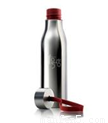
3.Which of the following is a flask?


 A.               B.                C.              D.


4. The word "pollute" means "______".

A. to tell something to a lot of people       B. wanting to know about something

C. a programme on the radio or on TV       D. to make air. water, soil, etc dirty

5.These texts are probably from ______.

A. a magazine        B. a dictionary

C. a newspaper        D. an advertisement


查看答案和解析>>

阅读理解

  Have you heard about“Survival(生存)Holidays”?“Survival Holidays”is for children to go into the lonely place for exciting activities.Now about 1,100 companies are allowed to take children into the great outdoors without their parents.

  The reason why people like“Survival Holidays”is that they think being close to nature is good for children.Many children in big cities spend all time watching TV and playing computer games.“Survival Holidays”gives them an important change.

  Is“Survival Holidays”a wonderful idea?Maybe it is.Children need more free time to play.They need to be left on their own, without adults disturbing them.Parents care too much about their children.They like to see the children being busy with activities that are controlled by adults, which causes many problems.They don't know what to do when they are in danger.Even something like crossing a small river seems to be a hard challenge.Children are not comfortable with danger.Even slight danger like getting their feet wet or falling down seems very terrible to them.

  Many people think the survival activities are good for children.Even years later, they will still remember what they have learned.Some have learned to stay calm in different times.Some have learned how to keep safe.Others have learned how to work in a team.All these skills will help them a lot in their lives.

(1)

The purpose of“Survival Holidays”is ________.

[  ]

A.

for children to live in a lonely place

B.

to let children not watch TV at home

C.

for parents not to disturb their children

D.

to improve children's abilities when living alone

(2)

Which of the following is true according this passage?

[  ]

A.

“Survival Holidays”is popular.

B.

Being close to nature is not good for children.

C.

Parents will pay no money for“Survival Holidays”.

D.

Children live a comfortable life during“Survival Holidays”.

(3)

The word“challenge”in the passage means ________.

[  ]

A.

suggestion to sb

B.

task that invites sb to fight

C.

task that tests sb's ability and skill

D.

task that doesn't need any effort

(4)

What do many people think?

[  ]

A.

The survival skills can not be learned in class.

B.

Children who live in nature will always be healthy.

C.

Children shouldn't live a comfortable life with their parents.

D.

The survival activities will have good effects on children for their future.

(5)

What does the passage mainly talk about?

[  ]

A.

What children do during“Survival Holidays”

B.

Why people like“Survival Holidays”

C.

What children need in their spare time

D.

How to educate children

查看答案和解析>>

阅读下列短文,从每小题所给的A、B、C、D四个选项中选出最佳选项。

broadcast1/'br?dkɑ: st||?br?d?k?st/n[C] a programme on the radio or on televisiona radio news broadcast | live broadcast(= a programme that you see or hear at the same time as the events are happening)

broadcast2 v past tense and past participle, broadcast 1 [ I, T] to send out radio or television programmesThe interview was broadcast live across Europe2 [T] to tell something to a lot of peopleThere was no need to broadcast the fact that he lost his job

broadcaster/?br??dkɑ?st? || ?br??dk?st?r/n [C]

curious/?kj??ri?s || 'kjur-/adj 1 wanting to know about somethingWhen I mentioned her name everyone was curious| [ +about] I'm incurious about this book she's supposed to be writing|curious to see/hear/know etcMandy was curious to hear what Peter had to say himself.-opposite INCURIOUS 2 strange or unusuala curious noise coming from the cellar | curious that It's very curious that she left without saying goodbye

curl1/k?l|| k?rl/n 1[C] a small mass of hair

flask/flɑsk || fl?sk/n [C] I BrE a special type of bottle that you use to keep liquids either hot or cold, for example when travelling 2 a flat bottle usually used to carry alcohol 3 a glass bottle with a narrow top, used in a LABORATORY

flat1/fl?t/adj flatter, flattest

1? SURFACE? smooth and level, without raised or hollow areas, and not sloping or curvinga flat-bottomed boat |a perfectly flat sandy beach | flat as a

pollute/p?'lut/v [T] 1 to make air, water, soil etc dangerously dirty and not suitable for people to usebeaches polluted by raw sewage | industrial emissions that pollute the air 2 pollute sb's mind to give someone immoral thoughts and spoil their characterfears that Lawrence's novels would pollute young minds-polluted adjpolluted rivers-polluter n [C]

pollution/p??lu?n/n [U] 1 the process of making


(1)

The pronunciation of the word "broadcast" is ________ or/?br?d?k?st/.

[  ]

A.

/'br?:dkɑ:st/

B.

/'br?ud'sɑ:st/

C.

/br?d'k?st/

D.

/'bru:dkɑ:st/

(2)

The word" ________ "can be used as an adjective(形容词).

[  ]

A.

pollute

B.

pollution

C.

curious

D.

curiously

(3)

Which of the following is a flask?

[  ]

A.

B.

C.

D.

(4)

The word "pollute" means " ________ ".

[  ]

A.

to tell something to a lot of people

B.

wanting to know about something

C.

a programme on the radio or on TV

D.

to make air.water, soil, etc dirty

(5)

These texts are probably from ________.

[  ]

A.

a magazine

B.

a dictionary

C.

a newspaper

D.

an advertisement

查看答案和解析>>


同步练习册答案