
题目列表(包括答案和解析)
Talking with people is necessary in our daily activities and it is also very important. However, we all have different styles of communicating. Some people seem to be liked by most of the people while others not! Why does this happen? The answer lies in the simple magic words of communication—Thank you, Please and Sorry!
Let’s see how and why we should use these three words:
◆ Thank you
There is not one day of our life which we spend without taking help from another person. From the time we start our day till we step into our bed for a good night’s sleep, we have taken a number of favors (恩惠). However, how many times do we thank the other person truly? Be free and generous in saying “Thank you”! It does not take away your credit (认可), but surely makes the other person happy and more willing to help you next time!
◆ Please
Often we take things for granted (想当然) and ask other people to do things for us. This does not help as others feel they are made to do these for you. A simple and sweet “please” could completely change the manner towards you.
◆ Sorry
Everyone makes mistakes, but it is quite difficult to accept it and say sorry for it. This always causes trouble in our relationship. Saying sorry does not disgrace (使丢脸) anyone, instead, puts them in a more polite position.
These three simple words can work wonders for people. If you truly use these words in your day to day communication with people, you will surely find a change in the way people respond (反应) to you and your actions.
|
Three 1. words of communication |
|
|
Communicating is 2. and plays an important part in our daily activities. Because of different styles of it, some people are very 3. while others are not. |
|
|
Thank you |
We receive help from others 4. day. If you say “Thank you” after getting favors, others will help you 5. . |
|
Please |
Others should 6. you well, right? No! But if you 7. the simple and sweet “Please”, maybe others could change the manner towards you. |
|
Sorry |
It is human nature that everyone makes 8. . Saying “Sorry” can help you reduce 9. in your relationship. |
|
You’re 10. to find a change in the way people respond to you if you truly use these words. |
中人物的活动。)
|
visited mountains awful expensive watched crowded museum boring rained uncrowded stayed home snowed |
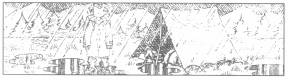
He Went__________________________________________________________________
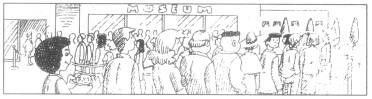
__________________________________________________________________________
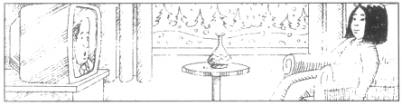

The word “sharp” can be __ to describe many different things in your home, classroom, and places of work. In this chapter, the writer __sharp pencils, meaning pencils with a very fine __.The writer does not like dull pencils. 。
We can also use “sharp” to describe the blades of knives. Knives also have points. We can use “sharp” to describe a __ kind of point, such as the sharp points of kitchen and steak knives. Scissors have blades, too, and we can describe these blades as sharp or dull. Furthermore, the points of scissors are __ sharp or rounded spending on the kind of scissors. Some tools, such as saws, scrapers, and garden tools, also have blades. We can use the words “sharp” and “dull” to describe the blades of these tools, too. Sharp knives, scissors, and tools are__to use. They cut things easily and quickly, without effort.?
“Sharp” can be used to describe the edges of furniture and __some containers. For example, the edge of a table or desk can be __.In addition; we can describe the edge of __ open can as sharp. The top of a can is sometimes sharp__ to cut your hand. A piece of __ from a broken jar or bottle is ordinarily very sharp.
__we sometimes use “sharp” to describe people. A person who appears sharp is very well __.A person who is sharp, on the other hand, is intelligent, smart, and__ learn and understand.
To summarize, “sharp” can be used to describe many kinds of __ that have blades, points, and edges. When we used it to describe people, it can mean nice looking, well dressed, or intelligent. It is an expensive word because it can be used in many different ways.
1.A. written???????? B. used???????? C. seen???????? D. taken
2.A. talks about???? B. takes care of?? C. doesn't like to mention??? D. makes up his mind to
3.A. sharp???????? B. color????????? C. point????????? D. edge
4.A. some???????? B. any????????? C. only????????? D. certain
5.A. either???????? B. neither???????? C. too?????????? D. very
6.A. difficult?????? B. easy?????????? C. interesting????? D. clean
7.A. for?????????? B. with?????????? C. of???????????? D. at
8.A. seen???????? B. sharp?????????? C. smooth??????? D. hard
9.A. an?????????? B. a????????????? C. the??????????? D. /
10.A. so as???????? B. in order???????? C. so that??????? D. enough
11.A. news???????? B. glass?????????? C. information??? D. advice
12.A. However???? B. Finally???????? C. Therefore????? D. In this way
13.A. prepared????? B. dressed???????? C. mannered????? D. served
14.A. easy to?????? B .is to??? ??????? C. to???????????? D. quick to
15.A. funny things?? B. knives???????? C. objects????????? D. containers
| A.he would be away from home for four days |
| B.he would be back in seven days |
| C.he would be back in a month |
| D.he would be back in a week |
| A.the wall | B.the door |
| C.a piece of paper | D.the picture |
| A.the fifth day | B.the third day |
| C.the fourth day | D.the second day |
| A.he thought the child's father was dead |
| B.the child didn't ask him to sit down |
| C.the child gave him a cup of tea |
| D.the child gave him a cup of coffee |
| A.The piece of paper | B.Mr. Smith |
| C.The visitor | D.the son |
湖北省互联网违法和不良信息举报平台 | 网上有害信息举报专区 | 电信诈骗举报专区 | 涉历史虚无主义有害信息举报专区 | 涉企侵权举报专区
违法和不良信息举报电话:027-86699610 举报邮箱:58377363@163.com