
题目列表(包括答案和解析)
_______ oranges do you want and ______milk would you like?
|
A.How many, how many |
B.How much, how much |
|
C.How many, how much |
D.How much, how many |
Expert(专家)say that students usually need eight to ten hours’ sleep at night, but most Chinese students do not get enough sleep. Some Chinese parents are usually glad to see their children studying late. They will think their children work very hard, but not all parents are happy about this. Once a mother told us that every morning her 10-year-old boy put up one finger(手指)with his eyes still closed, begging(请求)for one more minute to sleep. Like thousands of students “early birds” in China, he has to get up before six every morning.
A report shows that without a good night’s sleep, students seem to be weaker(虚弱)than they should be. Many students have fallen asleep(睡觉) during class at one time or another. Too much homework is not the only reason why students stay up late. Some watch TV or play the computer games late into the night.
Experts have ever said that the students should develop good study habits. So some clever students never study late, they are able to work well in class.
【小题1】The 10-year-old boy begged for more minute to sleep because__________.
| A.he didn’t have enough sleep |
| B.it wasn’t time for him to get up |
| C.he didn’t want to go to school |
| D.he wanted his mother to wake him up |
| A.become too weak to sleep | B.not work well in class |
| C.go to bed early | D.be weak in English |
| A.get up early | B.get up late |
| C.sleepless | D.don’t want to sleep |
| A.study late | B.watch TV late |
| C.not go to bed until late | D.stay outside |
| A.If you want to study better, you must work hard at night. |
| B.Sleeping less means working hard. |
| C.Some clever students are able to work well in class because they have good study habits. |
| D.Students don’t have enough sleep because they have lots of homework to do. |
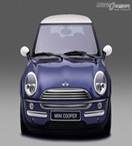
In Britain you’re allowed to drive a car when you’re seventeen. You have to get a special two-year driving license before you can start. When you’re learning, someone with a full license always has to be in the car with you because you aren’t allowed to drive the car on the road alone. You don’t have to go to a driving school --- a friend can teach you. The person with you isn’t allowed to take money for the lesson unless he’s got a teacher’s license.
Before you’re allowed to have a full license, you have to take a driving test. You can take a test in your own car, but it has to be fit for the road. In the test you have to drive round for about half an hour and then answer a few questions. If you don’t pass the test, you’re allowed to take it again a few weeks later if you want to. In 1970 a woman passed her fortieth test after 212 driving lessons! When you’ve passed your test, you don’t have to take it again, and you’re allowed to go on driving as long as you like. Britain’s oldest driver was a man who drove in 1974 at the age of 100.
Before 1904 everyone was allowed to drive, even children. Then from 1904 car drivers had to have a license. But they didn’t have to take a test until 1935. On the early days of car driving, before 1878, cars weren’t allowed to go faster than four miles an hour, and someone had to lead the car with a red flag.
【小题1】A person can’t take money for driving lessons unless he __________.
| A.has learnt to drive in a driving school |
| B.has a full driving license |
| C.has a full license and a teacher’s license |
| D.is given a special two-year driving license |
| A.mustn’t drive his car, even though the car is fit for the road |
| B.is usually asked to drive on roads for some time |
| C.has to be examined only in car driving skills |
| D.must drive around for more than an hour |
| A.a few years later |
| B.right after the first test |
| C.a few weeks later |
| D.never |
| A.There is no limit (限制)to the age of an old man who drives a car. |
| B.One can take a driving test again and again until he passes it. |
| C.There was a speed limit to cars before 1878. |
| D.A car driver didn’t have to get a limit license until 1935. |
| A.Driving Licenses in Britain |
| B.Tests for Britain People |
| C.Driving Cars |
| D.Young Men’s Driving Licenses |
从下面方框内所给的七个选项中选出五个句子,将其序号填入相应空白处,使其组成一段符合逻辑的对话
|
A.Do you like music? B.How are you? C.What about you? D.How old are you? E.Can you sing a song? F.Nice to meet you G.Where are you from? |
Paul:Good morning, Mr Black.
Mr Black: Good morning, Paul. Let me introduce a new friend to you. This is Bill.
Bill: 1.
Paul: Nice to meet you, too. 2.
Bill:I’m from America.
Paul: 3.
Bill: I’m eleven years old.
Paul: 4.
Biu:Yes,I do. 5.
Paul: Me,too.
完形填空(共12分,每小题1分)
阅读下面的短文,掌握其大意,然后从短文后各题所给的A、B、C、D四个选项中,选择最佳选项
I had my first job at the age of thirteen, when a friend of my mother’s who owned a book shop hired(雇佣) me for six hours a week to help her in the shop. I was very 1 to earn my own pocket money and my parents 2 interfered(干涉)with how I spent it, even when I was spending it foolishly. They believed that by earning money, spending it, and learning from the 3 , I would become more mature(成熟的) and responsible about how to handle work, relationships with others, and money.
Like many American parents, my parents also let me and my brothers do things over which they 4 a great deal. When I was sixteen, for example, after I finished high school and before I entered university, I wanted to spend the summer months traveling around Europe. My mother was against the idea of my traveling alone at such a young age, but my father felt that it would be a great 5 for me. In the end, my father won the argument(争论) on the 6 that I limited(限定)my traveling to France, my mother’s home, where I had many uncles, aunts and cousins spread out through the country who could 7 shelter(住处)and help if I needed them.
Three years later, my younger brother decided to 8 a year off after his first year in university and travel through the United States and the Caribbean. Again my mother was very worried and not eager to see my brother leave school, but my father encouraged him and my brother had a(n) 9 year working his way on trains and ships to 10 passage to different ports and cities, and discovering many fascinating places and people.
These kinds of experiences are probably rare(稀少的)for children in many countries but in the US they are fairly common. Most parents start 11 their children at a young age to do small things by themselves. By the time they have finished high school, many American kids have already had part-time jobs, traveled around the US or other countries on their own, have selected the university they plan to attend and maybe even 12 on their future career, and so on.
1. A.anxious B.content C.proud D.hopeful
2. A.never B.ever C.always D.even
3. A.problems B.mistakes C.disappointment D.failure
4. A.helped B.supported C.shared D.worried
5. A.journey B.experience
C.decision D.possibility
6. A.situation B.agreement C.gesture D.condition
7. A.promise B.afford C.provide D.serve
8. A.set B.put C.take D.keep
9. A.unusual B.hard C.strange D.busy
10. A.accept B.earn C.find D.search
11. A.bringing B.forcing
C.pushing D.protecting
12. A.worked B.decided C.carried D.tried
湖北省互联网违法和不良信息举报平台 | 网上有害信息举报专区 | 电信诈骗举报专区 | 涉历史虚无主义有害信息举报专区 | 涉企侵权举报专区
违法和不良信息举报电话:027-86699610 举报邮箱:58377363@163.com