
1. (小组讨论,相互提问完成1c。)
T: Everyone has his own favorite artist. Please discuss the questions in 1c in groups. Then tell us the story of your favorite artist.
My favorite artist is Qi Baishi. He shows great love to life in his painting. His paintings belong to modern arts. Work like this, please! In 3 minutes, I’ll ask some students to report.
5.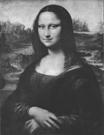 (呈现第34页3的图片,引出对图画的分类,并学习生词。)
T: In this picture we can see a woman. It’s a portrait. It is Leonardo
da Vinci’s work.
(以同样的方法讲解其他两幅图片,学习并了解生词: landscape, porrtait。)
(板书画线部分。)
|
Portrait,landscape |
(领读生词并对图片进行描述,为学生自己描述奠定基础。)
Step 4 Practice 第四步 练习(时间: 15分钟)
完成1c和2。
4. (完成1b。)
T: Read 1a again and fill out the table in 1b. Check (√) the painter you like better. Then I’ll ask some of you to explain the reasons why you like him/her better.
3. (学生自读,注意黑板上所标的复合句的类型,对从句作出总结。)
T: Read the dialog by yourselves and pay attention to the complex sentences on the blackboard. Then summarize the kinds of the sentences.
2. (两人一组表演1a。)
T: Work in pairs. Act out the dialog.
1. (放1a录音,让学生跟读。)
T: Follow the tape, pay attention to the pronunciation and intonation, and then practice in pairs.
2. (让学生找出本段对话的复合句,并说出从句的类型。)
T: Please read 1a and find out the complex sentences, at the same time point out their types. Discuss in pairs and further understand them.
(本段对话中含有状语从句和定语从句,在此过程中应得到复习。)
Step 3 Consolidation 第三步 巩固(时间: 5分钟)
巩固1a。
1. (就1a对话,进行简单介绍,然后设置听力任务,降低听力难度。)
T: Today we’ll learn something about Steve. He wants to be an artist like Vincent van Gogh,because he likes Vincent van Gogh’s works very much. Now listen and find the answers to the following questions:
|
(1)Which painting is Steve’s
favourite? (2)What is the major symbol of expression in Vincent van Gogh’s paintings? |
(听录音,回答问题并核对答案。)
(第二轮,用定语从句。)
T: He was a Chinese painter who was quite good at painting figures.(T→B1)
B1: The man was a Dutch artist who was famous for his painting of Sunflowers.(B1→G1)
G1: …
(同时板书画线部分生词。需理解生词figure,了解生词sunflower。同时老师给予必要说明:sunflower作画的名称时,s要大写。)
|
figure,
sunflower |
(第三轮,用条件状语从句。)
T: ×× said he had made up his mind to be an artist.
(板书画线部分,解释并要求学生掌握。)
|
make
up one’s mind |
T: If he works hard, his dream would be true. (T→B1)
B1: If you wouldn’t know the way, you can ask your friends. (B1→G1)
G1: …
…
(教师宣布结果,并给予奖励。)
Step 2 Presentation 第二步 呈现(时间: 5分钟)
学习1a。
4. (点将比赛。要求用以上所涉及的各种从句, 男女学生分为两组。)
T: Let’s do a contest. All the girls in one group: G, all the boys in the other group: B. You can challenge the members of the other group.
(第一轮,用if条件状语从句。)
T: Let’s make sentences with“if”. I will make the first sentence.
(教师说出第一句,让第一个学生说第二句,第一个学生说完叫第二个学生。)
T: I will go to the park if it is fine tomorrow.(T→B1)
B1: I will go to school if it is fine tomorrow.(B1→G1)
G1: I will go to the National Art Gallery if it is fine tomorrow.(G1→B2)
B2: ...
...
湖北省互联网违法和不良信息举报平台 | 网上有害信息举报专区 | 电信诈骗举报专区 | 涉历史虚无主义有害信息举报专区 | 涉企侵权举报专区
违法和不良信息举报电话:027-86699610 举报邮箱:58377363@163.com