
题目列表(包括答案和解析)
A well-known speaker started his talking by holding up a $20 bill. In the room of 200, he asked, "Who would like this $20 bill?"
Hands started going up. He said, "I am going to give this $20 to one of you, but first, let me do this." He began to crumple(弄皱) the 20 dollar note up. He then asked, "Who still wants it?" Still the hands were up in the air.
"Well," he replied, "what if I do this?" He dropped it on the ground and started to grind it into the floor with his shoe. He picked it up, now crumpled and dirty.
"Now, who still wants it?" Still the hands went into the air.
"My friends, you have all learned a very valuable lesson. No matter what I did to the money, you still wanted it because it did not decrease in value. It was still worth $20."
"Many times in our lives, we are dropped, crumpled, and ground into the dirt by the decisions we make and the circumstances that come our way. We feel as though we are worthless; but no matter what happened or what will happen, you will never lose your value." "Dirty or clean, crumpled or finely creased, you are still priceless to those who love you. The worth of our lives comes, not in what we do or who we know, but by ...WHO WE ARE."
"You are special — don’t ever forget it."
36. This passage is mainly about ________.
A. a famous professor B. the value of $20
C. the value of a person D. the importance of money
37. By making the money crumpled and dirty , the professor wanted to show ________.
A. the value of the money never changed
B. he was not interested in the money
C. he was a very special person
D. the money was valuable any more
38. The underlined word “ decrease” most probably means “________”.
A. become more B. become less C. change fast D. stay the same
39. The writer implies (暗示) in the passage that ________.
A. we should try our best to make more money
B. we should try to make ourselves special
C. we can word hard to prove ourselves
D. we might meet with a lot of difficulties in our life
A well-known speaker started his talking by holding up a $20 bill. In the room of 200, he asked, "Who would like this $20 bill?"
Hands started going up. He said, "I am going to give this $20 to one of you, but first, let me do this." He began to crumple(弄皱) the 20 dollar note up. He then asked, "Who still wants it?" Still the hands were up in the air.
"Well," he replied, "what if I do this?" He dropped it on the ground and started to grind it into the floor with his shoe. He picked it up, now crumpled and dirty.
"Now, who still wants it?" Still the hands went into the air.
"My friends, you have all learned a very valuable lesson. No matter what I did to the money, you still wanted it because it did not decrease in value. It was still worth $20."
"Many times in our lives, we are dropped, crumpled, and ground into the dirt by the decisions we make and the circumstances that come our way. We feel as though we are worthless; but no matter what happened or what will happen, you will never lose your value." "Dirty or clean, crumpled or finely creased, you are still priceless to those who love you. The worth of our lives comes, not in what we do or who we know, but by ...WHO WE ARE."
"You are special — don’t ever forget it."
36. This passage is mainly about ________.
A. a famous professor B. the value of $20
C. the value of a person D. the importance of money
37. By making the money crumpled and dirty , the professor wanted to show ________.
A. the value of the money never changed
B. he was not interested in the money
C. he was a very special person
D. the money was valuable any more
38. The underlined word “ decrease” most probably means “________”.
A. become more B. become less C. change fast D. stay the same
39. The writer implies (暗示) in the passage that ________.
A. we should try our best to make more money
B. we should try to make ourselves special
C. we can word hard to prove ourselves
D. we might meet with a lot of difficulties in our life
What did you do on April 23, World Book Day, last year? Did you find some interesting books to read? Here is a book list from China’s GAPP.
|
Author: Jimmy Jimmy, a Chinese painter and his 10-year-old daughter argue a lot. Jimmy tried to understand his daughter, so he drew this picture book for her. His paintings show kids’ anger, pain, happiness and wishes. |
|
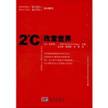
Author: Yamamoto Ryoichi If the earth’s temperature went up 2 ℃, what would happen? In this book we learn about the history, today’s situation and the future of global warming. The author also tells us useful ways to protect our world. |
|
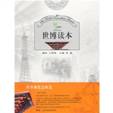
Author: Song Chao The first part gives an introduction to World Expos. The next talks about the host countries and each of their World Expos. China’s early participation (参加) in the World Expo is the topic of the third part. The last one is all about the World Expo 2010. |
|
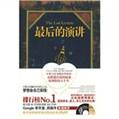
Author: Randy Pausch Randy Pausch, a professor (教授) from New York was asked to give a lecture. He knew it would probably be his last lecture, because he was dying of illness. His lecture wasn’t about dying, but about getting over the difficulties, helping others to reach their dreams. |
74. Who wrote the book “Don’t Blame Me, it’s Not My Fault”?
A. Jimmy B. Yamamoto Ryoichi C. Song Chao D. Randy Pausch
75. The book, Climate Change +2 Degrees mainly tells us __________.
A. that the earth’s temperature will surely go up 2 ℃.
B. the history of different countries in the world
C. the future of global warming
D. how we can protect our earth before the global warming comes
76. We can know about Shanghai World Expo from __________ of the World Exposition Reader.
A. part 1 B. part 2 C. part 3 D. the last part
77. Which of the following is NOT true in the book The Last Lecture?
A. The professor is from America.
B. The professor was in his poor health.
C. The professor shared his opinion with his audience
D. The professor talked a lot about his illness in his lecture
78. The writer introduces some __________ to us for World Book Day.
A. books B. pictures C. cities D. famous people
79. The passage maybe comes from __________.
A. a diary B. a novel C. a book advertisement D. film reviews
There is not enough oil in the world now. As time goes by ,it becomes less and less ,so what are we going to do when it runs out? Perhaps we will go back to use horses ,carriages and bicycles .
In the Second World War ,some people didn't use gas made from petroleum (石油)in their cars .They made gas from wood and plants instead . The cars didn't go fast ,but they ran ,so this was better than nothing. However, in the future, we can't cut down all our trees to make gas; we need our trees for other things, too.
Besides different types of gas, we can also use electricity(电)to run our cars but first we must make the electricity !Some countries have coal and they make electricity with that, but we might not always have coal, either. Other countries have big ,strong rivers and they can use the power of water to turn turbines(涡轮机) and make electricity more easily and cheaply.
We are also able to get power from the ocean tides. We put turbines into the mouth of the river .Then the tide comes in ,the water turns the turbines and then it goes out ,it turns them again.
Which of these ways will be used to run our cars in the future?
【小题1】When might people have to go back to using horses and carriages?
| A.When they are poor |
| B.When they run out of oil |
| C.When they need more exercise |
| D.When there aren't any big trees in the world |
| A.2 | B.5 | C.4 | D.3 |
| A.how to run our cars |
| B.what to do when oil runs out |
| C.different types of gas |
| D.the way to make electricity |
A bus stops at a small bus stop. A man is hungry and he wants to buy some cakes. It’s raining(下雨) hard, he doesn’t want to go out in the rain. He sees a boy. “Come here, boy!” he cries. “Do you know how much the cakes are?” The boy says yes. The man gives the boy four dollars(美元) and asks him to buy two cakes. “One is for you and one is for me.” Three minutes later, the boy comes back. He’s eating a cake. He gives the man two dollars and says: “Sorry, there is only one cake left.”
【小题1】Where is the man?
| A.He’s near the bus. | B.He is at home. |
| C.He’s in the bus. | D.He is in the car. |
| A.he is tired | B.he doesn’t like rain |
| C.he is hungry | D.it’s raining hard |
| A.One | B.Two | C.Three | D.Four |
| A.five dollars | B.Four dollars | C.Ten dollars | D.Fifteen dollars |
| A.The man eats the cake. | B.The boy eats the cake. |
| C.The boy doesn’t eat the cake. | D.The boy and the man both eat the cakes. |
湖北省互联网违法和不良信息举报平台 | 网上有害信息举报专区 | 电信诈骗举报专区 | 涉历史虚无主义有害信息举报专区 | 涉企侵权举报专区
违法和不良信息举报电话:027-86699610 举报邮箱:58377363@163.com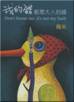 Title: Don’t Blame Me, it’s Not My Fault
  Title: Climate Change +2 Degrees
  Title: The World Exposition Reader
 Title: The Last Lecture