
题目列表(包括答案和解析)
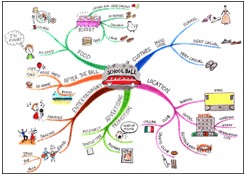
Tony Buzan’s grades were going down at university. Disappointed with his low marks, he went to the library to find a book on how to use his brain. He was directed to the medical section. Confused, he said to the librarian, “I don’t want to take my brain out, I just want to learn how to use it.” Her reply was simple: “There’s no book on that.”
“I thought to myself,” says Buzan, “if I buy a little radio, I get an instruction manual (说明书). If I buy a microwave, I get an instruction manual. But for the most important machine in the world, no instruction manual?”
Fifty years later, Buzan has become the world’s leading speaker on the brain and learning. In the late 1960s, he invented the mind map, a visual representation of thought processes.
This kind of thinking has become a popular tool for planning, organizing, problem solving, and communicating across the world. He has since authored and co-authored over 100 books that have appeared in more than 30 languages.
“I think in most cases, people use less than 1 percent of their brains,” he says.
But how do you expand this 1 percent? How do you become the best student you can be?
According to Buzan, the answer is simple. You take a section of whatever it is that you are trying to learn, he says, and you read it for its essence (精髓、要素). Then you make a mind map of all the important details. For a truly effective mind map, you start with a colored image in the center of your page. Draw the first image that comes to mind on the topic you are mind mapping. Branch off from your central image and create one of your main ideas. From your main branches draw some sub-branches and from those sub-branches you can draw even more branches. He emphasizes that you should use plenty of images and colors as these help with memory recall and encourage creativity.
By using this visual format (形式), according to Buzan, your mind will begin to make associations that will help you remember more information for longer periods of time.
Buzan believes that traditional note-taking methods, such as lists and summaries, do not stimulate the brain’s recall capacity or ability in the same way. Because of this, students will often find themselves locked away in their rooms for hours, trying hard to memorize separate details. Buzan believes that for a more effective and lasting way of studying, you must first understand how your brain works.
“Everyone is born smart,” he says. “You just have to learn how to learn.”
1.What is the main purpose of the first two paragraphs?
A.To show that Tony Buzan was worried about his study.
B.To invite us to think about the importance of manuals.
C.To prove that the mind map is a useful tool for the brain.
D.To show why Tony Buzan studies the brain and learning.
2.What does the word “stimulate” mean in the passage?
A.Excite. B.Improve. C.Encourage. D.Affect.
3.What can we infer from the passage?
A.If we learn the mind map, we will become the best student.
B.The mind map will help your brain connect separate details.
C.The mind map will be more effective if we put more details in it.
D.We will solve the problem if we make connections between ideas.
4.What is the best title for the passage?
A.How to make the mind map?
B.Is the mind map widely used?
C.Can your memory be mapped?
D.Is the mind map helpful in thinking?
Passage 2
Colin is a twenty-year-old young man. Two years ago, when he finished middle school, he got a job in a store. Usually he works until ten o’clock in the evening. He is very tired when he gets home. After a quick supper he goes to bed and soon falls asleep. His grandma who lives downstairs is satisfied(满意) with him.
One day, on his way home, he met Nancy. They were both happy. He asked the girl to his house. She agreed happily. He bought some fruit and drinks for her. And they talked about the school life they spent together, their teachers, classmates and their future(未来). They talked for a long time.
“Have a look at your watch, please,” said the girl. “What time is it now?”
“Sorry, something is wrong with my watch,” said Colin. “Where’s yours?”
“I left it at home.”
Colin thought for a moment and found a way. He began to stamp his foot on the floor, “Bang! Bang! Bang!”
The sound woke his grandma up. The old woman shouted downstairs, “It’s twelve o’clock in the night, Colin. Why are you still jumping upstairs?”
1.Colin was ______ when he finished middle school.
A. seventeen B. twenty C. eighteen D. twenty-two
2.The
old woman is s atisfied
with Colin because ______.
atisfied
with Colin because ______.
A. he buys food for her B. he’s smart
C. he can keep quiet D. he gets home on time
3.From the story, we can know that Nancy was Colin’s ______.
A. classmate B. co-worker(同事,同仁) C. aunt D. cousin
4.The underlined word “stamp” in the story means ______ in Chinese.
A. 集邮 B. 站立 C. 贴邮票 D. 跺脚
5.Colin stamped his foot on the floor in order ______.
A. to wake his neighbor
B. to make his grandma angry
C. that his grandma would tell him the time
D. that his grandma would buy his a watch
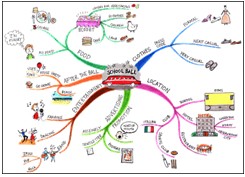
Tony Buzan’s grades were going down at university. Disappointed with his low marks, he went to the library to find a book on how to use his brain. He was directed to the medical section. Confused, he said to the librarian, “I don’t want to take my brain out, I just want to learn how to use it.” Her reply was simple: “There’s no book on that.”
“I thought to myself,” says Buzan, “if I buy a little radio, I get an instruction manual (说明书). If I buy a microwave, I get an instruction manual. But for the most important machine in the world, no instruction manual?”
Fifty years later, Buzan has become the world’s leading speaker on the brain and learning. In the late 1960s, he invented the mind map, a visual representation of thought processes.
This kind of thinking has become a popular tool for planning, organizing, problem solving, and communicating across the world. He has since authored and co-authored over 100 books that have appeared in more than 30 languages.
“I think in most cases, people use less than 1 percent of their brains,” he says.
But how do you expand this 1 percent? How do you become the best student you can be?
According to Buzan, the answer is simple. You take a section of whatever it is that you are trying to learn, he says, and you read it for its essence (精髓、要素). Then you make a mind map of all the important details. For a truly effective mind map, you start with a colored image in the center of your page. Draw the first image that comes to mind on the topic you are mind mapping. Branch off from your central image and create one of your main ideas. From your main branches draw some sub-branches and from those sub-branches you can draw even more branches. He emphasizes that you should use plenty of images and colors as these help with memory recall and encourage creativity.
By using this visual format (形式), according to Buzan, your mind will begin to make associations that will help you remember more information for longer periods of time.
Buzan believes that traditional note-taking methods, such as lists and summaries, do not stimulate the brain’s recall capacity or ability in the same way. Because of this, students will often find themselves locked away in their rooms for hours, trying hard to memorize separate details. Buzan believes that for a more effective and lasting way of studying, you must first understand how your brain works.
“Everyone is born smart,” he says. “You just have to learn how to learn.”
【小题1】What is the main purpose of the first two paragraphs?
| A.To show that Tony Buzan was worried about his study. |
| B.To invite us to think about the importance of manuals. |
| C.To prove that the mind map is a useful tool for the brain. |
| D.To show why Tony Buzan studies the brain and learning. |
| A.Excite. | B.Improve. | C.Encourage. | D.Affect. |
| A.If we learn the mind map, we will become the best student. |
| B.The mind map will help your brain connect separate details. |
| C.The mind map will be more effective if we put more details in it. |
| D.We will solve the problem if we make connections between ideas. |
| A.How to make the mind map? |
| B.Is the mind map widely used? |
| C.Can your memory be mapped? |
| D.Is the mind map helpful in thinking? |
Galloway Wildlife Conservation Park is in the south of Scotland.
A collection of nearly 150 different animals from all over the world can be seen within the peaceful and natural setting. Galloway Wildlife Conservation Park is to provide a living shelter for small animals, to protect wildlife, to provide chances for the public to enjoy and learn about the area they live in. A main aim of the park is to protect endangered animals.
Facilities(设施) available to visitors mainly include restaurants, gift shops picnic areas, facilities for babies, facilities for disabled people free parking, etc.
There is a programme of improvement to condition for the animals, birds and visitors. Through the programme, the park plays an important part in the international effort to protect rare and endangered animals. Click here to see what improvement the park has to make.
As some of our animals are free in the park area, dogs and other pets are not allowed.
Open from 1st February to 30th October, 10:00 a.m to 6:00p.m.
|
Tickets |
|
|
Adult |
£ 6.50 |
|
Child |
£ 4.50(4-15 years old) |
|
Elderly |
£ 5.50 |
|
Family |
£ 20.00 (2 adults & 2 children) |
By buying a ticket to visit the park, you can help us do so much more so HELP SUPPORT CONSERVATION!
You can help us continue our work by making a donation here >>> SUPPORT
Contact us:
E-mail: infor@gallowaywildlife.co.uk Fax/Tel:01557 331645
1.You can visit Galloway Wildlife Conservation Park ___________.
A.at 9:00a.m on 7th December
B.at 11:00a.m on 7th December
C.at 9:00a.m on 7th September
D.at 11:00a.m on 7th September
2.How much should you at least pay if your family (five persons, including an elderly person, two adults and the ten-year-old twins) visit the park?
A. £24.50 B.£25.50 C.£26.50 D.£27.50
3.Which is TRUE according to the passage?
A.There are endangered animals in the park.
B.There aren’t any picnic areas in the park.
C.You can’t take the babies to the park.
D.You can visit the park with your dogs.
The centerpiece of curling(冰壶)is the curling stone. Kays of Scotland has been making curling stones since 1851, when William Kay and his sons Andrew and Thomas set up a workshop in Mauchline, Ayrshire, in southwest Scotland. Kays is still owned by the relatives of the founder, and today it is the only curling stone maker left in Scotland.
Used in a highly competitive sport, the curling stones are made to exact standards. First, stones are sliced and then into round “cheeses”. Finally, the cheeses are shaped and polished into curling stones in a series of steps.
Each stone must weigh 44 pounds. Each must have a maximum diameter (直径) of 36 inches. Polishing is done by hand on a wheel using water, diamond-talcum power, and felt. Finishing the stone’s “running edge” is done entirely by hand with a special kind of paper and a digital measure and magnifying glass (放大镜). Lastly, a handle(把手) is fitted into holes on the top of the stone. Stones are computer-matched into pairs. Sixteen stones----8 pairs----are needed for a game, and since curling game field usually have 6 lanes, each game field needs 96 matched stones!
Kays is a small company, employing less than ten skilled workers. Master craftsman and co-owner James Wyllie is skilled at all phases of curling stone making and is also an enthusiastic curler, as well as active member of Mauchline’s Burns Club, which meets regularly to honor well-known Mauchline residents.
【小题1 】What is true about Kays?
A. It is a family business.
B. It’s a brand(牌子) of curling stones.
C. It’s a place in Scotland.
D. It’s the name of a curling stone dealer(业者).
【小题 2】How many curling stones are needed for two games happening at the same time?
A. 8 B. 16 C. 32 D. 96
【小题 3】What does the underlined word “sliced” mean in Chinese in the second paragraph?
A. 切割 B. 镶嵌 C. 移开 D. 固定
【小题 4】Which of the following statements is NOT RIGHT according to the passage?
A. Kays of Scotland has been curling stone maker for more than 150 years.
B. The weight of each curling stone must be 44 pounds.
C. We use a special machine to polish the curling stone.
D. The workers in Kays are all experienced.
【小题 5】What’s the passage mainly about?
A. The history of curling.
B. How to make a curling stone.
C. The rules of curling.
D. How to become a curling stone maker.
湖北省互联网违法和不良信息举报平台 | 网上有害信息举报专区 | 电信诈骗举报专区 | 涉历史虚无主义有害信息举报专区 | 涉企侵权举报专区
违法和不良信息举报电话:027-86699610 举报邮箱:58377363@163.com