
题目列表(包括答案和解析)

There are camels from Africa and Asia.This is an African camel.It lives in the desert and eats grass.It doesn't often drink.

The monkey comes from South America.It’s South American.The monkey lives in the jungle and eats fruit.

There are elephants from Africa and India.This is an Asian elephant.It lives in India.In Asia, some elephants work in the forest.Elephants like water.

There are snakes in Asia, America, Africa, Australia and Europe.This snake comes from America.It eats meat.It doesn't like water.

The kangaroo comes from Australia.It’s Australian.The kangaroo lives in the grassland.It eats grass and leaves.It doesn't eat meat.

This is a European wolf.It lives in the forest.It eats meat.It doesn't eat vegetables.
1.There are ________________animals in the passage.
A.four B.five C.six
2.________________________eats meat.
A.The kangaroo B.The snake C.The monkey
3.The kangaroo is from________________________.
A.Asia B.Africa C.Australia
4.______________________likes water.
A.The elephant B.The monkey C.The snake
5.In Africa, you can see _______________________________.
A.the camel, the elephant, the kangaroo
B.the monkey, the snake, the wolf
C.the camel, the elephant, the snake
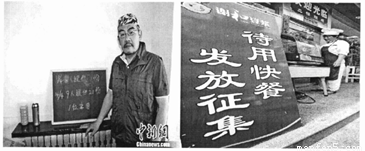
Gao Wenqi, 49, owner of a restaurant in Xi'an, Shanxi, started to offer a new service on April 13, 2013: suspended meals (待用快餐). Now many restaurants in China, such as in Henan,Chongqing and Yunnan, have joined the program.
You can pay 10 yuan for a meal, which should be sold at 16, and leave it at the restaurant. Then other people in need, such as the disabled(残疾人), the poor elderly or homeless children,can have it without paying.
This idea comes from the cafes (咖啡馆) in Naples, Italy. It's a tradition that someone there pays in advance for an extra (额外的) cup or two. Then another coffee-drinker can take them for free.
“The program is meaningful. It offers help with dignity(尊严),” said Gao to Xinhua. However, people are worried that someone who is able to pay would also ask for the suspended meals, so there should be rules for this program.
1.According to the passage, this program may possibly take place .
A. in a restaurant B. at a bus station C. in a school D. on a train
2.The suspended meals are offered to .
A. students B. workers C. people in need D. the rich
3.The underlined phrase “in advance” in the third paragraph means “_ _” in Chinese.
A.滞后 B.预先 C.优先 D.胜过
4.It's said that the idea of “suspended meals” comes from .
A. Italy B. the U.S. C. Canada D. China
5.Which of the following is NOT true?
A. Someone who is unable to pay can ask for the suspended meals.
B. The program is meaningful and it offers help with dignity.
C. Gao Wenqi's restaurant joined the program on April 13, 2013.
D. All customers must pay an extra meal at the restaurant.
There are hundreds of funny and strange expressions in the English language. A lot of them include country names or nationalities. Take these examples:
The Dutch(丹麦人)are the target of most English expressions about nationalities. Why are there so many jokes about the Dutch in English? And what do these expressions mean? In the 17th and early 18th centuries, there were three wars between the British and the Dutch, and Dutch became a bad word. So double Dutch means something that has no meaning or is impossible to understand. A Dutch uncle is someone who gives much stronger advice than they need to. There are later expressions, which are funnier and kinder, like to go Dutch, which is nowadays a popular expression. It means to pay for your part of a bill. This often happens when a group of friends have a meal together, and each person pays for the food they ate. I’m a Dutchman is another commonly used expression. This means not being able to believe something.
An expression with a similar meaning to double Dutch is it’s all Greek to me, which means I don’t understand. The expression was made famous in Shakespeare’s play Julius Caesar although the expression is actually hundreds of years older.
If you take French leave, you are not present or leave somewhere without permission. For example, you could take French leave from a classroom or the place where you work. This expression is from the 18th century when French people left parties without saying goodbye to the host or hostess.
There are Chinese whispers, which mean confused(令人困惑的)messages. This describes the fact that a message can often change as it is passed from person to person. This expression comes from the First World War when foreigners were often confused by Chinese language.
Many people find English expressions confusing, but now that you know about some of them, you can easily have fun finding out many more funny English expressions.
【小题1】Are there many jokes about the Dutch in English?
【小题2】When did Dutch become a bad word?
【小题3】What does “French leave” mean?
【小题4】Which three expressions mentioned above have similar meanings?
【小题5】What do the funny and strange expressions in the passage have in common?
There are hundreds of funny and strange expressions in the English language. A lot of them include country names or nationalities. Take these examples:
The Dutch(丹麦人)are the target of most English expressions about nationalities. Why are there so many jokes about the Dutch in English? And what do these expressions mean? In the 17th and early 18th centuries, there were three wars between the British and the Dutch, and Dutch became a bad word. So double Dutch means something that has no meaning or is impossible to understand. A Dutch uncle is someone who gives much stronger advice than they need to. There are later expressions, which are funnier and kinder, like to go Dutch, which is nowadays a popular expression. It means to pay for your part of a bill. This often happens when a group of friends have a meal together, and each person pays for the food they ate. I’m a Dutchman is another commonly used expression. This means not being able to believe something.
An expression with a similar meaning to double Dutch is it’s all Greek to me, which means I don’t understand. The expression was made famous in Shakespeare’s play Julius Caesar although the expression is actually hundreds of years older.
If you take French leave, you are not present or leave somewhere without permission. For example, you could take French leave from a classroom or the place where you work. This expression is from the 18th century when French people left parties without saying goodbye to the host or hostess.
There are Chinese whispers, which mean confused(令人困惑的)messages. This describes the fact that a message can often change as it is passed from person to person. This expression comes from the First World War when foreigners were often confused by Chinese language.
Many people find English expressions confusing, but now that you know about some of them, you can easily have fun finding out many more funny English expressions.
1.Are there many jokes about the Dutch in English?
2.When did Dutch become a bad word?
3.What does “French leave” mean?
4.Which three expressions mentioned above have similar meanings?
5.What do the funny and strange expressions in the passage have in common?
Expressions cover all parts of our life. They may be around your ears every day. You may know a lot of Chinese expressions that describe how you feel. Here are some English ones for your enjoyment.
Have Your Heart in Your Mouth
This expression means that you're really afraid or anxious about something. When your heart starts beating so much that you can feel a thumping(怦怦跳) in your throat, it may feel like you "have your heart in your mouth."
Have Butterflies in the Stomach
How did butterflies get in your stomach? Well, those really aren't butterflies in there. It is a way of describing those nervous feelings you might get before a test or a very important decision.
These stomach flutters (跳动) are normal and happen to many people. Some people believe having a few butterflies might even help you perform better.
Sick as a Dog
If you've ever been very sick, you may have used this expression. Because dogs eat just about anything they find, they often get sick. So it's all right to describe someone who's not feeling well as being "sick as a dog".
Under the Weather
When it's rainy all day outside, how would you feel? This expression comes from the idea that bad weather might hurt a person's health and mood(心情).
1. The expression "__" is most probably used while you are watching a thriller.
A. have your heart in your mouth B. sick as a dog C. under the weather
2.Someone believes__ if you "have butterflies in the stomach" before a test.
A. you're sure to fail B. you will forget everything C. you might do better
3.It's __ to say somebody is "sick as a dog" when he is not feeling well.
A. impolite B. suitable C. wrong
4.When somebody says "under the weather", he must feel
A. upset B. happy C. calm
5.All expressions discussed in this passage are about
A. health B. habits C. feelings
湖北省互联网违法和不良信息举报平台 | 网上有害信息举报专区 | 电信诈骗举报专区 | 涉历史虚无主义有害信息举报专区 | 涉企侵权举报专区
违法和不良信息举报电话:027-86699610 举报邮箱:58377363@163.com