
题目列表(包括答案和解析)
One day an old man is selling (卖) a big elephant. A young man comes to the elephant and begins to look at it slowly. The old man goes up to him and says in his ear, “Don't say anything about the elephant before I sell it. Then I will give you twenty dollars.” “All right,” says the young man. After the old man sells the elephant, he gives the young man twenty dollars and says, “Now, can you tell me how you found the elephant's bad ears?” “I didn't find the bad ears,” says the young man. “Then why are you looking at the elephant slowly?” asked the old man. The young man answers, “Because I have never seen an elephant before, and I want to know what it looks like.”
根据短文选择正确的答案
( )11. ________ the elephant.
A. The young man sells B. The old man sells
C. The two men sell D. The old man buys
( )12. The young man is looking at the elephant slowly.
He wants to find out ___________.
A. which foot of the elephant is bad B. how heavy it is
C. which ear of the elephant is bad D. what it looks like
( )13. The young man ______________.
A. knows the elephant has bad ears B. wants to buy the elephant
C. looks after the elephant D. gets some money from the old man
( )14. The young man ______________.
A. is not interested in elephants B. knows what an elephant looks like
C. has seen some elephants before D. has never seen an elephant before
( )15. Hearing what the young man said, the old man will probably(很可能)be ____________.
A. angry (生气) B. happy C. dangerous D. hungry
What do you do at weekends? Some people like to __11__ at home, but others like to go for a walk __12__ have a picnic. My friend Jack works hard in a factory during the __13__. At weekends he always _14__ the same thing. On Saturday he __15__ his car and on _16_ he takes his family to a nearby village. His uncle and aunt have a farm there. It isn’t a __17__ one, but there's always __18__ to do. The children help with the animals and give them their _19__, Jack and his wife help in the fields. At the end of the day, they are all __20__ and Jack's aunt gives them a big meal.
1.A. play B. live C. stay D. like
2.A. and B. or C. but D. so
3.A. day B. time C. autumn D. week
4.A. does B. makes C. borrows D. has
5.A. watches B. drives C. sells D. washes
6. A. Monday B. Sunday C. Saturday D. Wednesday
7.A. small B. big C. hard D. short
8.A. much B. little C. fast D. far
9.A. clothes B. places C. food D. water
10.A. clean B. late C. happy D. kind
For as long as I can remember, Grandma’s plentiful tomato garden has been a sign of summer’s end. Each September, just as the decreased heat of the sun suggests cooler days, Grandma requests (ask for something) my help in her tomato garden. I’m sure that she cannot pick tomatoes without my youthful eyes and quick mind. She says we need to examine each tomato and agree on its readiness for picking. While Grandma’s request for my help in the tomato garden is always the same, her desire for my help seems to increase each year.
Grandma has eyes for finding even the tomatoes hidden by undergrowth and other tomatoes. I, however, just turn circles looking for the ones I think Grandma will like. I spot what looks like a ripe(成熟的)tomato, head in its direction, and then get sidetracked by another that appears to be equally ripe. I usually end up watching Grandma and trying to stay out of her way, which seems the only way my eyes and mind are useful.
There we are, lost in the tomato vines(藤). Grandma’s eyes are always knowing, and they are no different in the vegetable garden. From afar she spots (notice) what looks like a ripe tomato. As she walks toward the garden, she evaluates the tomato for a second time, but from a different angle. I already know it will end up in the basket with the pile of others Grandma has carefully chosen. However, Grandma acts as if she needs a final look to be sure. She calls me to her side, kneels beside the vine while enjoying the warmth of the fading sunlight on her face, and grasps the tomato in her hand. She turns each round, red ball toward the sunlight before disconnecting it from the vine with a half-hearted smile.
She then looks at me. I nod my head and smile. Grandma assumes I smile in agreement with her tomato selection. I know I smile, instead, at her.
【小题1】 Why does Grandma ask the author to go to the tomato garden with her?
| A.He can help pick more tomatoes. |
| B.He can learn the hardship of labor. |
| C.She enjoys staying with him while working. |
| D.She tries to share tomato harvest with him. |
| A.isn’t good at picking tomatoes |
| B.doesn’t like to stay with Grandma |
| C.thinks his eyes and mind are useful |
| D.is trying to be out of Grandma’s sight |
| A.Gardening—good for my Grandma. |
| B.Growing Grandma. |
| C.Gardening—good for my growth. |
| D.Picking tomatoes. |
---May I go out with you tomorrow?
---If your job ______by then.
A. has been finished B. finish C. will be finished D. will finish
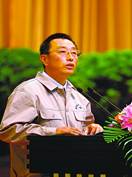
Chairman Mao once said: “It is not hard to do one good deed. It is hard to do good deeds all your life.” Guo Mingyi, 52, a worker in Anshan, Liaoning, did just that. Over the past 20 years, Guo has donated 60,000 milliliters(毫升) of blood. That is the blood of 10 people put together.
Once, on a cold winter of 2009, Guo got a call from the hospital. The doctors told him that a patient needed a blood donation. Guo didn’t have time to eat lunch. He travelled in the snow to get to the hospital. When he finished donating the blood, he was so tired that he fell asleep on the hospital bed.
Guo and his family live a simple life. He and his wife and daughter live in a house of only 40 square meters. They don’t have a lot of money, but Guo saves money to support poor children. In the past 16 years, he has donated over 100,000 yuan to more than 180 poor students. When the parents met him, many cried. “He looks poorer than us,” they said.
Guo has also offered hands to thousands of workers, friends and strangers. His warm heart has moved many people. They call him a “Modern-Day Lei Feng”.
Recently, Chinese leaders called on people to learn from Guo. They say young people especially should learn his selfless devotion(无私奉献).But Guo said he did these things in order not to get famous. “It’s just that some people need some help, and there should be someone standing out to give them a hand,” he said.
【小题1】When was Guo Mingyi born in Anshan, Liaoning?
| A.In 1940 | B.In 1950 | C.In 1960 | D.In 1970 |
| A.Because they are good friends. |
| B.Because he had no money to eat lunch. |
| C.Because he wanted to sleep in the hospital |
| D.Because he wanted to help the patient very much. |
| A.He is a common businessman. |
| B.He has a very rich family. |
| C.He wants to be famous a lot. |
| D.He devotes what he has to helping others |
| A.To learn from Gou Mingyi’s selfless devotion. |
| B.To donate blood to the people in need. |
| C.To raise money for poor students. |
| D.To remember Lei Feng. |
| A.Sports news | B.Health care | C.People | D.Nature |
湖北省互联网违法和不良信息举报平台 | 网上有害信息举报专区 | 电信诈骗举报专区 | 涉历史虚无主义有害信息举报专区 | 涉企侵权举报专区
违法和不良信息举报电话:027-86699610 举报邮箱:58377363@163.com