
题目列表(包括答案和解析)
We may know that there are four basic periods for human beings to pass through when you enter and live in another country. This process(变化过程) helps you deal with culture shock(文化冲击).
Culture shock begins with the "honeymoon period". This is the time when you first arrive in a place where everything about the new cu1ture is strange and exciting. You see new things, hear new sounds and language, eat new kinds of food. This period can last for quite a long time because you feel very happy.
Unluckily, the second period can be more difficu1t. After you have got used to your new life, you can become very tired and begin to miss your motherland, your family, your friends, your pets and so on. Al1 the little prob1ems in life seem to be much bigger and more worrying when you face them in a foreign country. This period can be very difficult and lead to moving backwards quickly.
The third period is called the "adjustment(调整) period". This is When you begin to realize that things are not so bad in the new country. Your sense of humor usually becomes stronger and you realize you are becoming stronger by 1earning to take care of yourself in the new place. Things are still difficult, but you are now a survivor(善于求生者).
The fourth period can be cal1ed "at ease at last". Now you feel quite comfortable in your new place. You can deal with most problems that you have. You may still have prob1ems with language,but you know you are strong enough to deal with them. At this time, you may feel a little uncomfortable if you go back to your motherland.
1.According to the passage, culture shock usually happens when you
A. get married to a foreigner B. live in a big city
C. go to live in a foreign country D. meet foreigners in your motherland
2.During the first period of the process, you feel
A. sad and lonely B. happy and excited
C. angry but strong D. easy but uncomfortable
3.You will find that you are a survivor in
A. the lst period B. the 2nd period
C. the 3rd period D. the 4th period
4.The fourth period can be regarded as a period of being
A. relaxing B. worrying C. tiring D. adjustable
5.We can conclude(lgth$it) from the passage that
A. Living in another country is fun
B. it's boring to live in another country
C. knowing about culture shock is hard
D. it's not easy to dea1 with culture shock
| Paul和Jenny正在制作课程表,请阅读下面的对话,完成文后的表格。 Paul: We must give each subject enough (足够的) periods (课时). Our English lessons are really interesting. I'd like to have them every day. So what about having an English lesson on Tuesday, the first period? Jenny: OK. My favourite subject is math. I'd like to have two periods after the recess (课间休息) on Monday. Paul: What about those boring social subjects? We'd better not have two periods of them. Jenny: Well. Put geography (地理) on Monday, the third period; history (历史) on Wednesday, the fifth period; biology (生物) on Thursday, the period before lunch and P.E. on Friday, the period before the recess. Paul: Oh, I forget the Chinese lessons. Can we put them before recess on Tuesday? Jenny: OK. The science (科学) lesson should be on Friday before lunch. Is everything done?
| ||||||||||||||||||||||||||||||||||||||||||||||||
People can find jobs in many ways. Sometimes you can find a job easily, by walking into a local store and looking at its notice board(布告栏). Local stores often have areas for people to put small signs telling the services that they need or they can provide. Such services include looking after children or cleaning houses.
Another popular tool for finding a job is the Internet. For example, people around the world can
use the Craigslist Web site to buy things, meet people or find a job. It is said that the site can receive two million new jobs each month.
Another useful way to find a job is through a university. For example, students at the University
of Texas can go to the job center to get help. Many college students like this way better.
At times, some experts(专业人士)can also help people find a job. Susan Miller has her own company called California Job Services in Los Angeles. She says her company helps people find a job by first helping them understand their strengths, goals and interests. Then she provides them with methods to help them find the right job. So with her help, many people have succeeded in finding a good job.
1On the Craigslist Web site, you can't________ .
A. find a job B.meet people C. sell your old things D. do some shopping online
2According to the passage, college students prefer to find jobs by _________
A.visiting the Internet B. asking experts for help
C. looking at the notice board D. going to a job center in the university
3The underlined word "strengths" in the last paragraph means_________ .
A. 长处 B. 强度 C. 力量 D.人数
4 Which of the following statements is TRUE.?
A. Local stores have few areas for people to put signs
B. You can only get one service on the notice board
C. The Craigslist Web site can get two million new jobs each week
D. Susan Miller has helped many people find a good job successfully
5 The main idea of this passage is about________ .
A. how to find experts B. ways of finding a job
C. how to study and work D. ways of setting up a job center
We may know that there are four basic periods for human beings to pass through when you enter and live in another country. This process(变化过程) helps you deal with culture shock(文化冲击).
Culture shock begins with the "honeymoon period". This is the time when you first arrive in a place where everything about the new cu1ture is strange and exciting. You see new things, hear new sounds and language, eat new kinds of food. This period can last for quite a long time because you feel very happy.
Unluckily, the second period can be more difficu1t. After you have got used to your new life, you can become very tired and begin to miss your motherland, your family, your friends, your pets and so on. Al1 the little prob1ems in life seem to be much bigger and more worrying when you face them in a foreign country. This period can be very difficult and lead to moving backwards quickly.
The third period is called the "adjustment(调整) period". This is When you begin to realize that things are not so bad in the new country. Your sense of humor usually becomes stronger and you realize you are becoming stronger by 1earning to take care of yourself in the new place. Things are still difficult, but you are now a survivor(善于求生者).
The fourth period can be cal1ed "at ease at last". Now you feel quite comfortable in your new place. You can deal with most problems that you have. You may still have prob1ems with language,but you know you are strong enough to deal with them. At this time, you may feel a little uncomfortable if you go back to your motherland.
6 According to the passage, culture shock usually happens when you
A. get married to a foreigner B. live in a big city
C. go to live in a foreign country D. meet foreigners in your motherland
7 During the first period of the process, you feel
A. sad and lonely B. happy and excited
C. angry but strong D. easy but uncomfortable
8 You will find that you are a survivor in
A. the lst period B. the 2nd period C. the 3rd period D. the 4th period
9 The fourth period ean be regarded as a period of being
A. relaxing B. worrying C. tiring D. adjustable
10 We can conclude(lgth$it) from the passage that
A. Living in another country is fun
B. it's boring to live in another country
C. knowing about culture shock is hard
D. it's not easy to dea1 withculturshock
BEIJING---No Car Day was first started by 34 cities in France on September22, 1998. It was started to protect the environment. By now, more than 1,000 cities around the world have had a No Car Day.
The first No Car Day in China was in Chengdu in 2001. Other cities, including Taipei, Shanghai and Wuhan, also support( 支持) the day.
In Beijing, more and more people are joining in the activity. It asks drivers to leave their cars at home for one day each month and walk or ride a bike to work. It also calls on Beijingers not to use cars on June 5 ( World Environment Day ).The slogan for the day is, “ If we drive for one less day, we can have one more nice day.”
So far more than 200,000 drivers have shown their support “ We can’t control the weather, but we can choose not to drive,” said Wu Zonghua, a car club chairman. Beijing is trying to have 238 blue sky days this year. In the first quarter of this year, Beijing only had 52 blue sky days. This was 11 days less than the number for the same period last year. Much of the dust( 灰尘 ) comes from the desert(沙漠), but cars cause most of the air pollution.(污染). We must do more for No Car Day.
1.There are cities in China that support No Car Day according to the passage.
|
A.three |
B. four |
C. five |
D.six |
2.The activity of No Car Day encourages Beijing drivers .
|
A.not to work on No Car Day |
|
B.to enjoy having a day off |
|
C.leave their cars at home for repair |
|
D.to ride a bike or walk instead of driving to work |
3.We can know from the passage that .
|
A.more and more people in Beijing are joining car clubs |
|
B.people will have one more World Environment Day each month |
|
C.more and more people won’t drive on No Car Day in Beijing |
|
D.more people in the world won’t drive any more |
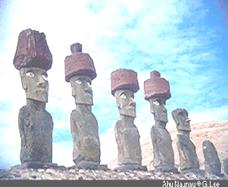
| A.the discovery of Easter Island | B.the statues on Easter Island |
| C.the history of Easter Islanders | D.the earliest population on Easter Island |
| A.c-d-a-b | B.d-b-a-c | C.a-c-b-d | D.d-a-b-c |
| A.Easter Island is the most distant island in the world |
| B.Easter is the name of a holiday |
| C.not all the statues were placed in a line |
| D.the island was once rich in natural resources |
| A.mysterious | B.lost |
| C.unknown to the world | D.with no people living there |
湖北省互联网违法和不良信息举报平台 | 网上有害信息举报专区 | 电信诈骗举报专区 | 涉历史虚无主义有害信息举报专区 | 涉企侵权举报专区
违法和不良信息举报电话:027-86699610 举报邮箱:58377363@163.com