
题目列表(包括答案和解析)
A year ago,I paid no attention to English idioms (习语), though my teacher told us the importance again and again. But soon, the importance of English idioms was shown in an amusing experience.
One day, I happened to meet an Englishman on the road, and soon we began to talk. As I was talking about how I was studying English, the foreigner seemed to be surprised. Gently shaking his head,shrugging his shoulders, he said,“You don’t say!” “You don’t say!” I was puzzled. I thought , perhaps this is not a right topic. “Well, I’d better change the topic.” So I said to him. “Well, shall we talk about the Great Wall? By the way, have you ever been there?” “Certainly, everyone back home will laugh at me if I leave China without seeing it. It was wonderful.” He was deep in thought when I began to talk like a tourist guide. “The Great Wall is one of the wonders in the world. We are very proud of it.” Soon I was interrupted (打断) again by his words: “You don’t say!” I couldn’t help asking, “Why do you ask me not to talk about it?” “Well, I didn’t ask you to do so,” he answered, greatly surprised. I said, “Didn’t you say ‘you don’t say’?” Hearing this, the Englishman laughed to tears. He began to explain, “ ‘You don’t say’ actually means ‘really!’ It is an expression of surprise. Perhaps you don’t pay attention to English idioms.” I realized I had made a fool of myself. Since then I have been more careful with idiomatic expressions. Remember: what the English teachers said is always right to us students.
1.A year ago, I paid no attention to English idioms because .
A.I had no interest in them
B.English idioms were very difficult
C.I did not realize the importance of them
D.my teacher didn’t tell us the importance of them
2.At first, on hearing “You don’t say,” I thought the foreigner meant .
A.I had talked too much
B.I had to stop talking
C.he was not interested in the topic
D.he was only interested in the Great Wall
3.“… was shown in an amusing experience.” The word “amusing” probably means .
A.interesting B.important C.terrible D.unlucky
4.Which of the following is TRUE according to the passage?
A.The Englishman wanted me to act as his guide.
B.The Englishman left China without seeing the Great Wall.
C.The Englishman wanted to see the Great Wall after I talked about it.
D.The Englishman visited the Great Wall and thought it worth visiting.
5.After the Englishman explained the idiom, ___________.
A.I felt very silly
B.the Englishman became a real fool
C.I became more carefully in everything
D.I thought the Englishman had made me a fool
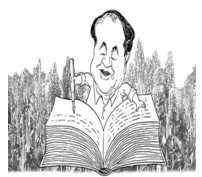
Born into a farmer’s family, life was not easy when I was a kid. We were so poor that we often did not know where our next meal was coming from. I had to sell cabbages at the marketplace to support my family.
A storyteller once came to the marketplace, and I went to listen to him. My mother was unhappy with me for forgetting my job. But that night, while she was making clothes for us under the weak light of an oil lamp, I couldn't help retelling stories I'd heard that day. She listened impatiently at first, since in her eyes professional(职业的) storytellers were smooth-talking men—nothing good ever came out of their mouths. But slowly she was attracted by my retold stories, and from that day on, she never gave me any task on market days, unspoken agreement to enjoy new stories. As a repayment(回报)for Mother's kindness and a way to show off my memory, I'd retell the stories for her in lively detail. Soon, she wasn't the only member of my audience, which later included my elder sisters, my aunts, even my stubborn grandmother.
I knew she was worried about me. Talkative kids are not well thought of in our village, for they can bring trouble to themselves and to their families when they talk too much. Mother often reminded me not to talk so much, wanting me to be a silent and modest teenager. However, my natural desire(渴望)to talk never went away, and that is what makes my name – Mo Yan, which means ‘no speaking’. This strong wish to talk also improved my ability to express myself, which is important for writers who are also considered as storytellers.
【小题1】Mo Yan lived a/an ________ life when he was young.
| A.hard | B.colourful | C.easy | D.rich |
| A.little Mo Yan was interested in selling vegetables |
| B.his mother was attracted by the retold story at first |
| C.his mother didn’t let him listen to the new stories again |
| D.little Mo Yan had quite a good memory |
| A.Because she thought they never said anything good. |
| B.Because she thought they couldn’t make much money. |
| C.Because she thought they would affect Mo Yan’s schoolwork. |
| D.Because she thought most people didn’t like listening to stories. |
| A.silent | B.modest | C.talkative | D.trouble-making |
| A.My Unlucky Childhood | B.A Storyteller’s Childhood |
| C.My Kind Grandmother | D.More talking leads to success |
在下列各句的空格内填上一个适当的完整的单词,该词的首字母已给出。
1. Tony is really p______. He keeps waiting outside the house for almost three hours.
2. The f________ stood on the board, laughing happily, because they caught lots of fish this time.
3. When I heard of my grandma’s d________, I couldn’t help crying.
4.Parents hope their children can do best in the class, so they usually e_______ too much of
their children.
5. There is nothing in the box. It’s e______.
| 【小题1】 |
|
| 【小题2】 |
|
| 【小题3】 |
|
| 【小题4】 |
|
| 【小题5】 |
|
| 【小题6】 |
|
| 【小题8】 |
|
| 【小题9】 |
|
| 【小题10】 |
|
| 【小题11】 |
|
| 【小题12】 |
|
A year ago,I paid no attention to English idioms (习语), though my teacher told us the importance again and again. But soon, the importance of English idioms was shown in an amusing experience.
One day, I happened to meet an Englishman on the road, and soon we began to talk. As I was talking about how I was studying English, the foreigner seemed to be surprised. Gently shaking his head,shrugging his shoulders, he said,“You don’t say!” “You don’t say!” I was puzzled. I thought , perhaps this is not a right topic. “Well, I’d better change the topic.” So I said to him. “Well, shall we talk about the Great Wall? By the way, have you ever been there?” “Certainly, everyone back home will laugh at me if I leave China without seeing it. It was wonderful.” He was deep in thought when I began to talk like a tourist guide. “The Great Wall is one of the wonders in the world. We are very proud of it.” Soon I was interrupted (打断) again by his words: “You don’t say!” I couldn’t help asking, “Why do you ask me not to talk about it?” “Well, I didn’t ask you to do so,” he answered, greatly surprised. I said, “Didn’t you say ‘you don’t say’?” Hearing this, the Englishman laughed to tears. He began to explain, “ ‘You don’t say’ actually means ‘really!’ It is an expression of surprise. Perhaps you don’t pay attention to English idioms.” I realized I had made a fool of myself. Since then I have been more careful with idiomatic expressions. Remember: what the English teachers said is always right to us students.
【小题1】A year ago, I paid no attention to English idioms because .
| A.I had no interest in them |
| B.English idioms were very difficult |
| C.I did not realize the importance of them |
| D.my teacher didn’t tell us the importance of them |
| A.I had talked too much |
| B.I had to stop talking |
| C.he was not interested in the topic |
| D.he was only interested in the Great Wall |
| A.interesting | B.important | C.terrible | D.unlucky |
| A.The Englishman wanted me to act as his guide. |
| B.The Englishman left China without seeing the Great Wall. |
| C.The Englishman wanted to see the Great Wall after I talked about it. |
| D.The Englishman visited the Great Wall and thought it worth visiting. |
| A.I felt very silly |
| B.the Englishman became a real fool |
| C.I became more carefully in everything |
| D.I thought the Englishman had made me a fool |
湖北省互联网违法和不良信息举报平台 | 网上有害信息举报专区 | 电信诈骗举报专区 | 涉历史虚无主义有害信息举报专区 | 涉企侵权举报专区
违法和不良信息举报电话:027-86699610 举报邮箱:58377363@163.com