
题目列表(包括答案和解析)
听力理解
第一节:根据你所听到的内容结合所给图片,从A、B、C三个选项中选择能准确回答所给问题的选项。每个小题读两遍。现在你有20秒钟时间浏览每个问题和图片。
1.What's the lovely cat doing?
A.
B.
C.
2.What instrument has she been practicing for many years?
A.
B.
C.
3.How does your father usually go from Shanghai to Beijing?
A.
B.
C.
4.What's her favorite fruit after supper?
A.
B.
C.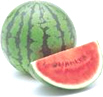
5.When does he get home?
A.
B.
C.
第二节:情景反应:听下面5个情景句子,从A、B、C三个选项中选择一个恰当的应答语。每个句子读两遍。现在你有20秒钟时间浏览各个选项。
6.A.No, you may not.
B.Yes, you can.
C.Glad to meet you, Miss Smith.My name is Jim Green.
7.A.I'm sorry, I don't know.
B.How do you do?
C.Just fine.Thanks.
8.A.The post office? Sorry, I'm not sure.
B.It doesn't matter.
C.That's all right.
9.A.No, I won't.
B.Yes, with pleasure.
C.It's very kind of you.
10.A.I'd like to have a glass of tomato juice, please.
B.I'm terribly sorry.
C.I am a stranger here.
第三节:听下面5段小对话和问题,根据你所听到的内容,从所给的A、B、C三个选项中选出一个能恰当回答所提问题的选项。每段对话读两遍。现在你有20秒钟的时间浏览各个选项。
11.A.At two o'clock.
B.At eleven o'clock.
C.At nine o'clock.
12.A.She went to bed late last night.
B.She didn't go home.
C.She didn't sleep last night.
13.A.He goes for a walk.
B.He plays tennis.
C.He watches TV.
14.A.It will leave at ten.
B.It will leave at eleven.
C.It will leave at twenty to twelve.
15.A.Because she will not go to school tomorrow.
B.Because the man is smiling.
C.Because she wants to make the man smile.
第四节:听下面一段短文,根据其内容及所给问题现在正确答案,短文读两遍。现在你有20秒钟的时间浏览各个选项。
16.What did Mr.and Mrs.Jones do last Saturday?
A.They drove a car.
B.They stayed at home.
C.They went to a film.
17.Did Mr.and Mrs.Jones have a good time there?
A.No, they didn't.
B.Yes, they did.
C.They seldom had.
18.When did they come out of the cinema?
A.At 10 o'clock.
B.At 11 o'clock.
C.At 12 o'clock.
19.How did Mr.and Mrs.Jones go home after the film?
A.They went home on foot.
B.They went home in their car.
C.They went home by bus.
20.Why did Mr.and Mrs.Jones ask the woman if she needed help?
A.Because he thought she was in trouble.
B.Because he saw she was tired.
C.Because it was quite dark.
21.Who usually washes the dishes?
A.The one who is faster.
B.The one who gets home later.
C.The one who is stronger.
第五节:听下面一段短文。根据所听内容的先后顺序,对下面几句话排列顺序。听短文前,你有时间阅读各个小题,每个题5秒钟;听完后,各小题将给出5秒钟的作答时间。该段短文读两遍。
A.I passed all the exams.
B.I fell down and hurt my legs badly.
C.I will do my best to give my love to others.
D.My classmates helped me a lot.
22.________
23.________
24.________
25.________
阅读理解:
Bill is now in China with his parents. He goes to a Chinese school
near here. He gets up at six o'clock and then he washes his face, brushes his teeth and has his breakfast quickly. After that he goes to school. He gets to school at a quarter past eight on weekdays. He never gets to school late. In class he works hard and listens to the teacher carefully. He is very good at all his lessons but Chinese. He's a beginner of it. He finds it a bit difficult to learn Chinese. He says,“ it's not easy to learn Chinese. And it takes time. But I like it. ”He can speak quite a little Chinese now.
Bill does not go home for lunch. He has it at school. After lunch he has a short rest. The classes in the afternoon are over at about four o'clock. Bill does not go home before five. He enjoys sport. He usually plays football with us after school. After that he goes home. He gets home at about half past five.
He sometimes helps his parents do some housework before supper. After supper. he does his lessons for an hour. Sometimes he watches TV,but he does not watch TV for long. He goes to bed at about a quarter to nine at night.
At weekends he turns on his computer. He sends and gets e-mails to and from his friends hack in England. He also gets on the Interact(因特网)to learn about what is going on in the world. He says that the Internet can bring him the world news very quickly. Sometimes his parents take him to some places of great interest in China. He likes going out. Sometimes I ask him to come over to my home for a weekend. Myparents say they cannot understand what we talk about because there are two languages in our talks, Chinese and English. My mother sometimes says to him,“ Bill, can you talk to my son in Chinese only?” He smiles and answers, “Not today. I'm going to speak good Chinese very soon ,I think. ”He is not very good at Chinese and I am not very good at English, you know. But we like these talks because we can learn While talking.
At home he is a good boy, and at school he is a good student. And he is my good friend both in and out of school!

(1) What does the writer of the passage tell us?
[ ]
A. Bill's school life in China.
B. Bill's after-school time.
C. Bill's life in China.
D. Bill's hobbies and school work.
(2) How long is Bill at school on weekdays?
[ ]
A. He is at school for more than eight hours.
B. He is at school for about seven hours.
C. He is at school for less than seven hours.
D. He does not go to school on weekdays.
(3) What does he do after school?
[ ]
A. He has sport with his classmates.
B. He goes to one of his friends' homes.
C. He begins to learn Chinese.
D. He has a short rest.
(4)Which country does Bill come from?
A. He comes from Canada.
B. He comes from Australia.
C. He comes from the USA.
D. He comes from England.
(5)What do you know about his weekends?
A. He sometimes goes to see his friends back home.
B. He sometimes gets on line to read the world news.
C. He sometimes takes his parents out to see the cities in China.
D. He sometimes practise speaking Chinese with his teachers and friends.
(6) What do you know of Bill's Chinese now ?
A. He is very good at his Chinese lessons now.
B. He is only beginning to learn it and can speak a little of it.
C. He finds it hard to learn Chinese and dislikes it.
D. He can talk to his Chinese friends in Chinese without speaking any English.
(7) What do you know of the writer from this passage?
A. The writer of this passage is a Chinese teacher.
B. She is good at English.
C. He is Bill's good friend.
D. The writer can send and get e-mails to and from Bill's foreign friends.


1从所给句子中选择恰当的句子完成下列对话。(有两句多余)
A: Hello, Nick! 1.__________________
B: Hello, Tony. I'm going to school.
A: Is the school near your home or far from?
B: It's near.
A: Then how do you go to school, by bike or by bus?
B: 2. ____________ Sometimes I'm late, and then I go to school by bus.
A: What time do the classes begin?
B: At eight o'clock.
A: Are the classes over in the middle of the day?
B: No, they aren't. 3._______________
A: Do you often play basketball or football after school?
B: I don't like playing them. I like swimming.
A: 4. ________________
B: I do my homework. After that I watch TV until half past nine. 5.___________
A: I nearly do the same things every evening.
|
A. What about you? B. Let's go to school. C. Where're you going? D. I go to school on foot. E. Yes, I sometimes go to school by bike. F. They are over at 4:30 in the afternoon. G. What do you usually do in the evening? |
| A. What about you? B. Let’s go to school. C. Where’re you going? D. I go to school on foot. E. Yes, I sometimes go to school by bike. F. They are over at 4:30 in the afternoon. G. What do you usually do in the evening? |
湖北省互联网违法和不良信息举报平台 | 网上有害信息举报专区 | 电信诈骗举报专区 | 涉历史虚无主义有害信息举报专区 | 涉企侵权举报专区
违法和不良信息举报电话:027-86699610 举报邮箱:58377363@163.com