
Step Ⅰ Key Vocabulary This activity introduces the key vocabulary words. Show the following vocabulary on the screen by a projector. Wedding n.婚礼,结婚 anniversary n.周年纪念,周年纪念日 co-worker n.同事,合作者 let’s say比如说 orange adj.&n.橙黄色 vase n.花瓶 host n.主人,房东 hostess n.女主人,女房东 ahead adj & adv.在前,向前,提前 ahead of time提早 arrange v.整理,布置,排列 feminine adj.女性的,女子气的 consider v.考虑,细想 proper adj.适宜的,合适的 acceptable adj.可接受的,合意的 tradition n.传统,惯例 cheaply adv.廉价地,便宜地 voucher n.票券,收据,凭单 embarrass v.使窘迫,使尴尬 breaker n.打破者,破坏者 container n.容器 quality n.品质,品德 Read the words and have students repeat them again and again until they can pronounce them fluently and accurately. Step Ⅱ Part 1 This activity allows students to activate their background knowledge before attempting the reading. Look at the picture. Ask, What’s happening in the picture? Let students describe the picture. Read the title The art of giving aloud. Get the students to predict what they think the article is about, based on the title and the picture. Get students to finish Task 1. But don’t look at the reading text. Instead, they use their background knowledge to try to answer the questions. As students work, move around, looking at their progress. When most students complete the task, get students to answer the questions with a parter. Elicit answers from the students. Ask if other students have the same or different answers. Do not give the correct answers to the students at this point. Wait until students have finished the reading and let them revise their answers accordingly. Answers will vary. Step Ⅲ Part 2 This activity encourages students to read for the main idea. Read the instructions aloud to the class. Get students into groups of four. Let them read th4 text quickly, then each group summarizes one paragraph in their own words. As they are doing this, go around the classroom to make sure they discuss the questions in English. Invite four students to report their answers. Sample answers Paragraph 1 Giving and receiving gifts isn’t easy. Paragraph 2 Some gifts, such as flowers and plants, are usually welcome. Paragraph 3 Giving money may be a good gift but may have problems. Paragraph 4 Follow a host’s suggestion or you may be rude. Notes1. feminine-of, like, suitable for, women 查看更多


题目列表(包括答案和解析)

Shaking It Off
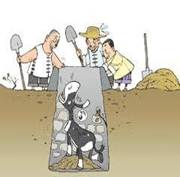
One day, a farmer’s donkey fell into a dry well(井). The poor animal cried for hours before his       finally found him. The farmer tried hard to pull him out from the well but failed. He felt       for the donkey but after carefully thinking about the situation, he       that he would save neither the donkey nor the well. Since the donkey was too       and it was not worth(值得) the trouble of saving. So he invited his neighbors to help him bury(埋葬) the old donkey in the __    so that it would make him end his pain.

      many people coming to help, the old donkey was excited at first. As they began to scoop the dirt into the well with shovels(铲子), he soon       what was happening. He felt upset and cried sadly again. As the farmer and his neighbors continued throwing the dirt on his      , he suddenly had a good idea. Some time later, when the farmer finally looked down into the well, he was surprised at what he saw:      the dirt landed on his back, he would shake it off and take a step up!

Soon, everyone was amazed when the donkey stepped       over the edge of the well and ran away quickly! It seemed that it would       him at first, but it actually helped him later because of the manner in which he faced his adversity(逆境).

That is life! Just like the donkey, life is going to throw dirt on us, all kinds of dirt.      we face our problems in an active way, and refuse to       to any trouble, each dirt is like a stepping stone with which we get out of the deepest wells. This is a key       one of the secrets of life.      stop and never give up. Success is just in its way.

1.A. neighbor                 B. owner                                C. relative                   D. kid

2.A. sorry                    B. lucky                                 C. dangerous                      D. worried

3.A. complained                  B. decided                            C. agreed                         D. meant

4.A. strong                           B. tall                                     C. old                                     D. poor

5.A. water                            B. hole                                  C. well                               D. house

6.A. Heard                            B. Hearing                            C. To hear                    D. Hears

7.A. realized                        B. remembered                  C. discovered                  D. found

8.A. leg                            B. stomach                   C. tail                                     D. back

9.A. any time                  B. every time                        C. one time                          D. some time

10.A. angrily                        B. heavily           C. proudly                    D. sadly

11.A. save                            B. bother                              C. fill                             D. bury

12.A. as soon as                  B. as long as                         C. as far as                            D. as well as

13.A. give up                       B. give out                            C. give in                               D. give off

14.A. to                                 B. of                             C. on                                      D. from

15.A. Always                        B. Never                          C. Sometimes                        D. Hardly


查看答案和解析>>

阅读理解。
     I love to write! Ever since I was a five-year-old girl, I wrote stories in my notebooks and on small pieces
of paper. I told stories to my friends. As a grown-up, I have written over 100 books! That's a lot! As a teacher,
it's my goal to encourage all of my students to love to write.
     Writing is easy if you're careful enough, I told them. Everyone I meet is a possible character.
     Everything I see or do is a possible scene in a book. Start looking around you. You'll be amazed at what
you discover.
     Anyone can be a writer. You just put your pencil on your paper and write what you like to read,
 step by step:   
    ● Create great characters. If you know your characters well, they'll write the story for you. 
    ● Interest the reader right at the beginning. You can start your stories with dialogue or action. If you can
make the reader ask questions, then he has to keep reading to find out the answers. 
    ● Follow the steps. The steps for every story are almost the same: Introduce the characters and the
conflict (争端); things get worse; all seems lost; the hero saves the day!
    ● Balance is the key. Remember, when writing, it doesn't hurt to add some humor (幽默).
1. What did the writer begin to do when she was five years old?
    ___________________________________________________________________
2. What's the writer's goal as a teacher?
    ___________________________________________________________________
3. How many steps are mentioned about writing according to this passage?
    ___________________________________________________________________
4. Does the writer think it hurts to add some humor when writing?
    ___________________________________________________________________
5. What does the passage mainly talk about? 
    ___________________________________________________________________

查看答案和解析>>

阅读短文,根据其内容回答问题。

Self-images are our own mind’s pictures of ourselves. These images(意象)include the way we look, the way we act, the way we talk and the way we think. When we find that believing in ourselves is a bit hard, it is time we build positive(积极的)self-images and learn to have happy lives.

 Interestingly, our self-images are often quite different from the images others hold about us. Unluckily, most of these images are more negative(消极的)than they should be. Thus changing the way we think about ourselves is the key to change our self-images and our whole world.

The best way to destroy a passive(被动的)self-image is to step back and decide to pay attention to our successes. That is, make a list if we need to, but write down all of the great things we do every day. Don’t allow doubts to happen on us.

It very well might be that we are experiencing negative self-images because we can’t move past the weakness that we see about ourselves. Well, make a change of it as our primary tasks. If we think we’re silly because we aren’t good at math, find someone to help us. If we think we’re weak because we can’t run a mile, get more practice. But remember, what we think doesn’t mean it’s true.

The best way to get rid of a negative self-image is to realize that our images are far from the goals, and to actively make ourselves believe that we have positive personalities. Changing the way we think and working on those we need to improve will go a long way to create new positive self-images. When we can pat ourselves on the back, we’ll know we’re well on our way.

64. What are self-images?

65. When do we need to build positive self-images?

66. What’s the key to change our self-images?

67. How can we destroy passive self-images?

68. What does the writer mainly want to tell us?

查看答案和解析>>

 "Hi, Mommy, what are you doing?" asked Susie.

    "I'm making a cake for Mrs. Smith next door," said her mother.

    "Why?" asked Susie, who was only six years old.

    "Because Mrs. Smith is very sad; she  32   her daughter and she has a broken heart. We need to take care of her for a little while."

    "Why, Mommy?"

    "You see, Susie, when someone is very, very sad, they have trouble  33  the little things like making dinner. Because we're part of a community and Mrs. Smith is our neighbor, we need to do some things to help her. Mrs. Smith won't ever be able to talk with her daughter or hug her or do all those   34   things moms and daughters do together. You are a very smart girl, Susie, maybe you'll  think of some way to help take care of Mrs. Smith.”

    Susie thought   35   about it and how she could do her part in caring for Mrs. Smith. A few minutes later, Susie knocked on her door. After a few moments Mrs. Smith answered the knock with a "Hi, Susie."

    Susie noticed that Mrs. Smith didn't have that   36   musical quality about her voice when she greeted someone.

    "My mommy says that you lost your daughter and you're very, very sad with a broken heart.” Susie held her hand out shyly. In it was a Band - Aid(创可贴).“This is  37  your broken heart." Mrs. Smith  38  her tears. She knelt down and hugged Susie, saying "Thank you, darling girl, this will   39   a lot."

    Mrs. Smith accepted Susie's act of   40   and took it one step further. She bought a small key ring with a picture frame(相框).She put Susie's Band - Aid in the frame to  41  herself to heal (治疗)a little every time she saw it.

32. A. killed        B. beat        C. lost         D. missed

33. A. to make           B. to do       C. making     D. doing

34. A. wonderful   B. terrible      C. bad         D. harmful

35. A. highly       B. hardly    C. seriously  D. poorly

36. A. familiar    B. surprising C. strange    D. ordinary

37. A. of             B. for          C. in                  D. beyond

38. A. went back         B. put back    C. kept back D. held back

39. A. make        B. have        C. help        D. give

40. A. kindness    B. words           C. idea        D. medicine

41. A. warn        B. forgive    C. remind    D. make

查看答案和解析>>

阅读理解。
     Have you ever spoken or acted before the public? Have you got stage fright c怯场)? Many people
have such an experience but they feel differently about it.  Some are just a little nervous,  others become
dizzy (眩晕 WJ).  It's hard to tell why these feelings happen.  Anyway, stage fright is a common problem and you can overcome (克服) it. To overcome stage fright you need to do lots of work.  It takes time.  
But it will pay off in  . the end. The first step is facing the fact you have stage fright. Then what? Here are
somc steps toward a speaking success story.
     Soon you have to give a speech in class.  But you are worried about it.  What should you do?
      * Try practicing at home.  Then,  even if you become nervous, at least your opening sentences will
be right.
      * Before you go on stage,  try listening to relaxing music or breathing deeply.  This may help you
feel better.
      * Dress smartly.  This will give you confidence.
      * Once you are up on stage,  pick out the most friendly face in the audience.  Look into the person's
eyes from time to time and speak as if you are talking directly to that person.
        * Write down the key points of your speech on small cards.  But don't hold your notes in your
hand.  Put them on a table near you instead.
        * If you are trembling,  stand against a table or move your legs and move about a little.
根据短文内容 ,判断句正  (T)误  (F) .
(     ) 1. Many people have the experience of stage fright and they feel the same about it.
(     ) 2. It's very easy to overcome stage fright and it doesn't take a long time.
(     ) 3. Listening to relaxing music or breathing deeply before you go on stage may help  you feel better.
(     ) 4. When you are on stage, it's not right to look into any other person's eyes.
(     ) 5. Dressing smartly is also important to get a speaking success story.

查看答案和解析>>


同步练习册答案