
题目列表(包括答案和解析)
Invertors are always looking for ways to make our lives easier, greener and more fun. Take a look at 2010’s coolest inventions in science and technology. What in the world will inventors dream up next?
Robot Teachers
Some students in South Korea have a new language teacher: an English-teaching robot. The robot help students practice speaking English. South Korea needs about 30,000 foreigners to teach English. The robot teachers are helping to solve a shortage(短缺)English teachers. Could robots take the place of the human teachers one day?
A Touch Tablet (书写板)
Apple, creator of the iPhone and iPod, had another hit invention this year with iPad. The iPad is a touch-screen tablet computer. It gives users video, websites, books and games at their fingers. Apple sold 3 million iPads in the first 80 days on the market.
Up, Up and Away
It took him 30 years to develop it, and now Glen Martin’s is ready to take off. The Martin Jetpack (喷气动力背包), a personal flying machine, allows the users to fly 2.4 km into the air. Unfortunately, you can not fly for very long. The jetpack only holds the fuel(燃料) for about 30 minutes’ flight. It will sell for S 100,000. Field tests begin in 2011.
71.The robot teachers can ___________
A. train students to speak English B. help students learn Japanese and English C. take the place of the human English teachers now
72.The underlined word “ hit” means ______.
A.撞击 B. 妙语 C. 成功
73. Glen Martin spent ______on his flying machine.
A. a very short time B. quite a long time C. just a little money
74. Which invention can you use to fly in the air?
A. The iPad B. The robot C. The Martin Jetpack
75. The best title for this passage may be ________
A. Coolest Inventions of 2010
B. Most Useful Comouter of 2010
C. Greatest Discoveries of 2010
Last month, Junior 1 students from Beijing Chaoyang Foreign Language School took a special test. They took it by traveling.
The students went to Nanjing and Yangzhou for five days. Their teachers gave each student a list of questions to answer during the trip. The questions are also the students' mid-term test for history and geography. There were questions like: How long is the Beijing-Shanghai Railway? What were the six dynasties (朝代) that used Nanjing as their capital?
"I never had so much fun with an exam," said Gao Chenxiang,13. "We learned a lot by working this way."
The students learned much more than just the answers to the questions. They also visited the Nanjng Massacre Museum (南京大屠杀纪念馆).
"If 1 was learning only from a textbook, I wouldn′t have known how bad the Japanese invaders (侵略者) were," said Gao.
Students did not get to sleep on the train to Nanjing. Usually the kids would sleep on a train journey so long, but in this case they were all given seats.
"The seats are very uncomfortable," said DengLin,12. "I know most migrant workers (民工)travel this way. That must be so hard."
Students also learned to take care of themselves. They washed clothes and made their own beds.
"I learnt lots of useful life skills," said Wang Yiran,12. "1 never knew I could be so capable(能干的)."
1. All the questions given to the students are for mid-term test.
A. a foreign language B. history
C. geography D. history and geography
2. The students went to Nanjing .
A. by plane B. by bus C. by train D. by bike
3. The students didn′t fall asleep on the train because .
A. there was too much noise on the train B. they discussed the answers to the questions
C. some migrant workers kept talking with them
D. it was an unusual trip and the seats were uncomfortable
4. Which of the following is TRUE according to the passage?
A. The teachers didn't take the travel with their students,
B. it's the first time for the students to go to Nanjing and Yangzhou,
C. The students have learnt more by traveling than from textbooks.
D. Gao didn't know Nanjing Massacre until she visited the Museum.
5. The best title of this passage is .
A. A special Test B. An Interesting Travel
C. A Good Way to Relax D. How to Test Students
“I hate school, and I’m not going back!”Have you ever had that thought?
Lots of kids have had. Usually this feeling doesn’t last long. But what if you feel this way too much? If you are stressed out, you might have a hard time making decisions. In the morning, you can’t decide what to eat, what to wear, or what to take for lunch. Sometimes it’s a problem with your classes and schoolwork. Maybe the work is too easy and you get bored. Or maybe the work is too hard, or you don’t feel as clever as the other kids. Reading may be difficult for you, but you are asked to do a lot of it. You may be getting farther and farther behind, and it may seem that you will never catch up with others. When you know why you don’t like school, you can start taking steps to make things better
It’s a good idea to talk to someone about your problems at school. Your mom, dad, friends, teachers, or even classmates will be able to help you.
Another good idea is to write down your feeling about school. For instance, keep a diary or just write in a notebook. It’s a great way to let out emotion that may be stuck inside you. And you don’t have to share(分享)what you have written with others.
The next time you find yourself disliking school, this will also help you:
Make a list of everything you dislike or enjoy—even there is only one thing. See what you can change on “don’t like” list. Could you find a way to show off your special interests and talents on what you like? Which activities could you try that would help you solve these “don’t like” problems? Focus on what you can change and you might be able to put the good feeling back in school!
【小题1】This article mainly gives you some advice on .
| A.how to beat stress |
| B.what if you don’t like school |
| C.how to deal with the problems in studies |
| D.communications with your parents |
| A.Two. | B.Four. | C.Three. | D.Five. |
| A.most students hate school in a way |
| B.all the students have the same problems |
| C.making a list can solve all your problems |
| D.a diary is something personal |
| A.do something to change the condition |
| B.wait and see |
| C.have a positive attitude towards schoolwork |
| D.be friendly to others |
A new term has begun. Teachers are 1 about the fact that new students are not easy to deal with. They like to bring cell phones and MP3 players to school. What is worse, some students even use cell phones 2 out-of-class matters in class, or sometimes just for fun. Some 3 students listen to MP3 players when they are having a lesson that they are not interested in.
Are these new students really that ___4____? "Yes," says Delaney Kirk, a professor at Drake University. But she adds it's not their fault. 5 , the teachers should be blamed (责备). Mrs. Kirk first began thinking about students' manners six years ago. "I had my first Class in which students were sleeping or talking to each other. It seemed that learning well had nothing to do with them," she says. "At first, I got worried about this. But then I said to 6 ' You're giving lessons, and you need to manage this kind of situation. These students need to know more about manners. It's time to help them develop some good 7 They shouldn't waste time doing nothing when they are young. Sooner or later, they may regret the time they 8 '"
Mrs. Kirk also makes a list of suggestions to help teachers better manage their classes. The following are among her suggestions:
On the first day of class, tell students how they will benefit (受益) by taking the class and the importance 9 listening carefully in class.
Do not allow them to bring cell phones or MP3 players to the class at all.
Tell them how to use Cell phones or MP3 players 10
| 【小题1】 |
|
| 【小题2】 |
|
| 【小题3】 |
|
| 【小题4】 |
|
| 【小题5】 |
|
| 【小题6】 |
|
| 【小题7】 |
|
| 【小题8】 |
|
| 【小题9】 |
|
| 【小题10】 |
|
School uniforms are common in primary and secondary schools in many countries. Here’s a list of countries below.
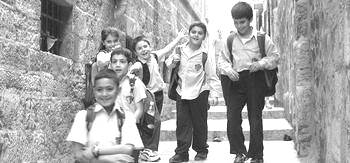 | In Brazil, students wear uniforms in private schools. But in public schools, students don’t have to wear uniforms although they might have one. In general, the uniforms are a pair of blue pants and a white T-shirt with the school symbol printed on it. |
 | School uniforms are used in Cuba. All students wear school uniforms with the color as a symbol of grade level. Children also wear scarves because they are young pioneers(少先队员). |
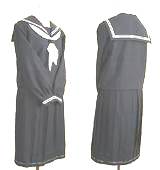 | Japan introduced school uniforms in the late 19th century. Today, school uniforms are very common. Many boys wear white shirts, short pants and caps. Girls’ uniforms might include a gray pleated (褶)skirt and a white blouse. |
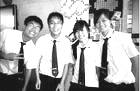 | In Singapore, all students must wear uniforms. Though the colors are different from school to school. The normal uniform for boys is shorts or long pants, with a shirt (often white), while girls wear white pinafores(连衣裙) or skirts. |
| A.On the pants | B.On the shoes | C.On the T-shirt | D.On the socks |
| A.grade level | B.cold weather | C.public school | D.young pioneer |
| A.a pair of blue pants and a white T-shirt |
| B.a gray skirt and a white blouse |
| C.a white shirt, short pants and a cap |
| D.a pinafore or a white skirt |
| A.School uniforms are the same as China’s. |
| B.Only the students in private schools wear uniforms. |
| C.Boys’ uniforms are different from girl’s in color. |
| D.Students usually wear white shirts or skirts. |
| A.Brazil | B.Cuba | C.Japan | D.Singapore |
湖北省互联网违法和不良信息举报平台 | 网上有害信息举报专区 | 电信诈骗举报专区 | 涉历史虚无主义有害信息举报专区 | 涉企侵权举报专区
违法和不良信息举报电话:027-86699610 举报邮箱:58377363@163.com