
题目列表(包括答案和解析)
My son Joey was born with club feet. The doctors said that with treatment he would be able to walk, but would never run very well. The first three years of his life was (16)____ in hospital. By the time he was six, you wouldn’t know he has a problem when you saw him (17)____.
Children in our neighborhood always ran around during their play, and Joey would jump and run and play, (18)_____. We never told him that he probably wouldn’t be able to run like the other children. So he didn’t know.
In his(19)_____ grade, he decided to join the school runnin g team. Every day he trained. He ran more than any of the others, (20) ____only the top seven runners would be chosen to run for the school. We didn’t tell him he probably would never make the team, so he didn’t know.
He ran four to five mile every day - even when he had a fever. I was (21) ____, so I went to look for him after school. I found him running (22) _____. I asked him how he felt. “Okay,” he said he had two more miles to go. Yet he looked straight ahead and kept (23) _____.
Two weeks later, the names of the team (24) _____ were caked. Joey was Number Six on the list. Joey had made the team. We never told him he couldn’t do it … so he didn’t know. He just took it. How (25) ____he was!
( ) 16. A. spent B. taken C. cost D. paid
( ) 17 A. talk B. sit C. study D. walk
( )18 A. either B. too C. though D. yet
( )19. A. six B. seven C. eighth D. nineth
( )20. A. so B. if C. then D. because
( )21. A. excited B. tired C. pleased D. worried
( )22. A. alone B. away C. almost D. already
( )23. A. riding B. walking C. playing D. running
( )24. A. jumpers B. runners C. doctors D. teachers
( )25.A.good .B. lucky C. clever D. well
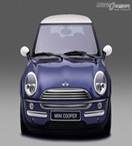
In Britain you’re allowed to drive a car when you’re seventeen. You have to get a special two-year driving license before you can start. When you’re learning, someone with a full license always has to be in the car with you because you aren’t allowed to drive the car on the road alone. You don’t have to go to a driving school --- a friend can teach you. The person with you isn’t allowed to take money for the lesson unless he’s got a teacher’s license.
Before you’re allowed to have a full license, you have to take a driving test. You can take a test in your own car, but it has to be fit for the road. In the test you have to drive round for about half an hour and then answer a few questions. If you don’t pass the test, you’re allowed to take it again a few weeks later if you want to. In 1970 a woman passed her fortieth test after 212 driving lessons! When you’ve passed your test, you don’t have to take it again, and you’re allowed to go on driving as long as you like. Britain’s oldest driver was a man who drove in 1974 at the age of 100.
Before 1904 everyone was allowed to drive, even children. Then from 1904 car drivers had to have a license. But they didn’t have to take a test until 1935. On the early days of car driving, before 1878, cars weren’t allowed to go faster than four miles an hour, and someone had to lead the car with a red flag.
【小题1】A person can’t take money for driving lessons unless he __________.
| A.has learnt to drive in a driving school |
| B.has a full driving license |
| C.has a full license and a teacher’s license |
| D.is given a special two-year driving license |
| A.mustn’t drive his car, even though the car is fit for the road |
| B.is usually asked to drive on roads for some time |
| C.has to be examined only in car driving skills |
| D.must drive around for more than an hour |
| A.a few years later |
| B.right after the first test |
| C.a few weeks later |
| D.never |
| A.There is no limit (限制)to the age of an old man who drives a car. |
| B.One can take a driving test again and again until he passes it. |
| C.There was a speed limit to cars before 1878. |
| D.A car driver didn’t have to get a limit license until 1935. |
| A.Driving Licenses in Britain |
| B.Tests for Britain People |
| C.Driving Cars |
| D.Young Men’s Driving Licenses |
Jeff Keith has only one leg. When he was only twelve years old, Jeff had cancer. Doctors had to 16 off most of his right leg.
17 Jeff puts on an artificial leg(假肢). The leg is plastic. With the plastic leg, Jeff can ski, ride a bicycle, swim, and play soccer. He can also run.
Jeff made a plan with his friends who had plastic legs, 18 . They decided to 19 across America. They all wore special T-shirts. 20 it was “Run, Jeff, Run, Jeff Keith’s Run Across America”.
Jeff Keith ran across the United States from the east to the west 21 he was twenty-two years old. He started running in Boston(波士顿). Seven 22 later, he stopped 23 in Los Angeles(洛杉矶). He ran 3,200 miles (1 mile = 1.6093km). Jeff wore out thirty-six pairs 24 running shoes and five plastic legs. Jeff 25 in cities on the way to Los Angeles. In every city people gave Jeff money. The money was not for Jeff, 26 for the American Cancer Society. The Society used the money to help people know 27 about cancer.
On the way to Los Angeles, Jeff talked to people about 28 . Jeff is disabled, but he can do many things. He finished college and is studying to be a lawyer(律师). Jeff says, “People can do 29 they want to do. I want people to know that. I ran 30 for disabled people. I ran for everybody.”
1.A. take B. cut C. put D. set
2. A. Every day B. One day C. Some day D. A day
3. A. also B. too C. either D. neither
4.A. walk B. fly C. swim D. run
5. A. On B. In C. With D. Above
6.A. while B. because C. when D. if
7. A. months B. days C. hours D. minutes
8.A. running B. to run C. walking D. to walk
9.A. at B. for C. in D. of
10.A. reached B. studied C. stopped D. started
11. A. and B. but C. or D. so
12.A. more B. less C. fewer D. little
13.A. cancer B. walk C. society D. America
14.A. any B. thing C. nothing D. anything
15. A. not only B. not C. only D. just
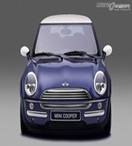
In Britain you’re allowed to drive a car when you’re seventeen. You have to get a special two-year driving license before you can start. When you’re learning, someone with a full license always has to be in the car with you because you aren’t allowed to drive the car on the road alone. You don’t have to go to a driving school --- a friend can teach you. The person with you isn’t allowed to take money for the lesson unless he’s got a teacher’s license.
Before you’re allowed to have a full license, you have to take a driving test. You can take a test in your own car, but it has to be fit for the road. In the test you have to drive round for about half an hour and then answer a few questions. If you don’t pass the test, you’re allowed to take it again a few weeks later if you want to. In 1970 a woman passed her fortieth test after 212 driving lessons! When you’ve passed your test, you don’t have to take it again, and you’re allowed to go on driving as long as you like. Britain’s oldest driver was a man who drove in 1974 at the age of 100.
Before 1904 everyone was allowed to drive, even children. Then from 1904 car drivers had to have a license. But they didn’t have to take a test until 1935. On the early days of car driving, before 1878, cars weren’t allowed to go faster than four miles an hour, and someone had to lead the car with a red flag.
1.A person can’t take money for driving lessons unless he __________.
A. has learnt to drive in a driving school
B. has a full driving license
C. has a full license and a teacher’s license
D. is given a special two-year driving license
2.In the driving test, one _______________________.
A. mustn’t drive his car, even though the car is fit for the road
B. is usually asked to drive on roads for some time
C. has to be examined only in car driving skills
D. must drive around for more than an hour
3.When can I take the driving test again if I don’t pass it?
A. a few years later
B. right after the first test
C. a few weeks later
D. never
4.Which of the following is NOT true?
A. There is no limit (限制)to the age of an old man who drives a car.
B. One can take a driving test again and again until he passes it.
C. There was a speed limit to cars before 1878.
D. A car driver didn’t have to get a limit license until 1935.
5.The best title for the passage is _____________.
A. Driving Licenses in Britain
B. Tests for Britain People
C. Driving Cars
D. Young Men’s Driving Licenses
湖北省互联网违法和不良信息举报平台 | 网上有害信息举报专区 | 电信诈骗举报专区 | 涉历史虚无主义有害信息举报专区 | 涉企侵权举报专区
违法和不良信息举报电话:027-86699610 举报邮箱:58377363@163.com