
题目列表(包括答案和解析)
A 10-year-old boy decided to study judo (柔道), although he had lost his left arm in a car accident.
The boy began lessons with an old Japanese judo teacher, Mr. Tanaka. The boy was doing well, but his teacher had taught him only one move in three months of training.
“Mr. Tanaka,” the boy finally asked, “shouldn’t I be learning more moves?”
“This is the only move you know, but this is the only move you’ll ever need to know,” his teacher replied.
Several months later, Mr. Tanaka took the boy to his first tournament (锦标赛). The boy won his first three matches, using his one move to win. The boy was now in the finals, and was amazed by his own success.
This time, his opponent (对手) was bigger, stronger, and more experienced. The referee (裁判) wanted to stop the match.
“No,” the
teacher insisted, “let him continue.” Soon, his opponent lowered his guard. At
that moment the boy used his move to pin (钉住) him. The
boy won the match an d
became the champion.
d
became the champion.
On the way home, the boy and his teacher reviewed every match. Then the boy asked what was really in his mind.
“Mr. Tanaka, how did I win the tournament with only one move?”
“You won for two reasons,” his teacher answered. “First, you’ve almost mastered one of the most difficult throws in all of judo. And second, the only defense (防守) for that move is for your opponent to catch your left arm.”
The boy’s biggest weakness had become his biggest strength (优点).
1.The boy decided to study judo though ____________.
A.he was only ten years old
B.he would have an old teacher
C.he had lost his left arm in a car accident
D.he knew he was not clever
2.How did the boy feel when he was in the finals?
A.Proud. B.Surprised. C.Worried. D.Happy.
3.What can you infer (推断) from the passage?
A.The boy wasn’t doing well at first.
B.Mr. Tanaka is a good teacher because he knows his student’s strength and weakness.
C.The referee believed the boy would win.
D.The boy had predicted that he would win.
A very new, young officer(军官) was at a station. He was on his way to visit his mother in another town, and he wanted to telephone her to tell her the time of this train , so that she could meet him at the station in her car. He looked in all his pockets, but found that he did not have the right money for the telephone, so he went outside and looked around for someone to help him.
At last an old soldier (战士) came by, and the young officer stopped him and said, "Have you got change (零钱) for ten pence?"
"Wait a moment, " the old soldier answered. He began to put his hand in his pocket, "I’ ll see whether(是否)I can help you. "
"Don’ t you know how to speak to an officer?" The young man said angrily.(生气). "Now let’s start again. Have you got change for ten pence? "
"No, sir, " the old soldier answered quickly.
56. The young officer and his mother lived ______.
A. in the same town . B. in different places
C. in another town D. in the other town
57.The young officer Wanted to telephone his mother to tell her______.
A.that he was going to visit her
B.where his train would leave for
C.what time his train would arrive at the station
D.that he was then at the station
58. He looked around for help because he ______.
A. had no money to make the phone call
B. did not know where to make the phone call
C. needed some change for the phone call
D. wanted to get change from the old soldier
59. The young officer was angry(生气) because he thought the old soldier ______.
A. was polite to him B. was not polite to him
C. didn’t know how to speak to him D. didn’t like to help him at all
60. Which of the following is not true?
A. Both the young officer and the old soldier were angry.
B. The young officer wanted his mother to meet him at the station.
C. He wanted the old soldier to speak to him in a polite way.
D. He knew the soldier before.
A very new, young officer(军官) was at a station. He was on his way to visit his mother in another town, and he wanted to telephone her to tell her the time of this train , so that she could meet him at the station in her car. He looked in all his pockets, but found that he did not have the right money for the telephone, so he went outside and looked around for someone to help him.
At last an old soldier (战士) came by, and the young officer stopped him and said, "Have you got change (零钱) for ten pence?"
"Wait a moment, " the old soldier answered. He began to put his hand in his pocket, "I’ ll see whether(是否)I can help you. "
"Don’ t you know how to speak to an officer?" The young man said angrily.(生气). "Now let’s start again. Have you got change for ten pence? "
"No, sir, " the old soldier answered quickly.
( )56. The young officer and his mother lived ______.
A. in the same town . B. in different places
C. in another town D. in the other town
( )57.The young officer Wanted to telephone his mother to tell her______.
A.that he was going to visit her
B.where his train would leave for
C.what time his train would get to the station
D.that he was then at the station
( )58. He looked around for help because he ______.
A. had no money to make the phone call
B. did not know where to make the phone call
C. needed some change for the phone call
D. wanted to get change from the old soldier
( )59. The young officer was angry(生气) because he thought the old soldier____.
A. was polite to him B. was not polite to him
C. didn’t know how to speak to him D. didn’t like to help him at all
( )60. Which of the following is not true?
A. Both the young officer and the old soldier were angry.
B. The young officer wanted his mother to meet him at the station.
C. He wanted the old soldier to speak to him in a polite way.
D. He knew the soldier before.
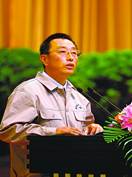
Chairman Mao once said: “It is not hard to do one good deed. It is hard to do good deeds all your life.” Guo Mingyi, 52, a worker in Anshan, Liaoning, did just that. Over the past 20 years, Guo has donated 60,000 milliliters(毫升) of blood. That is the blood of 10 people put together.
Once, on a cold winter of 2009, Guo got a call from the hospital. The doctors told him that a patient needed a blood donation. Guo didn’t have time to eat lunch. He travelled in the snow to get to the hospital. When he finished donating the blood, he was so tired that he fell asleep on the hospital bed.
Guo and his family live a simple life. He and his wife and daughter live in a house of only 40 square meters. They don’t have a lot of money, but Guo saves money to support poor children. In the past 16 years, he has donated over 100,000 yuan to more than 180 poor students. When the parents met him, many cried. “He looks poorer than us,” they said.
Guo has also offered hands to thousands of workers, friends and strangers. His warm heart has moved many people. They call him a “Modern-Day Lei Feng”.
Recently, Chinese leaders called on people to learn from Guo. They say young people especially should learn his selfless devotion(无私奉献).But Guo said he did these things in order not to get famous. “It’s just that some people need some help, and there should be someone standing out to give them a hand,” he said.
【小题1】When was Guo Mingyi born in Anshan, Liaoning?
| A.In 1940 | B.In 1950 | C.In 1960 | D.In 1970 |
| A.Because they are good friends. |
| B.Because he had no money to eat lunch. |
| C.Because he wanted to sleep in the hospital |
| D.Because he wanted to help the patient very much. |
| A.He is a common businessman. |
| B.He has a very rich family. |
| C.He wants to be famous a lot. |
| D.He devotes what he has to helping others |
| A.To learn from Gou Mingyi’s selfless devotion. |
| B.To donate blood to the people in need. |
| C.To raise money for poor students. |
| D.To remember Lei Feng. |
| A.Sports news | B.Health care | C.People | D.Nature |
In the Caucasus region(高加索地区), nearly 50 out of every 100,000 people live to celebrate their 100th birthday, and many don’t stop at 100! By comparison, in America only 3 people in 100,000 reach 100. But these Caucasus people aren’t alone. The Pakistani Hunzas, who live high in the Himalaya Mountains, and the Vilcabambans of the Andes Mountains in Ecuador seem to share the secret of long life too.
These peoples remain healthy in body and spirit despite the passage of time. While many older persons in industrial societies become weak and ill in their 60s and 70s, some Caucasus people aged 110-140, work in the fields beside their great-great-grandchildren. Even the idea of aging is foreign to them. When asked, “At what age does youth end?” most of these old people had no answer. Several replied, “Well, perhaps at age 80.” The very youngest estimate was age 60.
What accounts for this ability to survive (live) to such old age, and to survive so well? First of all, hard physical work is a way of life for all of these long-lived peoples. They began their long days of physical labor as children and never seem to stop. For example, Mr. Rustam is 142 years of age. He remembers his life experience: the Crimean War of 1854; the Turkish War of 1878; the Bolshevik Revolution in 1917. His wife is 116 years old. They have been married for 90 years. Mr. Rustam has no plan of retiring from his life as a farmer. “Why? What else would I do?” he asks. Oh, he’s slowed down a bit. Now he might quit (stop working) for the day after 6 hours in the field instead of 10.
All these people get healthful rewards from the environment in which they work. They all come from mountainous regions. They live and work at elevations(海拔)of 5,000 to 12, 000 feet(1,660 to 4,000meters) above sea level. The air has less oxygen and is pollution-free. This reduced oxygen environment makes the heart and blood vessel(血管)system stronger.
Another factor(因素)that may lead to the good health of these people is their isolation. To a great extent, they are separated from the pressure(压力)and worries of industrial society.
Inherited(遗传的) factors also play some role. Most of the longest-lived peoples had parents and grandparents who also reached very old age. Good family genes may, therefore, be one factor in living longer.
Finally, although these three groups don’t eat exactly the same foods, their diets are similar. All of them eat little animal meat. Their diets are full of fresh fruits, vegetables, nuts, grains, cheese and milk. They never eat more food than their bodies need.
It is clear that isolation from urban pressure and pollution, clean mountain air, daily hard work, moderate diets, good genes, and a youthful approach to life all lead to the health and remarkable long life of all these people.
【小题1】 What is the main idea of this article?
| A.Cause and effect of long-lived life. |
| B.People in the world enjoying a longer life. |
| C.Factors leading to the health and long life of people. |
| D.A description of several societies where people living a long life. |
| A.they don’t care much about their age |
| B.they have no idea of how old they are |
| C.they won’t say anything about their age until they are asked to |
| D.the idea of getting old has never come into their mind |
| A.He is much impressed with them. |
| B.He doesn’t care a bit about them. |
| C.He hopes that they will live a still longer life. |
| D.He doesn’t think their life is full of pressure and worries. |
湖北省互联网违法和不良信息举报平台 | 网上有害信息举报专区 | 电信诈骗举报专区 | 涉历史虚无主义有害信息举报专区 | 涉企侵权举报专区
违法和不良信息举报电话:027-86699610 举报邮箱:58377363@163.com