
题目列表(包括答案和解析)
用所给短语的适当形式填空
|
in my opinion afraid of go skiing go on on business |
1.Don’t stop! Let’s ________ reading it.
2.________,using cellphone has a lot of good effects (影响).
3.My brother will go to New York________next week.
4.Don’t be ________ the dog.It is friendly to us.
5.When I have free time,I would like to ________ with my sister.
根据短文内容及首字母提示,填写所缺单词。
Not long ago, I made up my mind to read a lot of books to get more knowledge. So I went to the l___1___ to borrow some books and returned them. But a few days l 2 , I felt impatient. The idea of finishing all of them seemed impossible, because I always found it d 3 _ to calm down to read a whole book. I didn’t know how to deal with it. Then suddenly one day I had an idea, “Why not m 4 reading fun ? ” It gave me hope a 5 . Reading is a journey of spirit. Every time we read a book, we are actually t 6 to the writer. I tried to put all my effort into his or her books, so I could feel all of his or her happiness and suffering. Now books have b 7 a part of my life. I do some reading at least two h 8 a day.
Do you know that attitude (态度) can make a great difference. S 9 once said, “Even though the situation is bad, people still have one freedom (自由) to choose their attitude.” So, don’t complain about(埋怨)study or w 10 . It helps nothing. Try to see things from a different way. Believe me, this will change the situation and help you a lot.
What did you do on April 23, World Book Day, last year? Did you find some interesting books to read? Here is a book list from China’s GAPP.
|
Author: Jimmy Jimmy, a Chinese painter and his 10-year-old daughter argue a lot. Jimmy tried to understand his daughter, so he drew this picture book for her. His paintings show kids’ anger, pain, happiness and wishes. |
|
Author: Yamamoto Ryoichi If the earth’s temperature went up 2 ℃, what would happen? In this book we learn about the history, today’s situation and the future of global warming. The author also tells us useful ways to protect our world. |
|
Author: Song Chao The first part gives an introduction to World Expos. The next talks about the host countries and each of their World Expos. China’s early participation (参加) in the World Expo is the topic of the third part. The last one is all about the World Expo 2010. |
|
Author: Randy Pausch Randy Pausch, a professor (教授) from New York was asked to give a lecture. He knew it would probably be his last lecture, because he was dying of illness. His lecture wasn’t about dying, but about getting over the difficulties, helping others to reach their dreams. |
74. Who wrote the book “Don’t Blame Me, it’s Not My Fault”?
A. Jimmy B. Yamamoto Ryoichi C. Song Chao D. Randy Pausch
75. The book, Climate Change +2 Degrees mainly tells us __________.
A. that the earth’s temperature will surely go up 2 ℃.
B. the history of different countries in the world
C. the future of global warming
D. how we can protect our earth before the global warming comes
76. We can know about Shanghai World Expo from __________ of the World Exposition Reader.
A. part 1 B. part 2 C. part 3 D. the last part
77. Which of the following is NOT true in the book The Last Lecture?
A. The professor is from America.
B. The professor was in his poor health.
C. The professor shared his opinion with his audience
D. The professor talked a lot about his illness in his lecture
78. The writer introduces some __________ to us for World Book Day.
A. books B. pictures C. cities D. famous people
79. The passage maybe comes from __________.
A. a diary B. a novel C. a book advertisement D. film reviews
If you have a problem with speaking, you can do several things. Listen to English as much as possible. You can learn a poem(诗) or a song by heart. You can also learn more dialogues(对话). And practice speaking with your friends as much as you can.
Many people find it difficult to listen to English. The answer is to listen as much as you can. However, don’t do too much at one time. It is better to practice listening for five minutes every day. Don’t sit down and listen for an hour at a time. That’s too much! Do choose listening passages that are interesting and not too difficult. Choose(选择) tapes(磁带) on which the people speak clearly and not too fast. Take it easy, at first. Success with simple tapes at the beginning is the answer. Later on you can practice with tapes that are more difficult.
Finally, how can you learn to write well? How do you use little words like in, on, of and for? There are two answers to this. First, do some study with new words. Keep a list of verbs like look for, look after and so on. Second, read as much English as possible. There are many things that can’t be learnt. You must see them in books many times. Then you’ll be able to use them correctly(正确地) yourself. So, in order to write well, you must first learn to read much.
1.This passage is about English ______ .
|
A.spelling, listening, grammar and reading |
|
B.listening, speaking, reading and writing |
|
C.taking exams, pronunciation, reading and writing |
|
D.pronunciation, reading, listening and writing |
2.If you ______ , you can speak well.
|
A.learn more dialogues |
B.learn a poem or a song by heart |
|
C.practice speaking with your friends as much as you can |
D.all above |
3.Which of the following is right according to the passage?
|
A.It’s better to listen to English for a long time every day. |
|
B.At the beginning, you’d better choose the tapes on which the people speak quickly. |
|
C.At first you should begin with simple tapes for listening. |
|
D.Few people think it hard to listen to English. |
4.Which of the following ways can help you to improve(提高) your written English?
A. Buy books of writing practice. B. Read as much as possible.
C. Do some study with new words. D. Both B and C.
5.Which of the following is not right according to the passage?
|
A.Many people find it difficult to listen to English. |
|
B.Sit down and listen for an hour at a time. |
|
C.Learn a poem or a song by heart can improve your speaking. |
|
D.To improve speaking, you can practice speaking with your friends as much as you can. |
湖北省互联网违法和不良信息举报平台 | 网上有害信息举报专区 | 电信诈骗举报专区 | 涉历史虚无主义有害信息举报专区 | 涉企侵权举报专区
违法和不良信息举报电话:027-86699610 举报邮箱:58377363@163.com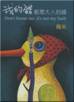 Title: Don’t Blame Me, it’s Not My Fault
  Title: Climate Change +2 Degrees
 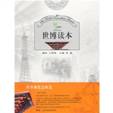 Title: The World Exposition Reader
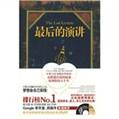 Title: The Last Lecture