
题目列表(包括答案和解析)
| A.the discovery of Easter Island | B.the statues on Easter Island |
| C.the history of Easter Islanders | D.the earliest population on Easter Island |
| A.c-d-a-b | B.d-b-a-c | C.a-c-b-d | D.d-a-b-c |
| A.Easter Island is the most distant island in the world |
| B.Easter is the name of a holiday |
| C.not all the statues were placed in a line |
| D.the island was once rich in natural resources |
| A.mysterious | B.lost |
| C.unknown to the world | D.with no people living there |
Even though global warming may have made the weather more mild, many animals are still hibernating(冬眠). It’s too bad that humans can’t hibernate. In fact we almost did.
Apparently, at times in the past, farmers in France liked a semi-state of human hibernation. So writes Graham Robb, a British scholar who has studied the sleeping habits of the French farmers. As soon as the weather turned cold, people all over the France shut themselves away and practiced the forgotten art of doing nothing at all for months.
In line with this, Jeff Warren, a producer at CBC Radio’s The Current, tells us that the way we sleep has changed since the invention of lighting.
When historians began studying texts of the Middle Ages, they noticed something referred to as “first sleep”, which was not clarified, though. Now scientists are telling us our ancestors most likely slept in separate periods. The business of eight hours’ continuous sleep is a modern invention.
In the past, without the artificial light, humans went to sleep when it became dark and then woke themselves up around midnight. The late night period was known as “The Watch”. It was when people actually kept watch against wild animals, although many of them simply moved around or visited family and neighbors.
According to some sleep researchers, a short of insomnia(失眠)at midnight is not a disorder. It is normal. Humans can experience another state of consciousness(清醒状态)around their sleeping, which happens in the brief period before we fall asleep or wake ourselves in the morning. This period can be a creative time for some people.
Playing with your sleep rhythms(节奏)can be dangerous, as worry may set in. Medical science doesn’t help much in this case. It offers us medicines for a full night’s continuous sleep, which sounds natural; however, according to Warren’s theory, it is really the opposite of what we need.
【小题1】The late night was called “The Watch” because it was a time for people ______.
| A.to set time to catch animals |
| B.to remind others of the time |
| C.to guard against possible dangers |
| D.to wake up their family and neighbors |
| A.sleep in the way animals do |
| B.follow their natural sleep rhythms |
| C.keep to the eight-hour sleeping way |
| D.ask doctors for help if they can’t sleep |
| A.To throw new light on human sleep. |
| B.To encourage people to sleep less. |
| C.To give some suggestions on insomnia. |
| D.To find out people’s hibernating history. |
 One of the greatest mysteries on Earth is
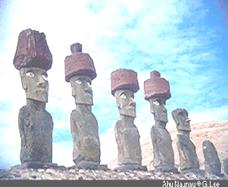
the statues which stand on Easter Island. Easter Island, which was almost uninhabited
when it was discovered on Easter Day in 1722 by a Dutch captain, is the most
distant island in the world covered with hundreds of giant statues, each
weighing several tons and some standing more than 30 feet tall.
One of the greatest mysteries on Earth is
the statues which stand on Easter Island. Easter Island, which was almost uninhabited
when it was discovered on Easter Day in 1722 by a Dutch captain, is the most
distant island in the world covered with hundreds of giant statues, each
weighing several tons and some standing more than 30 feet tall.
Who built these statues and why and how did they get there? Nobody knows the answer for sure.
One theory suggests that Easter Island was first inhabited by Polynesians, who traveled thousands of miles in their canoes(独木舟)in 400 A.D. However, the ocean currents(洋流)which carried them there would not take them back, so that they could not leave.
The statues appear to have been made out of the top edge of the walls of a volcano on the island. Then, it may have been rolled or dragged down to the foot of the volcano(火山). Then, it was stood upright(直立)and ropes were tied around it, which was made to act as a pulley(滑轮). Over a period of months, a statue could be walked for miles down to the ocean. Finally, it was placed in line with other statues, all of them looking towards the center of the island.
This process was difficult. If a statue fell over, it was too heavy to be pulled upright again, so the islanders went back and carved another statue.
The population of Easter Island must have reached 11,000. Later, the resources of the island were used up and people began fighting and eating each other. Work on the statues stopped and the statues were knocked over. When the first Europeans finally arrived on the island, most of these people had died out.
1.This passage is mainly about ________ .
A. the discovery of Easter Island B. the statues on Easter Island
C. the history of Easter Islanders D. the earliest population on Easter Island
2. Which of the following correctly tells of the possible working process after a statue was made?
a. It was stood upright and ropes were tied around it.
b. It was walked for miles down to the ocean.
c. It was placed in line with other statues.
d. It was moved to the foot of the volcano.
A. c-d-a-b B. d-b-a-c C. a-c-b-d D. d-a-b-c
3. It’s not a fact that ________ .
A. Easter Island is the most distant island in the world
B. Easter is the name of a holiday
C. not all the statues were placed in a line
D. the island was once rich in natural resources
4.The underlined word uninhabited most probably means ________.
A. mysterious B. lost
C. unknown to the world D. with no people living there
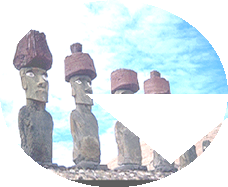
One of the greatest mysteries on Earth is the statues which stand on Easter Island. Easter Island, which was almost uninhabited when it was discovered on Easter Day in 1722 by a Dutch captain, is the most distant island in the world covered with hundreds of giant statues, each weighing several tons and some standing more than 30 feet tall.
Who built these statues and why and how did they get there? Nobody knows the answer for sure.
One theory suggests that Easter Island was first inhabited by Polynesians, who traveled thousands of miles in their canoes(独木舟)in 400 A.D. However, the ocean currents(洋流)which carried them there would not take them back, so that they could not leave.
The statues appear to have been made out of the top edge of the walls of a volcano on the island. Then, it may have been rolled or dragged down to the foot of the volcano(火山). Then, it was stood upright(直立)and ropes were tied around it, which was made to act as a pulley(滑轮). Over a period of months, a statue could be walked for miles down to the ocean. Finally, it was placed in line with other statues, all of them looking towards the center of the island.
This process was difficult. If a statue fell over, it was too heavy to be pulled upright again, so the islanders went back and carved another statue.
The population of Easter Island must have reached 11,000. Later, the resources of the island were used up and people began fighting and eating each other. Work on the statues stopped and the statues were knocked over. When the first Europeans finally arrived on the island, most of these people had died out.
【小题1】This passage is mainly about ________ .
| A.the discovery of Easter Island | B.the statues on Easter Island |
| C.the history of Easter Islanders | D.the earliest population on Easter Island |
| A.c-d-a-b | B.d-b-a-c | C.a-c-b-d | D.d-a-b-c |
| A.Easter Island is the most distant island in the world |
| B.Easter is the name of a holiday |
| C.not all the statues were placed in a line |
| D.the island was once rich in natural resources |
| A.mysterious | B.lost |
| C.unknown to the world | D.with no people living there |
| A.to set time to catch animals |
| B.to remind others of the time |
| C.to guard against possible dangers |
| D.to wake up their family and neighbors |
| A.sleep in the way animals do |
| B.follow their natural sleep rhythms |
| C.keep to the eight-hour sleeping way |
| D.ask doctors for help if they can’t sleep |
| A.To throw new light on human sleep. |
| B.To encourage people to sleep less. |
| C.To give some suggestions on insomnia. |
| D.To find out people’s hibernating history. |
湖北省互联网违法和不良信息举报平台 | 网上有害信息举报专区 | 电信诈骗举报专区 | 涉历史虚无主义有害信息举报专区 | 涉企侵权举报专区
违法和不良信息举报电话:027-86699610 举报邮箱:58377363@163.com