
题目列表(包括答案和解析)

Most English people have three names:a first name,a middle name and a family name.For example,my full name is Jack Henry Green.Green is my family name .Jack and Henry are my given names.The given name comes first,the family name comes last.People don’t use their middle names very much.So we can say Mr. Jack Green.We can say Mr.Green.But in China,the family name comes first and the given name comes last.
1.How many names do most English people have?
A.One. B.Two. C.Three. D.Four.
2.In China,the __ ____
comes first.
____
comes first.
A.first name
B.middle name C.given name D.family
name
3. English people don’t use their ______ very much.
A.first name B.middle name C.given name D.family name
4.The teacher’s name is Jenny Kim Hand.You can say ______.
A.Miss Hand B.Miss Jenny C.Miss Kim D.Mr. Hand
Researchers recently made a survey about how people know trees in UK.They showed them pictures of 10 of Britain’s most popular types of trees.They asked them to name each.Many British people cannot give the right answers.
One in 20 people questioned could not name any of the Britain’s common trees.Horse chestnut and oak are very common in Britain.Britons can see them everywhere from parks and gardens to the countryside and forests.But five per cent of Britons could not name the two trees.
While older people are more likely than younger adults to name Britain’s local trees,the knowledge is not being passed down.
Over 70% parents say they have never taught their children the names of trees nor asked them about what they may have learnt at school or elsewhere.
“It is very disappointing to learn that people know very little about British trees,” said one of the researchers.
1.What does this passage mainly talk about?
A.Many Britons cannot name trees.
B.A scientific survey.
C.Parents should teach their children.
D.People know very little about Britain.
2.How many people could not name any of the common trees if 200 people were surveyed?
A.140 B.20
C.100 D.10
3.It can be inferred from the passage that________.
A.the 10 types of Britain’s most popular trees can be seen everywhere
B.horse chestnut and oak are two kinds of animals seen everywhere in Britain
C.older people in Britain may know more about the local trees than the younger ones
D.70% of the people questioned can not name the 10 types of Britain’s most popular trees
4.The underlined word “common” in the second paragraph probably means________.
A.seldom seen B.often seen
C.formal D.local
5.This passage may be taken from________.
A.a newspaper B.a dictionary
C.a science report D.a textbook
| A.a studying plan of Edward Scott |
| B.A teaching plan of Ivy |
| C.a school report of Edward Scott |
| D.a working plan of M. L. Martin |
| A.PE. | B.Music. | C.Math | D.History. |
| A.Science | B.English | C.geography | D.History |
| A.Science and geography |
| B.Math and history |
| C.French and history |
| D.music and English |
| A.Edward can’t sing songs very well. |
| B.Edward doesn’t do well in science. |
| C.Edward can do better if he works harder next. |
| D.Edward learns two foreign languages in school. |
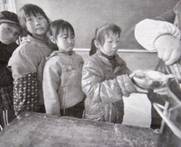
Almost every Chinese person can recite the two lines of the famous poem, “Every grain on the plate comes from hard work(谁知盘中餐,粒粒皆辛苦).” But sadly, many of us don’t actually get the real meaning of these lines: Don’t waste food.
A CCTV program, News One Plus One, reported that the food Chinese people throw away every year is enough to feed 200 million people for a year.
Do we have too much food? Of course not. According to the UN World Food Program, there were 925 million hungry people around the world in 2010, especially in developing countries. Six million children die of hunger every year.
Chinese people are well known for being hospitable(好客的) and generous. Many even feel that they lose face if their guests have eaten all the food on the table.
Luckily, a number of people have realized the importance of saving food. Last November, Li Hong, a waitress in a restaurant in Nanjing, got fired because she took some leftover food home for her son. Many people stood by her side and criticized(批评) the waste of food.
What should we do in our daily lives to waste less food? Here are some tips:
1. Do not order too much in a restaurant. Only order as much as you want to eat. If you cannot eat all the food you ordered, take the rest of it home.
2. Don’t be too picky(挑剔的) about food. Some food may not taste great, but your body needs it.
3. Keep an eye on what food you have at home. Don’t buy too much, especially for vegetables and fruit.
1.How many people were hungry in the world in 2010 according to the UN World Food Program?
A. 200 million. B. Six million. C. 925 million. D. 625 million.
2.What does the writer want to show us through Li Hong’s story?
A. Many Chinese restaurants waste a large amount of food.
B. Many Chinese people are kind-hearted and ready to help the weak.
C. Chinese people feel that they lose face if their guests eat all the food.
D. Many Chinese people don’t agree with the behavior of wasting food.
3.The underlined word “leftover” means in Chinese.
A. 过期的 B. 剩余的 C. 腐烂的 D.难吃的
4.According to the passage, we shouldn’t waste food because .
A. food comes from very hard work
B. six million children die of hunger every day
C. there is enough food to feed all the people
D. Chinese are hospitable and generous
5.Which of the following is a good way to save food?
A. Ordering more than you need at a restaurant.
B. Taking home restaurant leftovers.
C. Not knowing what you already have at home when shopping.
D. Not eating the food you don’t like even if it’s healthy.
湖北省互联网违法和不良信息举报平台 | 网上有害信息举报专区 | 电信诈骗举报专区 | 涉历史虚无主义有害信息举报专区 | 涉企侵权举报专区
违法和不良信息举报电话:027-86699610 举报邮箱:58377363@163.com