
题目列表(包括答案和解析)
找出与句中画线部分意思相同或相近的词或词组
We have learned English for over two years.
[ ]
Ⅰ.听力对话理解
(共10分,每小题1分)A)听小对话,根据你听到的内容从每小题的三个选项中选出一个正确答案,每段对话听两遍。
1.What is Julia going to do?
A.Go camping.
B.Do homework.
C.Do housework.
2.Where are they probably talking?
A.In the classroom.
B.In a shop.
C.At home.
3.What's the time now?
A.It's 2∶30.
B.It's 3∶00.
C.It's 2∶00.
4.What will the mother give Dave?
A.A cup of coffee.
B.An orange.
C.Some salt.
5.Where is Jim now?
A.At home.
B.In a science museum.
C.At school.
B)听小对话,每段对话你将听到前面的1-3句,从每小题的三个选项中选出能完成对话最后1句的最佳答语,每段对话听两遍。
6.A.Nice to meet you, too.
B.How are you?
C.This is John speaking.
7.A.Here it is.
B.That sounds fun.
C.You're welcome.
8.A.Noodles and vegetable soup.
B.Knife and fork.
C.White shirt and red skirt.
9.A.Yesterday.
B.Next week.
C.A month.
10.A.And then have a rest.
B.And then take the subway.
C.And then you'll enjoy it.
Ⅱ.听力篇章理解(共10分,每小题1分)
听下面
A、B篇的两段对话和C篇的一段独白,并从每小题的三个选项中选出一个正确答案。对话或独白听两遍。(A)
11.Where was Sally last Sunday?
A.Stayed at home.
B.Went to the library.
C.Went to a movie.
12.How was the boy's weekend?
A.He had fun.
B.Not much fun.
C.He was tired.
13.What else do you know about the boy's weekend?
A.Didn't visit his friend.
B.Didn't play soccer.
C.Didn't do his homework.
(B)
14.Why did the family go to the restaurant for lunch?
A.The food there was nice.
B.It was the mother's birthday.
C.To spend the boy's birthday.
15.How many awful things did the boy tell?
A.2.
B.3.
C.4.
16.What do you think the family members felt about it?
A.Unhappy.
B.Excited.
C.Anxious.
(C)
17.How long did the speaker stay with Victor?
A.More than ten years.
B.About three years.
C.Only a few days.
18.How did the speaker do with Victor when he moved?
A.Sold it.
B.Let it go.
C.Sent it away.
19.How did the speaker feel after he left Victor?
A.Felt very bad.
B.Was as happy as usual.
C.Needed another dog.
20.What happened to the speaker in the end?
A.He found Victor and took it back.
B.His friend sent him another dog.
C.He learned to live well without a dog.
听力
第一节:(共
5小题,每小题1分,满分5分)听下面
5段材料,根据所听内容,从题后所给A、B、C三幅图片中选出最佳选项。每段材料读两遍。1.What's Tom's favorite animal?
A.
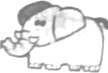
B.

C.

2.What does the boy want to drink?
A.

B.

C.

3.What was Jim doing this time yesterday?
A.

B.

C.

4.When will Mary go shopping with the man?
A.

B.

C.

5.How can he get to the hospital?
A.
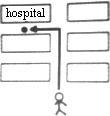
B.
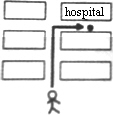
C.
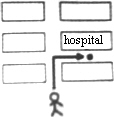
第二节(共
25小题,每小题1分,满分25分)听下面对话或独白,每段对话或独白后有几个小题,从题中所给的
A、B、C三个选项中选出最佳选项。每段对话或独白读三遍。听第
6段材料,回答第6-7题。6.What kind of TV programs does Wang Mei like?
A.Animals.
B.Music.
C.Sports.
7.Why does she like them?
A.Because they're interesting.
B.Because they're boring.
C.Because they're relaxing.
听第
7段材料,回答第8-10题。8.What picture is the woman showing the man?
A.A picture of the Great Wall.
B.A picture of Beijing Zoo.
C.A picture of the History Museum.
9.How many places did the woman visit besides the Great Wall?
A.Two.
B.Three.
C.Five.
10.What does the man say at the end of the dialogue?
A.He wants to visit Beijing next year.
B.He visited Beijing the year before.
C.He will visit Beijing this year.
听第
8段材料,回答第11-13题。11.What's wrong with the woman?
A.She has a headache.
B.Her back hurts.
C.She has a stomachache.
12.When did the woman start to feel that way?
A.This morning.
B.The day before yesterday.
C.Yesterday.
13.What's the man's advice?
A.To eat some food she likes.
B.To buy a warm coat.
C.To have a good rest.
听第
9段材料,回答第14-16题。14.Who are the two speakers?
A.Husband and wife.
B.Teacher and student.
C.Shopkeeper and customer.
15.What did the man buy?
A.Black trousers.
B.Brown trousers.
C.White trousers.
16.How much are the trousers?
A.$45.
B.$35.
C.$46.
17.
听第10段材料,回答第17-20题。17.The writer went to an old people's home to ________ last year.
A.look after them.
B.play the piano for them.
C.sing songs for them.
18.The old people felt ________ when they saw the children perform the play.
A.worried.
B.lonely.
C.happy.
19.The writer wants to be ________ when he grows up.
A.a doctor
B.a volunteer.
C.a teacher.
20.Peter should be allowed to volunteer at the newspaper office ________.
A.once a week
B.once a year
C.once a month
听第
11段材料,回答第21-25题。21.When did the Tree Planting Day start?
A.March 20th,1987.
B.March 12th,1987.
C.March 12th ,1978.
22.How did the students get to the park?
A.They walked there.
B.They took a bus there.
C.They rode a bike there.
23.How far is it from the school to the park?
A.It's very far.
B.It's very near.
C.It's five kilometers away.
24.Where did the students get water?
A.From the bus.
B.From a river.
C.From a well.
25.How many trees did they plant that day?
A.More than 150.
B.Less than 300.
C.More than 300.
听第
12段材料,回答第26-30题。26.Mr Black worked ________.
A.in a factory
B.in a big city.
C.in a small town.
27.Mr Black washed his new car ________.
A.on Sunday
B.on Saturday
C.on Friday
28.At that moment, a friend of his asked him if the car was ________.
A.Mr black's
B.new
C.nice
29.When there was ________, it was Mike's turn to use the car.
A.a basketball game
B.a football match
C.a party
30.Mr Black owned the car when the car ________.
A.needed washing
B.was clean
C.really looked nice
湖北省互联网违法和不良信息举报平台 | 网上有害信息举报专区 | 电信诈骗举报专区 | 涉历史虚无主义有害信息举报专区 | 涉企侵权举报专区
违法和不良信息举报电话:027-86699610 举报邮箱:58377363@163.com