
题目列表(包括答案和解析)
| |||||||||||||||||||||||||||||||||||||||||||||||||||||||||||||||||||||||||||||||||||||||||||||||||||||||||||||||||||||||||||||||||||||||||||||||||||||||||||||||||||||||||||||||||||||||||||||||||||||||||||||||||||||
What do you do if you're stranded(处于困境的)on a lonely island? Surely you need to find a way to get in touch with the outside world. Your best chance of doing this is to draw the attention of a passing plane.
Body signals(信号)
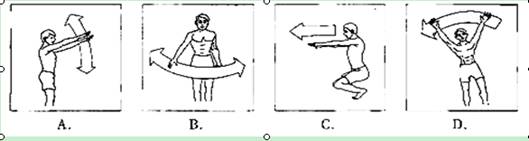
Pilots from different countries understand body signals if they have the correct training. When you wave your arms up and down in a straight line, it means "yes". When you point downwards and swing your arm from side to side, it means "no". If you want the pilot to know that it's safe to land, push your hands out in front of you and bend(弯曲)your knees. If you want to say that it's not safe to land, put your arms in the air and move them to one side.
Smoke signals
The smoke from a fire can be seen from far away, so it's a good way to draw attention. If the weather is dry, it isn't hard to start a fire. Remember, however, that fires can be very dangerous if they get out of control. Never light a fire unless you're sure that it can't spread. If the ground is dark, light smoke can be seen more easily. Green grass and leaves produce light smoke.
Ground-to-air signals
It's a good idea to build some signals, too. Use large pieces of wood to make the symbols(标记). If you can't find any wood, use earth. Some useful symbols are:
F "I need food and water."
II "I need medicine."
I "I am badly hurt."
X" I am unable to move from here."
Pilots' replies
If the pilot lowers the plane's wings from side to side, this means "message received and understood". (At night, the pilot flashes the plane's green lights.) If the pilots flies the plane in a clockwise circle, this means "message received but not understood".(At night, the pilot flashes the plane's red lights.)
However, there is no signal which means "message not received". Why not?
1. Which picture means "it's not safe land"?
2. What can we learn from the passage?
A. Swinging your arm from side to side means "yes".
B. If the ground is dark, light smoke can't be seen.
C. If you need some medicine, make a symbol "II".
D. The pilots make replies with a blue light at night.
3. What is the passage mainly about?
A. The explanation of building signals on an island.
B. The importance of making signals on an island.
C. Ways of sending out signals on a lonely island.
D. Ways of receiving signals from a lonely island
Sophia Wu, 25, is a young Chinese woman who does business with her family in Santiago, Chile (智利). On February 27, she experienced a night that she will never forget.
"I was asleep and was woken up by powerful shaking at around 3:30 in the morning. My whole room was moving and I couldn't stand still. I wanted to run downstairs and go outside, but suddenly the wall got broken and the lights in the room went out. The room became so shaky that I couldn't move at all."
That night an 8.8-magnitude (震级) earthquake hit Chile. Buildings and bridges fell down. Electricity (电) and water services shut down. The Chilean Red Cross reported that about 500,000 homes were destroyed and more than 800 people died.
The earthquake has been the fifth strongest since 1900. More than 90 aftershocks (余震) followed the earthquake. A tsunami (海啸) was set off in the Pacific Ocean by the earthquake.
Scientists say that there are about 500,000 earthquakes in the world each year. Of these, only 20% are felt, and 100 of them cause damage.
So far, scientists haven't found a way to predict earthquakes. But you can learn to protect yourself during an earthquake. The most important thing to remember is to drop, cover and hold on. So remember to drop to the floor, get under something for cover and hold onto something strong during the shaking.
根据短文内容,选择最佳选项。(10分)
1. What happened to Sophia Wu on February 27?
|
A.Her house was burned in a fire. |
|
B.She dreamed a terrible dream. |
|
C.Her family died in a terrible accident. |
|
D.A serious earthquake hit the city she was in. |
2. Which is the correct order (顺序)?
a. Wu got up and found her whole room was moving.
b. Wu wanted to run downstairs and go out.
c. The wall got broken and the lights went out.
d. Wu was woken up by shaking.
|
A.a-b-c-d |
B.d-a-b-c |
|
C.d-b-a-c |
D.c-a-b-d |
3. Which is TRUE about the Chile Earthquake?
|
A.It had no aftershocks. |
|
B.It destroyed five million homes. |
|
C.It caused a tsunami in the Pacific Ocean. |
|
D.It has been the fourth strongest earthquake since 1900. |
4. From the passage, we know that about of the earthquakes cause damage every year.
|
A.20% |
B.10% |
C.1% |
D.0.02% |
5. How should we protect ourselves during an earthquake?
|
A.We should run outside as quickly as possible. |
|
B.We should drop, cover and hold on. |
|
C.We should shout loudly for help. |
|
D.We should call 120 quickly. |
根据短文内容判断句子正误,正确的在前面括号内打T,错误的打F。
When you are in England, you must be very careful in the streets because the traffic drives on the left.
Before you cross a street, you must look to the right first and then the left. If the traffic lights are red, the traffic must stop. Then people on foot can cross the road carefully. If the traffic lights are green, the traffic can go. People on foot mustn't cross. When people go to work in the morning or come back from work in the evening, the streets are very busy. Traffic is most dangerous then.
When you go by bus in England, you have to be careful, too. Always remember the traffic moves on the left. So you must be careful. Have a look first or you will go the wrong way.
In many cities in England, there are big buses with two floors. You can sit on the second floor and enjoy seeing the sights(风景)of the city. It’s very interesting!
1. In England people drive on the right side of the road.( )
2. In England people walk on the left side of the road.
( )
3. Before crossing a street, you must look to the right first.
( )
4. Cars and buses must stop when the traffic lights are red.
( )
5. People on foot must stop when the traffic lights are green.
( )
6. There’s lot of traffic in the morning when people go to work.
( )
7. The roads aren't busy in the evening when people get back from work.
( )
8. If you are not careful when you go by bus, you will go the wrong way.
( )
9. In England big buses with two floors can move on the right side of the road.
( )
10. You can not see the sights of the city if you sit on the second floor of the big bus.
( )
阅读下列短文,从所给的四个选项中,选出最佳答案
When you are in England, you must be very careful in the 1 because the traffic 2 on the left. Before you cross a street, you must 3 the right first and then the left.
In the morning and in the evening when people go to or come from work, the streets are very 4 . Traffic is 5 then.
When you go by bus in England, you have 6 careful, too. 7 remember the traffic move on the left. So you must be careful. Have a look first, 8 you will go the wrong way.
In many English cities, there are big buses 9 two floors. You can sit on 10 floor. From there you can see the city very well. It's very interesting.
1.A.factories |
B.cinemas |
C.streets |
D.parks |
[ ] |
2.A.drive |
B.drives |
C.drove |
D.driven |
[ ] |
|
3.A.look to |
B.look |
C.look carefully |
D.look after |
[ ] |
4.A.free |
B.busy |
C.difficult |
D.easy |
[ ] |
|
5.A.most dangerous |
B.more danger |
C.no danger |
D.most danger |
[ ] |
6.A.to have |
B.to be |
C.been |
D.had |
[ ] |
7.A.Often |
B.Usually |
C.Sometimes |
D.Always |
[ ] |
8.A.or |
B.and |
C.yet |
D.so |
[ ] |
9.A.have |
B.has |
C.with |
D.without |
[ ] |
|
10.A.two |
B.second |
C.the second |
D.the two |
[ ] |
湖北省互联网违法和不良信息举报平台 | 网上有害信息举报专区 | 电信诈骗举报专区 | 涉历史虚无主义有害信息举报专区 | 涉企侵权举报专区
违法和不良信息举报电话:027-86699610 举报邮箱:58377363@163.com