An adjective always follows a sense verb or a verb of appearance -- feel, taste, smell, sound, look, appear, and seem -- when it modifies the noun before the verb. Sarah’s cough sounds bad. Here bad is an adjective that modifies the noun cough. Using the adverb badly here would not make sense, because it would mean her cough isn't very good at sounding. The ocean air smells fresh. Here fresh is an adjective that modifies the noun air. Using the adverb freshly here would not make sense, because it would mean that the air has a sense of smell that it uses in a fresh manner. She looks unhappy today. Here unhappy is an adjective that modifies the pronoun she. Using the adverb unhappily here would not make sense, because it would mean that she isn't very good at seeming. Avoiding Common Errors Bad or Badly? When you want to describe how you feel, you should use an adjective. So you'd say, "I feel bad." Saying you feel badly would be like saying you play football badly. It would mean that you are unable to feel, as though your hands were partially numb. Good or Well? Good is an adjective, so you do not do good or live good, but you do well and live well. Remember, though, that an adjective follows sense-verbs and be-verbs, so you also feel good, look good, smell good, are good, have been good, etc. Confusion can occur because well can function either as an adverb or an adjective. When well is used as an adjective, it means "not sick" or "in good health." For this specific sense of well, it's OK to say you feel well or are well -- for example, after recovering from an illness. When not used in this health-related sense, however, well functions as an adverb; for example, "I did well on my exam." 【查看更多】


题目列表(包括答案和解析)

Complete each sentence with an adjective +‘enough’+the‘to’-infinitive form of the verbs in brackets.

for example:

    I am 18 years old. I can vote in elections.

    I am old enough to vote (vote) in elections.


  My young cousin is curious. He always asks questions about everything.

  My young cousin is ________(ask) questions about everything.

查看答案和解析>>

阅读下面短文,从各题A、B、C、D四个选项中选出最佳选项。

  More and more new languages appear on the Internet.We call them "cyber* languages” .Recently “geili” is everywhere.It is a Chinese word in English alphabet*.Since “geili” sounds like “geli” in pinyin, netizens* invented the word “geli” .And Chinese does not have part of speech, so it can be a noun, a verb, an adjective or adverb at the same time.To fit into different parts of speech, they created “gelivable” the adjective, and “gelivability” the noun.It means “giving power” or “cool” .

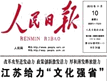
  We have many cyber words like this.Some of these words and expressions were even picked up in serious media* reports.On November 10, the People's Daily, carried a front-page* news story with the title “Jiangsu gelivable cultural province” .

  David Tool, a professor with the Beijing International Studies University, first heard the word “gelivable” from his students.He said it was very interesting to combine Chinese with English to create new words.

  Sergey Dmitriev, a student from Russia studying international politics at Liaoning University, believed the words are a way to learn more about Chinese society.“In Russia, similar words were created, as well, ” he said, adding that creation of the English words showed greater influence and more of an opening of China to the world.

  “Cyber language is more vivid*, ” Wu Zhongmin, a professor at the Party School of the Central Committee of the Communist Party of China, said.A writer, Wang Pei, thinks language is always developing.

  But an unnamed official said that, in fact, many senior* staff from news media were worried that years later, the younger would forget how to use formal* Chinese expressions.

  “My father is Li Gang” is another popular cyber language.What other cyber language do you know? What do you think of them?

(1)

“Geli” is a(n) ________ word in English alphabet.

[  ]

A.

Chinese

B.

English

C.

Russian

D.

Japanese

(2)

Words like “gelivable” were created by ________.

[  ]

A.

professors

B.

netizens

C.

some senior staff

D.

English people

(3)

It's clear that ________.

[  ]

A.

David Tool doesn't think it's good to create new words like “gelivable”

B.

Sergey Dmitriey is a professor at the Party School of the Central Committee of the Communist Party of China

C.

Wu Zhongmin were worried that years later, the younger generation would forget how to use formal Chinese expressions

D.

some serious media also use cyber languages

(4)

The main idea of the passage is ________.

[  ]

A.

people and “gelivable”

B.

how “gelivabe” come into use

C.

cyber languages like “gelivable”

D.

what is “gelivable”

查看答案和解析>>

Complete each sentence with an adjective +‘enough’+the‘to’-infinitive form of the verbs in brackets.

for example:

    I am 18 years old. I can vote in elections.

    I am old enough to vote (vote) in elections.


  My uncle is creative. He always has good ideas.

  My uncle is ________ (have) good ideas.

查看答案和解析>>

如果能正确地使用词典,它将成为你最好的朋友,并且你可以从中学到单词的发音、词性和释义,学到单词在句子中的使用方式、其他的意思以及相关动词短语。现在请看词典的摘录部分,选择最佳答案。

proud   adjective

/pravd/

1.You feel proud of things you

  have done,or things you own,

  if you are pleased with them:

  Peter was proud of himself for

  winning the race.Sarah felt

  very proud of her new watch.

2.Your parents or teachers are

  proud of you when you do

  well:Michael came top of the

  class and his parents were very

  proud of him.The cat seems

  proud of her six lively kittens.

3.A proud person thinks they are

voice   noun

/vכis/

Your voice is the

 sound you make when

 you speak or sing:

Speak in a load clear

voice so that everybody

 can hear you.I didn't

 recognize  Andrew's

 voice on the telephone. We could hear angry  voices coming  from  next door.Lucy has a nice singing voice.

en·cour·age   verb

/In'kΛrIdз/encouraged,    encouraging,has encouraged

 1.You encourage someone

  when you keep telling

  them that you know they

  can succeed:My parents

  have always encouraged

  me in my music.

2.You encourage someone

  to do something when you

  tell them that they should

  do it:Our teacher encourages us to ask questions.

better or cleverer or more im-

Lose your voice

IAntonyms/31. We can find these explainations (解释) in          dictionary.

A. an English-English                  B. a Chinese-English

  C. an English-Chinese                  D. a Chinese

32. Another form of the word "proud" in this dictionary is             .

  A. pleasure        B. pride           C. happiness       D. voice

33. You can find           new words in this dictionary extract (摘要).

  A. many           B. one             C. two             D. three

34. The word "proud" has           uses than the word "encourage".

  A. fewer           B. less             C. more            D. much more

35. The word "voice" is                      .

A. a noun         B. an adjective     C. a verb          D. an adverb

Synonyms

portant than other people:The

Ugly Sisters were too proud to

TreatCinderellalla as sister.

See also pride.

 You lose your voice

when you have such a

bad cold that you can't speak.

xdiscourage:Our parents

 discourage us from playing

computer games all the time.

1. We can find these explainations (解释) in          dictionary.

A. an English-English                  B. a Chinese-English

     C. an English-Chinese                  D. a Chinese

2. Another form of the word "proud" in this dictionary is             .

     A. pleasure        B. pride           C. happiness       D. voice

3. You can find           new words in this dictionary extract (摘要).

     A. many           B. one             C. two             D. three

4. The word "proud" has           uses than the word "encourage".

     A. fewer           B. less             C. more            D. much more

5. The word "voice" is                      .

A. a noun         B. an adjective     C. a verb          D. an adverb

查看答案和解析>>

Bob _________ exercises. He’s ______ unhealthy boy.

A. hardly ever; an         B. always; an

C. usually; a             D. never; a


查看答案和解析>>


同步练习册答案