
题目列表(包括答案和解析)
Did you ever wonder how some of your favorite foods, products or toys came about? Believe it or not, they may have been an accident, or a failure of some other intention. Below, we found three mistakes we’re thankful for turned out to be what they are.

1. Most historians hold that the Chinese invented fireworks in the 9th century when they discovered how to make gunpowder. Story has it that a Chinese cook accidentally mixed together what were then considered common kitchen items and noticed they burnt. When put tightly in a bamboo tube and lit, it blew up.

2. In May of 1886, a law led John Pemberton, a pharmacist(药剂师), to rewrite the formula(配方) for “Pemberton’s French Wine Coca”, his popular headache treatment. Containing sugar instead of wine as a sweetener, the outcome became something for Coke, which was later mixed with carbonated(碳酸) water. His bookkeeper suggested the name Coca-Cola because he thought the two C’s would look good together, which is how what we call Coca-Cola, a world-wide drink came into being.

3. During World WarⅡ, scientists at the University of Birmingham invented the magnetron(磁控管)—an important heat-producing part of the microwave oven. While working for Raytheon Corporation after the war, the American engineer Percy Spencer was testing the magnetron when a chocolate bar in his pocket melted. He went on to test other foods including popcorn kernels(仁), and found it to be a much more efficient way to cook. In 1947 Raytheon came out with the first restaurant microwave oven, which was six feet tall and weighed 750 lbs.
1.The right time order of the three inventions should be ________.
A. fireworks, the microwave and Coca-Cola
B. fireworks, Coca-Cola and the microwave
C. Coca-Cola, fireworks and the microwave
D. the microwave, Coca-Cola and fireworks
2.Percy Spencer found the microwave efficient in cooking when he was ________.
A. looking for a way to melt his chocolate
B. trying to know how a magnetron could cook
C. working to know how the magnetron works
D. asked to invent a restaurant microwave oven
3.The underlined phrase “ blew up” might mean _______ in Chinese.
A. 爆炸 B. 膨胀 C. 升华 D. 蒸发
4.What can we learn from the above invention stories?
A. Experiments make great inventors of our time.
B. Nothing is impossible if one tries each day.
C. Inventors come out of hard work at any time.
D. A small incident may lead to a great invention.
根据短文内容,用括号内动词的正确时态形式填空。
Liu Xiang was born in Shanghai on the 13th of July, 1983. He is 1.88m tall and 1. (weigh)74 kilograms. He began practicing jumping when he was at Grade Four in primai7 school. He 2. (win) the gold medal of the men's 110m hurdles in the 28lh Olympic Games. It is the first gold medal that Chinese have won from this competition in the Olympic history. He 3. (be) a great hero in Chinese eyes since then. He also likes singing and seeing films. Once when he 4. (walk) in the street, he stopped to answer the reporter, "I 5. (sing) songs with friends if I feel tired after training, or go to a movie for relaxation."
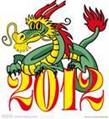
2012 is the Year of the Dragon in China. It began on January 23 but not on January 1st. The dragon is a symbol* of power and wealth in Chinese culture. And it is also the sign of the Emperor of China. People born in the Year of the Dragon are active-minded. They show a strong interest in the world around them, and will try their best to make their dreams come true all their lives.
Dragon people are talented while these people enjoy being the center of attention. They will stop at nothing to get what they want. Dragon people are very friendly and if their friends face a problem, they will be there to offer help at once. There are some famous people who were born in the Year of the Dragon, such as the premier* of the Russian Putin and the famous Argentine soccer player Messi. In China, the CEO of Alibaba Group Mayun and movie star Zhouxun are dragon, too.
There are some big events in the Year of the Dragon. In China, the 11th National People's Congress (NPC) * will be held in Beijing in March. The 9th National University Games in Tianjin will happen in September. And soccer fans, they can meet at the 2012 European Cup in June in Poland. And In Britain, the 30th Olympic Games is being held in London on July 27.
1.What does “Dragon” stand for in Chinese culture?
A. power B. wealth C. the emperor D. all of the above
2.When does the Year of Dragon begin?
A. January 1st. B. January 23rd C. January 2nd. D. January 22nd.
3.What will happen in July in London?
A. National People's Congress B. National University Games
C. 2012 European Cup D. the Olympic Games
4.Which of the following is NOT TRUE acorrding to the passage?
A. People born in the Year of the Dragon are active-minded.
B. People born in the Year of the Dragon enjoy being the center of attention.
C. If they face a problem, People born in the Year of the Dragon will give up.
D. If their friends face a problem, people born in the Year of the Dragon will offer help at once.
In Britain you may often hear “Drop in any time” or “Come to see me soon”, but you can’t really do that. People just say those things to make you feel welcome. It is better to telephone before visiting someone at home. If you receive a written invitation to an event that says “RSVP”, you should reply to let the person who sent the invitation know whether or not you plan to go.
You should never accept an invitation unless you really plan to go. You may refuse by saying. “Thank you for inviting me, but I will not be able to com.” If, after accepting, you are unable to go, be sure to tell those who are expecting you as soon as possible that you will not be there. Although it is not necessarily expected that you give a gift to your host, it is considered polite to do so, especially if you have been invited for a meal. Flowers, chocolate, or a small gift are appropriate(合适的). A thank-you note or telephone call after the visit is also considered polite and is an appropriate way to express your appreciation for the invitation.
1.What can you do when a British friend says, “Drop in anytime”?
a. Visit him or her at any time.
b. Say no to him or her seriously.
c. Telephone him or her before visiting.
2.What does the word “RSVP” probably mean in Chinese?
a. 请自便 b.请回复 c.请审阅
3.What should you do if your British friend sends you an invitation but you do not want to go?
a. Do not give him or her an answer.
b. Tell another friend to go instead of you.
c. Tell him or her that you can’t be there for some reason.
4. Which of the following is considered impolite in Britain?
a. Buy small presents when invited.
b. Refuse the invitation without telling anyone.
c. Write a thank-you note after a visit.
5.Where would you probably see this passage?
a. In an invitation b. In a guidebook c. On a poster
Anna was excited about starting her first day in the new school. However, when she first walked past the students in the school, her excitement turned to fear, and then to loneliness(孤独)over the next few days. "Why didn't anyone say 'hi' to me or invite me to his or her lunch table? Is it because of my clothes or my hair?" she wondered. Almost every day during the first week, Anna stayed alone, thinking that there must have been something wrong with her or that nobody saw her at all!
What caused Anna's problem? The reason was that nobody knew her. Most people don't like talking with strangers (陌生人). So it's your job to volunteer to make contact with people who you want to know. The easiest way to catch their attention is to notice them first. Make eye contact with them and smile at them. When you smile at them, you are doing your best to show your kindness to them, and they are sure to understand that you are saying, "Hey, how's everything going?" In this way, you are taking the first step towards the road to friendship.
When Anna realized this, she started talking to her classmates. Guess what happened? It really worked. She had made two friends by the end of the month.
In fact, saying “hi” or making friends with strangers is not hard. And the joy it brings you is really great. So try to open your heart to strangers!
1.What was Anna's problem?
|
A.She was afraid of entering a new school. |
|
B.She had no friends in her new school. |
|
C.She didn't like making friends with strangers. |
|
D.Her classmates didn't like her clothes or hair. |
2.Which of the following shows the change in Anna's feelings?
|
A.afraid→relaxed→nervous→happy |
|
B.happy→lonely→sad→proud |
|
C.nervous→angry→happy →sad |
|
D.excited→afraid→lonely→happy |
3.According to the writer, what is the easiest way to catch others' attention?
|
A.Noticing them first |
|
B.Talking to them |
|
C.Doing something for them. |
|
D.Making yourself cool. |
4.What can you learn from the passage?
|
A.Teenagers can't get along well with each other. |
|
B.Loneliness is a common problem these days. |
|
C.Opening our heart to strangers can help us get friends. |
|
D.It’s hard to take the first step towards the road to friendship. |
5.What does the underlined word contact mean in Chinese?
|
A.表扬 |
B.联系 |
C.招聘 |
D.聊天 |
湖北省互联网违法和不良信息举报平台 | 网上有害信息举报专区 | 电信诈骗举报专区 | 涉历史虚无主义有害信息举报专区 | 涉企侵权举报专区
违法和不良信息举报电话:027-86699610 举报邮箱:58377363@163.com