
题目列表(包括答案和解析)
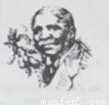
George Washington Carver was born in 1864. He was born a slave(奴隶). When he was still a baby, his mother was stolen. He was kept by his master.
All his life George loved 31 . When he was only seven years old, he already knew so 32 about plants that people in his hometown called him “the plant doctor”.
George wanted to learn as much as he could, but there was no 33 for black children where he lived. When he was ten, he left home to find a town that would allow 34 children to attend school. He studied in Missouri and Kansas 35 he finished high school. All this time he had to work to 36 his own expense(费用). He worked as a cook and opened his own laundry.
In 1890, George began college. At first he studied art, but he still had a 37 of plants. He began to study agriculture(农业). After he graduated, the famous inventor Thomas Edison asked him to work in his lab but George 38 . He had other 39 . He started an agricultural organization for black students in Alabama.
In those days, many 40 in the south grew only cotton. This was 41 to the soil(土壤). After a while the 42 would not grow as well. George Washington Carver wanted to help farmers in the south to grow plants like peanuts and sweet potatoes. These plants helped the 43 . Over the years he invented hundreds of ways to use these two plants.
George Washington Carver invented so many things that he was 44 “The Wizard(能手) of Tuskegee”. He died in 1943 at the 45 of 79.
1. A. animals B. plants C. buildings D. photos
2. A. much B. many C. little D. few
3. A. house B. farm C. hospital D. school
4. A. brown B. yellow C. black D. white
5. A. when B. until C. for D. since
6. A. cost B. spend C. pay D. take
7. A. love B. hate C. question D. surprise
8. A. accepted B. refused C. understood D. cared
9. A. situations B. suggestions C. plays D. plans
10. A. farmers B. scientists C. doctors D. inventors
11. A. helpful B. harmful C. careful D. wonderful
12. A. pumpkin B. peanut C. cotton D. potato
13. A. soil B. water C. air D. weather
14. A. seen B. look C. found D. called
15. A. time B. year C. age D. season
阅读下面短文,根据所给语境,按要求完成下列各题。
Failure is what often happens. It is everywhere in our life. Students may fail in exams, scientists may fail in their research work, and players may fail in competitions. (A) Although failure happens to everyone, but different people’s attitudes(态度) towards failure are different.
Some people don’t think that their failure is an important thing at all. So they pay no attention to it. As a result, they will have the (B) failure later. Some people think they themselves are fools and lose their hearts in everything after they get failure. Then they(C)
their time and energy on useless things. At last, they may really be fools as they have thought.
(D)Other people are quite different from these two kinds of people mentioned above. Instead of being hopeless and lost, they draw a lesson from every failure and become more experienced. (E) they, after, will ,hard, in, work, be , the, successful , end. So we should draw a lesson from every failure and become more experienced.
1. (A)处句中有一处错误,请找出并改正。(可用文字叙述)
?
2.在( B )、(C )处的横线上分别填上一个单词(B) (C)
3.将(D)处句子译成汉语: 。
4. 将(E)处的单词连成句子:
5.请从下面的选项中给短文选个标题,将答案标号填在此横线上:
?A. Draw a lesson from every failure B. The attitudes towards failure
?C. Failure is everywhere in our life D. Failure is very important
Many students ask for advice about improving their English. There are three basic questions.
The first question is about real English. Li Hao from Hubei wrote, “I enjoy watching English films and listening to real English songs. But it takes a long time. What do you think?” This is a great way to learn English! Talk about the film or song with your friends, and guess the meaning of the new words. Just enjoy yourself!
The second question is about speaking. Sam, from Suzhou wrote, “Our school has a foreign teacher. But I’m shy and can’t speak to her. What should I do?” When I visit China, lots of people in the street say, “Hello! How are you? Where are you from? Do you like China?” These are good questions to start a conversation. Many people are shy when they speak English, so before you begin, take a deep breath and smile! Smiling always helps.
The third question is about vocabulary. Oliver, from Anhui wrote, “I want to remember all the new words. I wrote them down, but I forget them quickly. What should I do?” Try to remember eight or nine words a day. Write them on pieces of paper and place them in your bedroom. Say the words when you see them, and change them every day. And when you’re shopping, how about counting the English words, or saying the English names for everything you see?
【小题1】How many basic questions do the students often ask?
| A.Two. | B.Three. |
| C.Four. | D.Five. |
| A.He’s too shy to talk with others. |
| B.He’s not able to count English words. |
| C.He can’t remember new words. |
| D.He doesn’t know what real English is. |
| A.How to learn English |
| B.Talking about English films |
| C.Advice about English writing |
| D.The way of beginning an English conversation |
The differences_____ these two pictures _____ colour are easy to see.
|
A.in, of |
B.from, of |
C.between, in |
D.of ,in |
One thing that British and Chinese cultures share is a love for fine tea. Today, when we think of Western tea culture, we often think of the English and beautiful china tea cups.
Afternoon tea
People believe that an English lady, Anna, first introduced the idea of afternoon tea. In the 18th and 19th centuries, the English ate only two main meals each day: breakfast and a heavy supper that would last for several hours in the evening. As a result, people often got very hungry during the long wait between these two meals. To solve this problem, Anna came up with the clever idea of inviting some friends to join her for an afternoon meal between four and five o’clock. This meal included cakes and sandwiches. And tea was served(供应) to wash down the food. In order to make this afternoon meal important, fine china cups and plates and silver teapots, knives, forks and spoons were used. Soon, afternoon tea parties became popular social occasions. Today, afternoon tea parties continue to play an important part in the social life in modern Britain.
Will you come for coffee?
Coffee also has an important role in British culture. People often use the words “Will you come for coffee” to mean “Would you like to come to my home for a chat?” Normally, several different drinks such as tea, hot chocolate or a soft drink like orange juice will be served as well as coffee, and you will be asked what you would like. However, you will not normally be offered wine at a “coffee” party.
Coffeehouses and the London Stock Exchange
In the 17th century London, coffeehouses were busy and noisy places. Businessmen and bankers went to coffeehouses to do their business, as well as to drink coffee. In fact, the London Stock Exchange(伦敦股票交易所) is believed to have started from these coffeehouses.
1.Anna introduced the idea of drinking afternoon tea because she ______.
A. enjoyed chatting with her friends at home
B. loved fine tea and beautiful china tea cups
C. wanted to share nice food with her friends
D. found people felt hungry during the long wait between the two meals
2.What does “social occasions” mean in Chinese?
A. 集体婚礼 B. 社交活动 C. 社区表演 D. 公共场合
3. If someone says to you “Will you come for coffee,” you ______.
A. will be offered coffee only
B. are asked what you would like to drink
C. will be asked to have a chat with him or her
D. you are invited to take part in an afternoon tea party
4. From the last paragraph we can see______
A. a new business was started in coffeehouses.
B. coffeehouses are still used by businessmen and bankers.
C. businessmen and bankers went to coffeehouses just for coffee.
D. most people wouldn’t like to go to coffeehouses because of the noise.
5. Which is the best title of the article?
A. British and Chinese cultures. B. The beginning of Tea and Coffee.
C. Coffeehouse and Business. D. English tea and coffee culture.
湖北省互联网违法和不良信息举报平台 | 网上有害信息举报专区 | 电信诈骗举报专区 | 涉历史虚无主义有害信息举报专区 | 涉企侵权举报专区
违法和不良信息举报电话:027-86699610 举报邮箱:58377363@163.com