
题目列表(包括答案和解析)
听力测试(共20小题,计20分)
(一)交际应答。录音中有五个句子,每个句子听一遍,然后从每小题A、B、C中选出能对每个句子做出适当反应的答语。
1.A.Yes, please.
B.Good idea.
C.Of course, it is.
2.A.Certainly you are.
B.Sure.Hold on, please.
C.I’ll do that.
3.A.Oh, they are over there.
B.I’m glad you’ve found it.
C.Go straight and turn left.
4.A.OK, I will.
B.Yes, I think so.
C.Good for you.
5.A.Never mind.
B.You are welcome.
C.I’m sorry.
(二)情景反应。录音中有五组对话,听对话两遍后,从每小题A、B、C中选出能回答所给问题的正确答案。
6.When will Mrs White come back?
A.Right now.
B.Quite soon.
C.At four.
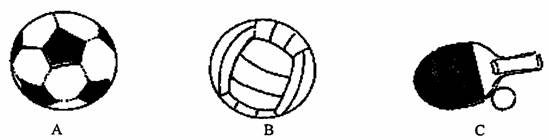
7.What sport does the woman like?
A.

B.

C.

8.What does the woman prefer to do?
A.To see the new play.
B.To do some shopping.
C.To visit the museum.
9.What are the man and woman doing?
A.They are looking for a CD player in a shop.
B.They are learning how to press the button.
C.The man is teaching the woman how to use the CD player.
10.Why was Frank on the news last night?
A.He walked along the beach at night.
B.He swam alone in the cold water.
C.He got the boy out of water and saved him.
(三)对话理解。录音中有一段对话,听对话两遍后,从每小题A、B、C中选出能回答所给问题的正确答案。
11.Where could the dialogue happen?
A.In a shop.
B.In a library.
C.In a hospital.
12.Why did the young man go to see the doctor?
A.He didn’t know where to begin his talk.
B.He felt difficult to fall asleep.
C.He felt unhappy most of the day.
13.How long has the young man been ill?
A.For about two years.
B.For about three weeks.
C.For about six months.
14.In what season did the young man feel worse?
A.In Spring.
B.In Autumn.
C.In winter.
15.What did the doctor ask the young man to do?
A.To take some medicine.
B.To burn away his worries.
C.To take more exercises.
(四)短文理解。录音中有一篇短文,听短文两篇后,从每小题A、B、C中选出能回答所给问题的正确答案。
16.What happened to the three boys in a cold day?
A.They lost their way.
B.They couldn’t find the big house.
C.They had to spend the night in the open air.
17.What did the three boys ask the farmer to do?
A.To give them some water and food.
B.To let them stay in his house for a night.
C.To tell them the way to walk out of the forest.
18.Why did one of the boys have to sleep in the big house?
A.The farmer didn’t like the third boy.
B.One of the boys made a loud noise when he slept.
C.There wasn’t enough room in the farmer’s house.
19.Who was the first to sleep with the horses?
A.Mike
B.Jack
C.Tom
20.Why were all the horses outside at the house door?
A.Because someone drove them out of the house.
B.Because the smell in the big house was really terrible.
C.Because the horses didn’t like to stay with people at night.
Two weeks ago, Ruichang City in Jiangxi Province was hit by an earthquake measuring 5.7 on the Richter scale(里氏震级). It killed 18 people and left hundreds homeless.
Earthquakes are one of the most deadly natural disasters(灾难) in the world. They happen more often than you would expect.
In the 24 hours after you read this, 400 to 500 earthquakes will shake the earth. You won't notice most of them because you live in a relatively(相对地) safe area or the quake is too far away or because the quake will be too small to notice.
Earthquakes are caused by sudden breaks in rock masses(群) deep in the earth. Rock masses are always under very high pressure. If the pressure in a certain area become too much and the rock masses break, an earthquake happens. But exactly when the rock masses reach the breaking point is a mystery(谜).
China is on the Eurasia(欧亚) plate, where earthquakes happen very often due to the earth's plates knocking against each other. Up to 17,139 earthquakes have taken place in China in the past 44 years, according to scientific research.
1What happened to the City of Ruichang?
A.18 people were killed in an earthquake.
B. Hundreds homeless people left the city.
C. An earthquake ruined thousands of houses there.
D. An earthquake measuring 7.5 on the Richter scale happened.
2How many earthquakes can happen in a day in the world?
A. 24. B. 44. C. 400 to 500. D. 17139.
3Why does the earth quake? Because ______.
A. we live in a relatively safe area
B. the pressure in the earth is too big
C. the rock masses is reaching the breaking point
D. the rock masses break suddenly deep in the earth
C
Once upon a time a woman found she was not easy to wake up in the morning as early as she wished. So she bought a beautiful alarm clock. These clocks are so made as to strike with loud whirring noise at any hour the owner pleases to set them.
The lady placed her clock at the head of the bed, and at the right time she found herself roused by the long, rattling sound.
She got up at once, and felt better all day for her early rising. This lasted for some weeks. The alarm clock faithfully did its duty, and was plainly heard so long as it was obeyed.
But, after a time, the lady grew tired of early rising. When she was waked by the noise, she merely turned over in bed, and slept again.
In a few days, the clock ceased to wake her from her sleep. It spoke just as loudly as ever; but she did not hear it, because she had been in the habit of not obeying it.
Finding that she might as well be without it, she made up her mind that when she heard the sound she would jump up.
Just so it is with conscience(自觉意识,诚意). If we will obey its voice, even in the least important things, we can always hear it, clear and strong.
But if we allow ourselves to do what we have some fears may not be quite right, we shall grow more and more sleepy, until the voice of conscience has no longer power to wake us.
4Why did the clock failed to stop to get the woman up later?
A. Because she was tired of getting up early in the morning.
B. Because she could not hear the clock any more.
C. Because she was too tired to wake up at it.
D. Because the clock stopped to do its duty.
5 Both the underlined words “whirring” and “rattling” are kinds of ______.
A. colours B. sounds C. actions D. feelings
6 The writer mainly wants to tell us that ______.
A. we should always obey our clocks
B. the clock sometimes can’t wake us up as we wish
C. It is conscience that ensures early rising not the clock
D. The voice of conscience has no longer power to wake us.
Amy was a dear little girl, but she was too ready to waste time in getting ready to do her tasks, instead of doing them at once as she ought to.
In the village in which she lived, Mr. Thornton kept a store where he sold fruit of all kinds, including berries in their season. One day he said to Amy, whose parents were quite poor, “Would you like to earn some money?”
“Oh, yes, ” replied she, “for I want some new shoes, and papa has no money to buy them with.”
“Well, Amy,” said Mr. Thornton, “I noticed some fine, ripe blackberries in Mr. Green’s field today, and he said that anybody was welcome to them. I will pay you thirteen cents a quart(度量单位) for all you will pick for me.”
Amy was delighted at the thought of earning some money; so she ran home to get a basket, intending to go immediately to pick the berries.
Then she thought she would like to know how much money she would get if she picked five quarts. With the help of her slate(书写板) and pencil, she found out that she would get sixty-five cents.
“But supposing I should pick a dozen quarts,” thought she, “how much should I earn then?” “Dear me!” she said, after figuring(测算) a while, “I should earn a dollar and fifty-six cents.”
Amy then found out what Mr. Thornton would pay her for fifty, a hundred, and two hundred quarts. It took her some time to do this, and then it was so near dinner time that she had to stay at home until afternoon.
As soon as dinner was over, she took her basket and hurried to the field. Some boys had been there before dinner, and all the ripe berries were picked. She could not find enough to fill a quarter of a quart.
As Amy went home, she thought of what her teacher had often told her---“Do your task at once; then think about it,” for “One doer is worth a hundred dreamers.”
7How many times did Amy figure with her slate?
A. 3. B. 4. C. 5. D. 6.
8The underlined sentence may mean “______”.
A. she got ready to waste some time to do her tasks
B. she thought it was a waste of time to do her tasks
C. she liked to waste time when should do her tasks immediately
D. she was not ready to get her tasks ready, and it’s a waste of time
9What can we infer from the story?
A. Amy’s family was very poor.
B. Amy was good at counting with a slate.
C. Mr. Thornton was the richest person in the village.
D. Amy would learn a better lesson from this affair than from school.
10 The best title of the passage may be “_____”.
A. The Money Amy Did Not Earn
B. The Girl Did Not Like To Waste Time
C. Amy, A Good Student To her Teachers
D. A Poor Girl Wanted To Earn Some Money
听力
(一)录音中有五个句子,听句子两遍后,从每小题A、B、C三个选项中选出能对每个句子做出适当反应的答语。
1.A.Yes, please.
B.Good idea.
C.Of course, it is.
2.A.Certainly you are.
B.Sure.Hold on, please.
C.I'll do that.
3.A.Oh, they are over there.
B.I'm glad you've found it.
C.Go straight and turn left.
4.A.OK, I will.
B.Yes, I think so.
C.Good for you.
5.A.Never mind.
B.You are welcome.
C.I'm sorry.
(二)录音中有五组对话,听对话两遍后,从每小题A、B、C三个选项中选出能回答所给问题的正确答案。
6.When will Mrs.White come back?
A.Right now.
B.Quite soon.
C.At four.
7.What sport does the woman like?
A.

B.

C.

8.What does the woman prefer to do?
A.To see the new play.
B.To do some shopping.
C.To go to the bank.
9.What are the man and woman doing?
A.They are looking for a CD player in a shop.
B.They are learning how to press the
button.C.The man is teaching the woman how to use the CD player.
10.Why was Frank on the news last night?
A.He walked along the beach at night.
B.He swam alone in the cold water.
C.He got the boy out of water and saved him.
(三)录音中有一段对话,听对话两遍后,从每小题A、B、C三个选项中选出能回答所给问题的正确答案。
11.Where could the dialogue happen?
A.In a shop.
B.In a library.
C.In a hospital.
12.Why did the young man go to see the doctor?
A.He didn't know where to begin his talk.
B.He felt difficult to fall asleep.
C.He felt unhappy most of the day.
13.How long has the young man been ill?
A.For about two years.
B.For about three weeks.
C.For about six months.
14.In what season did the young man feel worse?
A.In spring.
B.In autumn.
C.In winter.
15.What did the doctor ask the young man to do?
A.To take some medicine.
B.To burn away his worries.
C.To take more exercises.
(四)录音中有一篇短文,听短文两遍后,从每小题A、B、C三个选项中选出能回答所给问题的正确答案。
16.What happened to the three boys in a cold day?
A.They lost their way.
B.They couldn't find the big house.
C.They had to spend the night in the open air.
17.What did the three boys ask the farmer to do?
A.To give them some water and food.
B.To let them stay in his house for a night.
C.To tell them the way to walk out of the forest.
18.Why did one of the boys have to sleep in the big house?
A.The farmer didn't like the third boy.
B.One of the boys made a loud noise when he slept.
C.There wasn't enough room in the farmer's house.
19.Who was the first to sleep with the horses?
A.Tom.
B.Mike
C.Jack.
20.Why were all the horses outside at the house door?
A.Because someone drove them out of the house.
B.Because the smell in the big house was really terrible.
C.Because the horses didn't like to stay with people at night.
(五)听力填表(共5小题,计5分)
录音中有一篇短文,听短文两遍后,根据所听内容填写下面的表格。(每空不多于三个词)
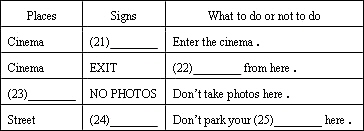
(一)交际应答。录音中有五个句子,每个句子听一遍,然后从每小题A、B、C中选出能对每个句子做出适当反应的答语。
1.A.Yes, please. B.Good idea. C.Of course, it is.
2.A.Certainly you are. B.Sure. Hold on, please. C.I’ll do that.
3.A.Oh, they are over there. B.I’m glad you’ve found it. C.Go straight and turn left.
4. A.OK, I wil. B.Yes, I think so. C.Good for you.
5.A.Never mind. B.You are welcome. C.I’m sorry.
(二)情景反应。录音中有五组对话,听对话两遍后,从每小题A、B、C中选出能回答所给问题的正确答案。
6.When will Mrs White come back?
A.Right now. B.Quite soon. C.At four.
7.What sport does the woman like?
8.What does the woman prefer to do?
A.To see the new play. B.To do some shopping. C.To visit the museum.
9.What are the man and woman doing?
A.They are looking for a CD player in a shop.
B.They are learning how to press the button.
C.The man is teaching the woman how to use the CD player.
10.Why was Frank on the news last night?
A.He walked along the beach at night.
B.He swam alone in the cold water.
C.He got the boy out of water and saved him.
(三)对话理解。录音中有一段对话,听对话两遍后,从每小题A、B、C中选出能回答所给问题的正确答案。
11.Where could the dialogue happen?
A.In a shop. B.In a library. C.In a hospital.
12.Why did the young man go to see the doctor?
A.He didn’t know where to begin his talk.
B.He felt difficult to fall asleep.
C.He felt unhappy most of the day.
13.How long has the young man been ill?
A.For about two years. B.For about three weeks. C.For about six months.
14.In what season did the young man feel worse?
A.In Spring. B.In Autumn. C.In winter.
15.What did the doctor ask the young man to do?
A.To take some medicine. B.To burn away his worries. C.To take more exercises.
(四)短文理解。录音中有一篇短文,听短文两篇后,从每小题A、B、C中选出能回答所给问题的正确答案。
16.What happened to the three boys in a cold day?
A.They lost their way.
B.They couldn’t find the big house.
C.They had to spend the night in the open air.
17.What did the three boys ask the farmer to do?
A.To give them some water and food.
B.To let them stay in his house for a night.
C.To tell them the way to walk out of the forest.
18.Why did one of the boys have to sleep in the big house?
A.The farmer didn’t like the third boy.
B.One of the boys made a loud noise when he slept.
C.There wasn’t enough room in the farmer’s house.
19.Who was the first to sleep with the horses?
A.Mike B.Jack C.Tom
20.Why were all the horses outside at the house door?
A.Because someone drove them out of the house.
B.Because the smell in the big house was really terrible.
C.Because the horses didn’t like to stay with people at night.
One summer evening as I was cooking dinner, there was a knock at the door. I opened it and saw an old man. But his voice was pleasant as he said, “Good evening. I come to see if you have a room for just one night. I live far away from here, and there's no bus till next morning. ”
I told him we would find him a bed, but it was not comfortable. I went inside and cooked dinner. When we were ready, I asked him if he would like to join us. “No, thank you. I have plenty.” When I had finished the dinner, I went out to talk with him. He told me he fished for a living to help his daughter, her five children, and her husband, who was ill and too weak to do anything.
At bedtime, we put a bed in the children's room for him. On his next trip, as a gift, he brought a big fish and some fresh vegetables. In the years he came to stay overnight with us, and there was never a time he did not bring us some fish or vegetables from his garden.
I know it was thankful for our family to know him, from whom we learn what was to accept the bad without a complaint(抱怨) and the good with thanks.
1Why did the old man go to the writer's house?
A. To give a fish to the writer. B. To stay for the night.
C. To sell some fish. D. To ask for some money.
2 How many people were there in the old man's daughter's family?
A. Two. B. Four. C. Six. D. Seven.
3 Which of the following is true?
A. The old man stayed for the night with the writer only once.
B. The old man came to the writer's house to ask for some food.
C. The old man came to stay with the writer for the night many times.
D. The old man felt lonely because he had no son or daughter.
British people are famous for drinking tea. But brother and sister, Sarah and Bobby Green, became young millionaires(百万富翁) when they opened a chain of American-style coffee shops in the UK.
Having the idea: It started when Sarah took a weekend trip to New York to visit her brother Bobby. One evening, in a Thai restaurant, Sarah told Bobby how much she wished she could buy American-style coffee in London. Bobby suggested they started their own coffee shop. Sarah fell in love with the idea.
Doing the research: Back in London, she spent a whole day on the London subway, getting off the train at different stations to taste the coffee. “It was terrible, and I knew there was a gap (空缺) in the market.” In 1995, they opened their first Coffee Republic shop in the center of London.
Making it work: The first year was very difficult. British people were not used to the names of American coffees, like latte and macchiato. But being successful was their dream and they were not going to give up. Today, there are over 100 Coffee Republic shops all over the country and the company has £30 million a year.
Advice for others: Sarah has now written a best-selling book about their experience, called Anyone Can Do It! She hopes it will help other young people to start their own businesses. She says, “If you think you have the energy, then get out and follow your dream.”
4What kind of company do they run?
A. A fast-food restaurant. B. A tea shop.
C. A coffee shop. D. A big hotel.
5 Where are their Coffee Republic shops?
A. All over the UK. B. All over the US.
C. In the center of London. D. In New York.
6Which information is mentioned in the passage?
A. Sarah was not interested in Bobby’s idea.
B. British people never drank coffee before 1995.
C. Sarah’s best-selling book is about how to make coffee.
D. Sarah found a business chance while doing the research.
 Most people around the world are right-handed. This also seems to be true in history. In 1799, scientists studied works of art made at different times from 1,500 B. C. to the 1950s. Most of the people shown in these works are right-handed, so the scientists guessed that right-handedness has always been common through history. Today, only about 10% to 15% of the world's population is left-handed.
Why are there more right-handed people than left-handed ones? Scientists now know that a person's two hands each have their own jobs. For most people, the hand is used to find things or hold things. The right hand is used to work with things. This is because of the different work of the two sides of the brain(脑). The right side of the brain, which makes a person's hands and eyes work together, controls(控制) the left hand. The left-side of the brain, which controls the right hand, is the centre for thinking and doing problems. These findings show that more artists should be left-handed, and studies have found that left-handedness is twice as common among artists as among people in other jobs.
No one really knows what makes a person become right-handed instead of left-handed. Scientists have found that almost 40% of the people become left-handed because their main brain is damaged(伤害) when they are born. However, this doesn't happen to everyone, so scientists guess there must be another reason why people become left-handed. One idea is that people usually get right-handed from their parents. If a person does not receive the gene(基因)for right-handedness, he/she may become either right-handed or left-handed according (根据)to the chance and the people they work or live with.
Though right-handedness is more common than left-handedness, people no longer think left-handed people are strange or unusual. A long time ago, left-handed children were made to use their right hands like other children, but today they don't have to.
7 After studying works of art made at different times in history, the scientists
found ____________.
A. the art began from 1,500 B. C.
B. the works of art ended in the 1950s
C. most people shown in the works of art are right-handed
D. most people shown in the works of art are left-handed
8 How many people in the world are left-handed now?
A. Less than one sixth. B. More than a half.
C. About 40%. D. The passage doesn't tell us.
9 According to the passage, which of the following is NOT true?
A. No one really knows what makes a person become right-handed.
B. Scientists think there must be some reason why people become left-handed.
C. Today children are not made to use their right hands only.
D. Left-handedness is cleverer than right-handedness.
10 What is the best title for this passage?
A. Left-handed People B. Scientists' New Inventions
C. Which Hand D. Different Brains, Different Hands
湖北省互联网违法和不良信息举报平台 | 网上有害信息举报专区 | 电信诈骗举报专区 | 涉历史虚无主义有害信息举报专区 | 涉企侵权举报专区
违法和不良信息举报电话:027-86699610 举报邮箱:58377363@163.com