
题目列表(包括答案和解析)
 To most of us, school means classes, teachers, schedules,
grades and tests. But for the children at Sudbury Valley School in
Massachusetts, school is very different.
To most of us, school means classes, teachers, schedules,
grades and tests. But for the children at Sudbury Valley School in
Massachusetts, school is very different.
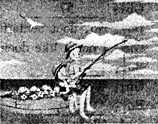
Firstly, there are no lessons. All the children, aged between 4 and 19, do whatever they want. There are no teachers, only “staff members”. The idea behind this is that you do not need to make children learn, because children want to learn anyway. “You do not need to say to a three-year-old, ‘Go explore your environment.’ You can’t stop them!”says Daniel Greenberg, a founder of the school. “But if you make children do what you want all day… they will lose all taste of learning.” At Sudbury Valley School, you will find children talking, reading, painting, cooking, working on computers, studying French, playing the piano, climbing trees, or just running around. Two boys spent three years just fishing!
The other way that Sudbury Valley School is different is that the children can decide the rules. Every week, there is a school meeting where both children and staff have one vote (投票)each—even the four-year-olds. They decide the school rules, how to spend the school money, and even which staff they want and do not want anymore.
When the school first opened in 1968, people said it would never work. But today, the school has 200 students, and 80% of its students go on to college. Even the two boys who went fishing all the time have successful careers today. One of them is a musician and the other is a computer scientist.
1.What's special about the school?
A. There is nobody but students there.
B. All the students are of the same age.
C. There are no classes for the students.
D. There are no rules in the school.
2.What do the students do in the school?
A. They learn everything there from the staff members.
B. They grow up there without learning anything.
C. They spend all the time with their parents.
D. They do whatever they are interested in.
3.The school seems to believe that children________.
A. learn best when they are doing what they want
B. are too young to learn anything by themselves
C. can look after themselves without any help
D. can't go to college without any hard work
4.The last paragraph wants to tell us that_ .
A. the writer doesn't like the idea of the school
B. the school is quite successful in its work
C. most of the parents don't believe in the school
D. younger students learn better there than older ones
5.The underlined word career in the last paragraph most probably means_.
A. family B. money C. lifestyle d. job
1
To most of us, school means classes, teachers, schedules, grades and tests. But for the children at Sudbury Valley School in Massachusetts, school is very different.
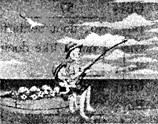
Firstly, there are no lessons. All the children, aged between 4 and 19, do whatever they want. There are no teachers, only “staff members”. The idea behind this is that you do not need to make children learn, because children want to learn anyway. “You do not need to say to a three-year-old, ‘Go explore your environment.’ You can’t stop them!”says Daniel Greenberg, a founder of the school. “But if you make children do what you want all day… they will lose all taste of learning.” At Sudbury Valley School, you will find children talking, reading, painting, cooking, working on computers, studying French, playing the piano, climbing trees, or just running around. Two boys spent three years just fishing!
The other way that Sudbury Valley School is different is that the children can decide the rules. Every week, there is a school meeting where both children and staff have one vote (投票)each—even the four-year-olds. They decide the school rules, how to spend the school money, and even which staff they want and do not want anymore.
When the school first opened in 1968, people said it would never work. But today, the school has 200 students, and 80% of its students go on to college. Even the two boys who went fishing all the time have successful careers today. One of them is a musician and the other is a computer scientist.
1.What's special about the school?
A. There is nobody but students there.
B. All the students are of the same age.
C. There are no classes for the students.
D. There are no rules in the school.
2.What do the students do in the school?
A. They learn everything there from the staff members.
B. They grow up there without learning anything.
C. They spend all the time with their parents.
D. They do whatever they are interested in.
3.The school seems to believe that children________.
A. learn best when they are doing what they want
B. are too young to learn anything by themselves
C. can look after themselves without any help
D. can't go to college without any hard work
4.The last paragraph wants to tell us that_ .
A. the writer doesn't like the idea of the school
B. the school is quite successful in its work
C. most of the parents don't believe in the school
D. younger students learn better there than older ones
5.The underlined word career in the last paragraph most probably means_.
A. family B. money C. lifestyle d. job


1
Top help you decide what might make a good pet ,we've put together a pet checklist .We've named some of the animals that are often kept as pets .We've shown some good points and bad points about each .And we hope it may help you make the best choice(选择)
|
Pick-a-Pet Checklist(清单) |
||
|
Pets |
Good Points |
Bad points |
|
Rabbit |
Easy to keep Enjoy being petted Good to hold |
Hard to house train Drop lots of hair Easily upset by high temperature |
|
Raccoon |
Can be very interesting Can be friendly when young |
Against the law to keep in many states in the U.S. Can get unkind when older |
|
Cat |
Easy to feed & care for Can live indoors or out Fun to hold Very friendly |
May scratch furniture Little pans can be messy May kill birds May make you sneeze |
|
Dog |
Come in many sizes Can live indoors or out Fun to love & play with Very friendly Can give safety |
Can be smelly ,messy ,noisy Need to be licensed& trained May make you sneeze May bite(咬)if angry Need lots of attention |
1.You are ______ to keep a raccoon as a pet in many places of America.
A. suggested B. encouraged C. not allowed
2.It would be easier for you to keep a ______ as a pet if you're often too busy to take care of it .
A. rabbit or raccoon B. rabbit or cat C. raccoon or dog
3.If you feed birds at home , you should be very careful to choose a ______ as your another pet.
A .rabbit B. raccoon C. cat
4.The dog may ______ you if you make it angry .
A. hurt B. fix C. train
5.The writer tries to help us______ with the checklist .
A. learn how to look after our pets
B. find which animal is our best choice as a pet
C. Know what kind of animals can be kept as a pet
Jack is the name of a game. It is quite popular with children. To play jacks, you will need a small ball and ten small metal objects (物体) called jacks.
The rules for this game are quite easy. To begin with, put the ten jacks on the floor or ground in front of you. Toss the ball high, pick up one jack and then catch the ball. Keep the jack in your hand and go on to pick up the other jack one at a time. You lose your turn if you do not catch the ball, or if you do not pick up a jack, or if you drop (掉) any of the jacks from your hand.
When you finish all the ten jacks, you now try to do the same thing again but with two jacks at one time. This is more difficult, of course. You lose your turn if you make any of the above three mistakes (错误) or if you do not pick up two jacks each time.
1.To play jacks is ___________.
A. difficult for boys B. interesting for children
C. difficult for girls D. interesting for old people
2.The word “toss” here means __________.
A. drop B. catch C. throw D. pick
3.If you want to finish the first and second parts of the game, you have to pick up jacks __________.
A. ten times B. fifteen times C. twenty times D. thirty times
4.The jacks are made of _________.
A. paper B. glass C. metal D. water
5.After you pick up the first ten jacks, the game becomes more difficult because you must pick up _________ at a time.
A. two jacks B. four jacks C. three jacks D. only one
湖北省互联网违法和不良信息举报平台 | 网上有害信息举报专区 | 电信诈骗举报专区 | 涉历史虚无主义有害信息举报专区 | 涉企侵权举报专区
违法和不良信息举报电话:027-86699610 举报邮箱:58377363@163.com