
题目列表(包括答案和解析)
听力部分(25分)
一、听小对话,回答问题(共5小题,计5分)
1.How often does Lucy go shopping?
A.Once a week
B.Twice a week
C.five times a week
2.What's the matter with David?
A.He has a toothache
B.He has a stomachache
C.He has a cold
3.What is Mary doing for vacation?
A.He is visiting his grandmother.
B.He is relaxing at home.
C.He is going to the beach.
4.What should Linda do?
A.She should see a dentist.
B.She should go to bed early.
C.She should listen to some music.
5.Where is Jeff going?
A.San Francisco
B.Hawaii
C.Greece
二、听长对话,回答问题(共6小题,计12分)
听下面两段长对话。每段对话后有几个小题,从题中所给的A、B、C三个选项中选出最佳选项,每段对话读两遍。
听下面一段对话,回答第6到第8三个小题。 现在,你有15秒钟的时间阅读这三题。
6.What are the speakers talking about?
A.Frank's math
B.Frank's science
C.Frank's English
7.How is Frank doing in science?
A.He is doing well.
B.He is doing badly.
C.He isn't working hard at science.
8.What's the relationship(关系)between the two speakers?
A.Neighbors(邻居)
B.Husband and wife
C.A parent and a teacher
听下面一段对话,回答第9到11三个小题。现在,你有15秒钟的时间来阅读这三个小题。
9.How is Mary going to Xi'an?
A.By air
B.By train
C.By bus
10.What is she going there for?
A.To spend her holiday
B.To see her parents
C.To meet her parents.
11.How long will she stay in Xi'an?
A.Five days
B.Fifteen hours
C.Fifty hours
三、听独白回答问题(共4小题,计8分)
听下面一段独白,并按独白的要求在试卷上完成任务。你可以边听边完成任务。然后你会看到5个问题和相关的选项。请从每个问题A、B、C三个选项中选出最佳选项。听独白前,你有25秒钟的时间阅读有关材料和5个小题,听完独白后,你有25秒钟的时间来选择有关选项。独白连读两遍。
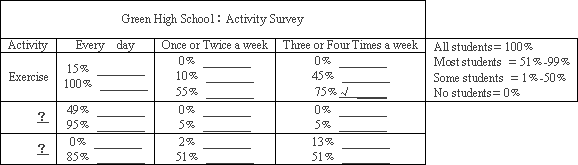
12.What is the speaker?
A.A teacher
B.A parent
C.A student
13.What is the second activity in the survey?
A.Exercise.
B.Do homework
C.Surf the Internet
14.How many students exercise every day?
A.Some students
B.Most students.
C.All students
15.As for “surf the Internet ”, which of the following is TRUE?
A.No students surf the Internet every day
B.51﹪students surf the Internet once or twice a week.
C.13﹪students surf the Internet three or four times a week.
听力
Ⅰ:听小对话,回答问题。请从题中所给的A、B、C三个选项中选择正确的选项。对话仅读一遍。
1.How often does Tom see the movies?
A.Once a month.
B.Twice.
C.Three times a month.
2.Where is the man going for vacation?
A.To Guangzhou.
B.To Hainan.
C.To Dalian.
3.When is Lucy coming back?
A.5th.
B.13th.
C.8 days.
4.What does Mike have to do?
A.He has to study for a test.
B.He has to look after his grandparents.
C.He has to visit his grandparents.
5.What is Linda doing on Thursday afternoon?
A.She has an art lesson.
B.She has a piano lesson.
C.She is playing sports.
II:听对话,回答问题。请从题中所给的A、B、C三个选项中选择正确的选项。对话仅读一遍。
听第6段材料,回答第6-7小题。
6.What did Mike buy for Kate?
A.A nice watch.
B.A new coat.
C.Some beautiful cards.
7.How will they get to Kate’s house?
A.By bus.
B.By subway.
C.By car.
听第7段材料,回答第8-10小题。
8.Does Bill walk to school every day?
A.Yes, he does.
B.No, he doesn’t.
C.Hardly ever.
9.Where does Bill have breakfast?
A.At school.
B.At home.
C.On the way.
10.How long does Bill read English every morning?
A.For forty minutes.
B.For half an hour.
C.For twenty minutes.
Ⅲ.听独白,请根据独白的内容,从题中所给的A、B、C三个选项中选择正确的选项。
11.How old is Mr Liu?
A.17.
B.70.
C.60.
12.Where does Mr Liu exercise every day?
A.In a park.
B.At home.
C.At school.
13.What does Mr Liu sometimes play with his friends?
A.Games.
B.Cards.
C.Chess.
14.Which is NOT right about Mr Liu?
A.He has a good eating habit.
B.He goes to the library twice a week.
C.He often has a walk in the afternoon.
15.How long does he watch TV every night?
A.Two hours.
B.An hour.
C.Half an hour
Childhood is a time of fun and games. Many people still remember when they were young, they often played games like hide-and-seek and chess. Playing teaches children how to get with others, and it also helps to exercise the mind and body. However, children today spend most of their time in front of the computer, playing video games.
A recent survey found that in the US. Children between 8 and 12 spend at least 13 hours a week playing video games or "gaming". Boys of this age spend even more time, almost 16 hours a week. Although some people will say that gaming is helpful, it brings many problems as well.
One big problem is that kids who spend most of their time on games might have difficulty communicating with real people. They might have trouble sharing and resolving (解决) problems because they do not practice these skills when sitting alone at a computer.
Another problem is about health. Game players usually sit for hours without doing any exercise. And they might not eat healthily. As a result, they might be out of shape.
Next, game players might have trouble with their lessons. Many of them spend more time playing games than working on their homework. In the end, they fail in the exams.
Finally, it is always possible that the gamers become addicted. Some people play four or five hours a day or even all day. This happened to a 28 - year - old Korean man. He spent about 50 hours playing an online game without sleeping or eating well. He died while gaming!
This is one example of the dangers of video gaming. It tells us that video gaming, like everything else, should not be done too much. A few hours a week should not hurt, but several hours a day just might be dangerous to your health.
1.Children of 8 to 12 in the US spend at least _________ hours a week playing video games.
A.13 B.16 C.28 D.50
2.How many problems about playing video games are mentioned in the passage?
A.Two. B.Three. C.Four. D.Five.
3.If game players spend lots of time playing games without doing their homework, they might __________.
A.become ill B.lose their friends C.die at once D.get lower grades at school
4.What does the underlined word “addicted” mean in Chinese?
A.悲伤 B.无聊 C.成瘾 D.沮丧
5.What does the writer want to tell us by writing this passage?
A.Video gaming has quite a lot of advantages.
B.Video gaming might be a dangerous thing.
C.Childhood is a time of fun and games.
D.Children should learn how to get along with others.
湖北省互联网违法和不良信息举报平台 | 网上有害信息举报专区 | 电信诈骗举报专区 | 涉历史虚无主义有害信息举报专区 | 涉企侵权举报专区
违法和不良信息举报电话:027-86699610 举报邮箱:58377363@163.com