
题目列表(包括答案和解析)
When my family moved to America from a small village in Guangdong, China, we brought not only our luggage, but also our village rules, customs and culture. One of the rules is that young people should always respect(尊敬) elders. Unluckily, this rule led to my very first embarrassment in the United States.
I had a part-time job as a waiter in a Chinese restaurant. One time, when I was serving food to a middle-aged couple, the wife asked me how the food could be served so quickly. I told her that I had made sure they got their food quickly because I always respect the elderly. As soon as I said that, her face showed great displeasure. My manager, who happened to hear what I said, took me aside and gave me a long lecture about how sensitive(敏感) Americans are and how they dislike the description “old”. I then walked back to the table and apologized to the wife. After the couple heard my reason, they understood that the problem was caused by cultural differences, so they laughed and were no longer angry.
In my village in China, people are proud of being old. Not so many people live to be seventy or eighty, and people who reach such an age have the most knowledge and experience. Young people always respect older people because they know they can learn from their rich experience.
However, in the United States, people think “growing old” is a problem since “old” shows that a person is going to retire(退休) or that the body is not working well. Here many people try to keep themselves away from growing old by doing exercises or jogging, and women put on makeup, hoping to look young. When I told the couple in the restaurant that I respect the elderly, they got angry because this caused them to feel they had failed to stay young. I had told them something they didn’t want to hear.
After that, I changed the way I had been with older people. It is not that I don’t respect them any more; I still respect them, but now I don’t show my feelings through words.
【小题1】Jack brought the couple their food very fast because______.
| A.the manager asked him to do so | B.he respected the elderly |
| C.the couple wanted him to do so | D.he wanted more pay |
| A.people dislike being called “old” |
| B.people are proud of being old |
| C.many people reach the age of seventy or eighty |
| D.the elderly are the first to get food in restaurants |
| A.lost his job in the restaurant |
| B.made friends with the couple |
| C.no longer respected the elderly |
| D.changed his way with older people |
| A.The more Jack explained, the angrier the couple got. |
| B.Jack wanted to show his feelings through words after his experience. |
| C.The manager went back to the table and apologized to the couple. |
| D.From this experience, Jack learned more about American culture. |
| A. Different countries, different customs | B. Old people, old customs |
| C. Different restaurants, different services | D. Differences between old and young |
My teenage son Karl became withdrawn after his father died. As a single parent, I tried to do my best to talk to him. But the more I tried, the more he pulled away. When his report card arrived during his junior year, it said that he had been absent 95 times from classes and had six falling grades for the year. In this way he would never graduate. I sent him to the school adviser, and I even begged him. Nothing worked.
One night I felt so powerless that I got down on my knees and asked God for help. “Please God, I can’t do anything more for my son. I’m at the end of my rope. I’m giving the whole thing up to you.”
I was at work when I got a phone call. A man introduced himself as the headmaster. “I want to talk to you about Karl’s absences.” Before he could say another word, I choked up(哽咽)and all my disappointment and sadness over Karl came pouring out into the ears of this stranger. “I love my son, but I just don’t know what to do. I’ve tried everything to get Karl to go back to school and nothing has worked. It’s out of my hands. ” For a moment there was silence on the other and of the line. The headmaster seriously said, “Thank you for your time”, and hung up.
Karl’s next report card showed a marked improvement in his grades. Finally, he was even on the list of the best students at school. In his fourth year, I attended a parent –– teacher meeting with Karl. I noticed that his teachers were surprised at the way he had turned himself around. On our way home, he said, “Mum, remember that call from the headmaster last year?” I nodded. “That was me. I thought I’d play a joke but when I heard what you said, it really hit me how much I was hurting you. That’s when I knew I had to make you proud.”
1.Which of the following has the similar meaning as the underlined word “withdrawn” in the first paragraph?
|
A.preferred to stay alone at home |
|
B.refused to go to school |
|
C.refused to talk to others |
|
D.began to dislike his mother |
2.There was silence on the other end of the line because _ _________.
|
A.the caller was too moved to say anything to the mother |
|
B.the caller waited for the mother to finish speaking |
|
C.the caller didn’t want the mother to continue her talk |
|
D.the caller was unable to help the mother |
3.Who was it that telephoned Karl’s mother that day?
|
A.The headmaster. |
B.The school adviser. |
|
C.Karl himself. |
D.The passage doesn’t tell us. |
4.From the passage we can learn that _____________.
|
A.children in single – parent families always have mental problems |
|
B.mother’s love plays an important role in teenagers’ life |
|
C.parents should give their children as much help as possible |
|
D.school education still works well without support from parents |
When I was a little girl, I lived with my grandparents in a small village(村庄).The life there was 41 , and I liked it very much. I had many friends and I liked playing with them 42 . After rainy days, there was much 43 in the river(河) near our house. I often went there to get 44 with my friends. I had 45 fun living there.
Now I live in a big city. I study in a school, but I 46 my life here. It’s too busy and it often makes me very 47 . Now the most interesting thing for me is to go to my grandparents’ home to 48 my vacation. Every time I can’t 49 to go there. I 50 a quiet life. I hope to live in a village when I’m older.
1.A. boring B. relaxing C. terrible
2.A. with B. from C. outside
3.A. ice B. water C. food
4. A. fish B. meat C. chicken
5.A. kind of B. a little C. lots of
6.A. enjoy B. dislike C. improve
7.A. dirty B. tired C. happy
8.A. spend B. describe C. remember
9.A. like B. want C. wait
10. A. order B. need C. think
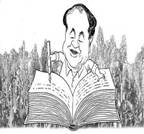
Born into a farmer’s family, life was not easy when I was a kid. We were so poor that we often did not know where our next meal was coming from. I had to sell cabbages at the marketplace to support my family.
A storyteller once came to the marketplace, and I went to listen to him. My mother was unhappy with me for forgetting my job. But that night, while she was making clothes for us under the weak light of an oil lamp, I couldn't help retelling stories I'd heard that day. She listened impatiently at first, since in her eyes professional(职业的) storytellers were smooth-talking men—nothing good ever came out of their mouths. But slowly she was attracted by my retold stories, and from that day on, she never gave me any task on market days, unspoken agreement to enjoy new stories. As a repayment(回报)for Mother's kindness and a way to show off my memory, I'd retell the stories for her in lively detail. Soon, she wasn't the only member of my audience, which later included my elder sisters, my aunts, even my stubborn grandmother.
I knew she was worried about me. Talkative kids are not well thought of in our village, for they can bring trouble to themselves and to their families when they talk too much. Mother often reminded me not to talk so much, wanting me to be a silent and modest teenager. However, my natural desire(渴望)to talk never went away, and that is what makes my name – Mo Yan, which means ‘no speaking’. This strong wish to talk also improved my ability to express myself, which is important for writers who are also considered as storytellers.
1.Mo Yan lived a/an ________ life when he was young.
A.hard B.colourful C.easy D.rich
2.From the second paragraph, we can learn that ________
A.little Mo Yan was interested in selling vegetables
B.his mother was attracted by the retold story at first
C.his mother didn’t let him listen to the new stories again
D.little Mo Yan had quite a good memory
3.Why did his mother dislike the professional storytellers?
A.Because she thought they never said anything good.
B.Because she thought they couldn’t make much money.
C.Because she thought they would affect Mo Yan’s schoolwork.
D.Because she thought most people didn’t like listening to stories.
4.In Mo Yan’s opinion, a writer should be a ________ child when they were young.
A.silent B.modest C.talkative D.trouble-making
5.Which is the best title(标题)of the passage?
A.My Unlucky Childhood B.A Storyteller’s Childhood
C.My Kind Grandmother D.More talking leads to success
When my family moved to America from a small village in Guangdong, China, we brought not only our luggage, but also our village rules, customs and culture. One of the rules is that young people should always respect(尊敬) elders. Unluckily, this rule led to my very first embarrassment in the United States.
I had a part-time job as a waiter in a Chinese restaurant. One time, when I was serving food to a middle-aged couple, the wife asked me how the food could be served so quickly. I told her that I had made sure they got their food quickly because I always respect the elderly. As soon as I said that, her face showed great displeasure. My manager, who happened to hear what I said, took me aside and gave me a long lecture about how sensitive(敏感) Americans are and how they dislike the description “old”. I then walked back to the table and apologized to the wife. After the couple heard my reason, they understood that the problem was caused by cultural differences, so they laughed and were no longer angry.
In my village in China, people are proud of being old. Not so many people live to be seventy or eighty, and people who reach such an age have the most knowledge and experience. Young people always respect older people because they know they can learn from their rich experience.
However, in the United States, people think “growing old” is a problem since “old” shows that a person is going to retire(退休) or that the body is not working well. Here many people try to keep themselves away from growing old by doing exercises or jogging, and women put on makeup, hoping to look young. When I told the couple in the restaurant that I respect the elderly, they got angry because this caused them to feel they had failed to stay young. I had told them something they didn’t want to hear.
After that, I changed the way I had been with older people. It is not that I don’t respect them any more; I still respect them, but now I don’t show my feelings through words.
1.Jack brought the couple their food very fast because______.
A. the manager asked him to do so B. he respected the elderly
C. the couple wanted him to do so D. he wanted more pay
2.In Jack’s hometown, ______.
A. people dislike being called “old”
B. people are proud of being old
C. many people reach the age of seventy or eighty
D. the elderly are the first to get food in restaurants
3. After this experience, Jack ______.
A. lost his job in the restaurant
B. made friends with the couple
C. no longer respected the elderly
D. changed his way with older people
4.Which of the following is TRUE?
A . The more Jack explained, the angrier the couple got.
B. Jack wanted to show his feelings through words after his experience.
C. The manager went back to the table and apologized to the couple.
D. From this experience, Jack learned more about American culture.
5.Which is the best title for this passage?
A. Different countries, different customs B. Old people, old customs
C. Different restaurants, different services D. Differences between old and young
湖北省互联网违法和不良信息举报平台 | 网上有害信息举报专区 | 电信诈骗举报专区 | 涉历史虚无主义有害信息举报专区 | 涉企侵权举报专区
违法和不良信息举报电话:027-86699610 举报邮箱:58377363@163.com