
题目列表(包括答案和解析)
书面表达。(10分)
A. 看图写句子。根据图示和提示词,写出恰当的句子,每图一句。(使用全部提示词)
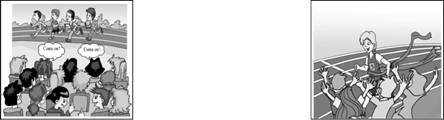
1. Kangkang, join, relay race, yesterday
______

2.2.stay up, computer
____________________________________

3.ring, stand for, parts 4. Ling Ling, well, English
____ _______

5. take…to, doctor
___________
— Where are Maria and Kangkang ? — They aren’t here. They ________ England.
A. have been to B. have been in C. have gone to
Does technology influence the purity of Chinese language? Yes!
Many Chinese use messenger tools such as MSN or QQ, listen to music on MP3 players and blog on the Internet using ADSL ,but most people don’t know the Chinese meanings of the abbreviations, as many English letters have become part of the local lexicon(专门词汇). some parents are so crazy about English letters that a couple tried to name their baby "@", they say the character used in email addresses reflects their love for the child.
While the "@" is obviously familiar to Chinese e-mail users, they often use the English word "at" to pronounce it , which sounds like ai ta, or "love him", to Putonghua speakers.
“Nowadays, more and more English abbreviations are being used in Chinese, making them an important part of the modern language," said Hou Min, a professor at Communication University of China. "The abbreviations are very popular because they can be used easily," Hou said. "As more Chinese people learn foreign languages, especially English, in recent years, using abbreviations has become a trend(趋势)among some educated people," she said.
Some language scholars fear such usage will influence the purity of Chinese and cause confusion(混乱) in communication.
【小题1】Which of the following is Not True according to the passage?
| A.Only a few people know the Chinese meanings of the abbreviations. |
| B.People often use the English word " love him " to pronounce"@". |
| C.Many English letters are popular and have become part of the local lexicon. |
| D.Using abbreviations has become a trend among educated people in recent years. |
| A.Because some parents feel "@"is very interesting. |
| B.Because some parents think "@"is a lucky word. |
| C.Because some parents want to show their love. |
| D.Because it is easy for children to write"@". |
| A.More and more Chinese abbreviations are being used in English |
| B.Chinese students can use Chinese in English correctly. |
| C.Many Chinese use messenger tools such as MSN or QQ, listen to music on MP3 players. |
| D.More and more English abbreviations are being used in Chinese |
| A.English abbreviations isn’t used in Chinese widely. |
| B.Technology influences the purity of Chinese language. |
| C.Some parents think it important to name their baby "@". |
| D.Using abbreviations has become a trend among some educated people. |
用方框中所给单词的正确形式填空,使短文正确、通顺。
(每词限用一次)(每小题1分,计10分)

Dear Headmaster,
I’m writing to tell you something 1.Nobody likes to be 2.However, some students throw waste paper and bottles 3. We all need a quiet place to study, but some students often make too much 4. at school. Even 5. , some of them are quite rude when talking to others. Everybody knows their behavior is bad, but 6. of us knows how to stop them.
I think we should make rules to 7. the situation. Perhaps it will be hard for us to obey the rules in the 8. , but if everyone does 9. best to follow the rules, our school will become better and better day 10. day.
Sincerely,
Kangkang
用特殊疑问词填空(20分)
what, who, where, why, which, when, how, how often , how many, how old
1. —_________do you get to school in the morning?
—At half past seven.
2. —_________does Kangkang usually play volleyball?
—On the playground.
3. —_________girl is your sister?
—The one next to the window.
4. —_________is under the chair?
—It’s a football.
5. —_________is your father?
—He is forty-one.
6. —_________does Steve go swimming?
—He goes swimming three times a week.
7.—_________sheep are there in the picture?
—There are eleven.
8. —_________does Maria go to visit her uncle?
—By train.
9. —_________is knocking at the door?
—Let me see. Oh, it’s Jane.
10. —_________are you running so fast?
—Because I’m late for class.
湖北省互联网违法和不良信息举报平台 | 网上有害信息举报专区 | 电信诈骗举报专区 | 涉历史虚无主义有害信息举报专区 | 涉企侵权举报专区
违法和不良信息举报电话:027-86699610 举报邮箱:58377363@163.com