
题目列表(包括答案和解析)
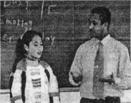
When I was a foreign teacher in China, every day I taught English to
my students and they taught me about China. One day the topic turned to
saying "I love you". I was shocked (震惊) to learn that not one of my
students had said this to their mothers, nor had their mothers said it to
them. "Does your mom love you?" "Of course ,"they answered.
 "How do you know ?"was my logical question. Some students
answered that their moms cooked and always told them what they were doing wrong to show their caring. I was shocked. So mom's cooking and criticizing read out as "I love you ". "Then how do you say 'I love you 'to her?" They agreed that getting good grades, followed by good jobs would be how they showed their love.
I come from a culture where most people are expressive enough, so I repeated these questions in classes over time. Gradually, I began to get different answers. Some of them had exchanged those sentiments with their moms.
One of my favorite stories of change came from a girl. When she came home from university, her mother met her at the door and hugged (拥抱) her. This had never happened before, but her mom said, "Now that you have gone I have more time to myself I noticed that in some places mothers and children hug each other and I decided it was a good idea and that I would begin hugging you."
In my family we all say "I love you" a lot .While it is true that we often say the words without having great depth(深度) of feelings at that moment, it is almost like a blessing we give each other. Those three little words carry a world of meaning, even when said as a greeting, but most especially if they are the last words we say to or hear from those we love.
81.The foreign teacher
A. comes from America B. is a young woman
C. doesn't understand Chinese culture D. knows much about China
82. Why was the foreign teacher shocked?
A. Because the students say "I love you" to her.
B. Because the students don't know the meaning of" I love you".
C. Because the students' moms don't love them.
D. Because her students and their mums didn't say "I love you" to each other.
83. Chinese mothers prefer to show love by_
A. saying "I love you" B. cooking
C. getting good grades D. doing something helpful
84. In paragraph 4,what's the meaning of the mom's hugging?
A. She doesn't want her daughter leave her again.
B. She loves her daughter and misses her.
C. She is glad that she has more time to herself
D. She finds it interesting to hug her daughter.
85. What's the main idea of the passage?
A. Say "I love you" to your family.
B. Say "I love you "a lot to Chinese people .
C. Say "I love you "as a greeting to others.
D. Say "I love you "without great depth of feelings.
 . At eight.
After my husband died, my world crashed around me. My six children were 10, nine, eight, six, three and 18 months, and I was overwhelmed with the responsibilities of earning a living, caring for the children and simply keeping my head above water.
I was fortunate to find a wonderful housekeeper to care for the children during the week, but from Friday nights to Monday mornings, the children and I were alone, and frankly I was uneasy. Every unusual noise or any late-night phone call filled me with fear. I felt incredibly alone.
One Friday evening I came home from work to find a big beautiful German shepherd(牧羊犬) on our doorstep. It was obvious he wanted to make the house his home. The children took an instant liking to "German" and begged me to let him in. I agreed to let him sleep in the basement until the next day. That night I slept peacefully for the first time in many weeks.
The following morning we made phone calls and checked lost-and-found ads for German’s owner, but with no results. Saturday night he was still with us.
On Sunday I had planned to take the children on a picnic. Since I thought it best to leave German behind in case his owner came by, we drove off without him. When we stopped to get gas at a local station, we were amazed to see German racing to the gas station after us. He stayed again Sunday night.
Monday morning I let him out for a run while the children got ready for school. He didn’t come back. We thought we’d never see him again. On Friday evening, German was back again. We took him in, and again he stayed until Monday morning, when our housekeeper arrived. It went like this for almost 10 months. We looked forward to his coming each Monday morning he left home.
Each week, between German's visits, I grew a little braver, but every weekend I enjoyed his company. Then one Monday morning we patted his head and let him out for what turned out to be the last time. He never came back.
【小题1】What does the underlined part in the first paragraph mean?
| A.trying to keep calm in public | B.trying to get attention from other men |
| C.showing her high spirit in the face of trouble | D.managing to continue to live |
| A.she couldn’t raise the six children on her own |
| B.she couldn’t relax on the weekends |
| C.The housekeeper only came on weekends |
| D.she was too busy to feel lonely |
| A.German was fond of living with the family. |
| B.The writer felt safe and protected with German around. |
| C.The dog stayed until the writer was strong enough to go on alone. |
| D.The writer was too busy that weekend to go find the dog’s owner. |
| A.A homeless dog | B.A friend’s strength |
| C.How to keep a dog | D.Keep up when in trouble |
After my husband died, my world crashed around me. My six children were 10, nine, eight, six, three and 18 months, and I was overwhelmed with the responsibilities of earning a living, caring for the children and simply keeping my head above water.
I was fortunate to find a wonderful housekeeper to care for the children during the week, but from Friday nights to Monday mornings, the children and I were alone, and frankly I was uneasy. Every unusual noise or any late-night phone call filled me with fear. I felt incredibly alone.
One Friday evening I came home from work to find a big beautiful German shepherd(牧羊犬) on our doorstep. It was obvious he wanted to make the house his home. The children took an instant liking to "German" and begged me to let him in. I agreed to let him sleep in the basement until the next day. That night I slept peacefully for the first time in many weeks.
The following morning we made phone calls and checked lost-and-found ads for German’s owner, but with no results. Saturday night he was still with us.
On Sunday I had planned to take the children on a picnic. Since I thought it best to leave German behind in case his owner came by, we drove off without him. When we stopped to get gas at a local station, we were amazed to see German racing to the gas station after us. He stayed again Sunday night.
Monday morning I let him out for a run while the children got ready for school. He didn’t come back. We thought we’d never see him again. On Friday evening, German was back again. We took him in, and again he stayed until Monday morning, when our housekeeper arrived. It went like this for almost 10 months. We looked forward to his coming each Monday morning he left home.
Each week, between German's visits, I grew a little braver, but every weekend I enjoyed his company. Then one Monday morning we patted his head and let him out for what turned out to be the last time. He never came back.
1.What does the underlined part in the first paragraph mean?
A.trying to keep calm in public B.trying to get attention from other men
C.showing her high spirit in the face of trouble D.managing to continue to live
2.When the author’s husband died, ______.
A.she couldn’t raise the six children on her own
B.she couldn’t relax on the weekends
C.The housekeeper only came on weekends
D.she was too busy to feel lonely
3.Which of the following is Wrong according to the article?
A.German was fond of living with the family.
B.The writer felt safe and protected with German around.
C.The dog stayed until the writer was strong enough to go on alone.
D.The writer was too busy that weekend to go find the dog’s owner.
4.Which is the best title for the passage?
A.A homeless dog B.A friend’s strength
C.How to keep a dog D.Keep up when in trouble
湖北省互联网违法和不良信息举报平台 | 网上有害信息举报专区 | 电信诈骗举报专区 | 涉历史虚无主义有害信息举报专区 | 涉企侵权举报专区
违法和不良信息举报电话:027-86699610 举报邮箱:58377363@163.com