
题目列表(包括答案和解析)
One bag, that’s it.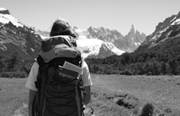
The importance of packing light cannot be overemphasized(过度强调). Limit yourself to 20 pounds in a carry-on bag. A 9’× 22’ ×14’ bag fits under most airplane seats. And after you enjoy that sweet mobility and freedom, you’ll never go any other way.
You’ll walk with your luggage(行李) more than you think you will. Before leaving home, give yourself a test. Pack up completely, and practice being a tourist for an hour. Fully loaded, you should enjoy window-shopping. If you can’t, go home and thin things out.
Packing light isn’t just about the trip over and back—it’s about your traveling lifestyle. Too much luggage marks you as a typical tourist. It slams the back door shut. Changing locations becomes an important operation. With only one bag, you’re mobile and in control. Take this piece of advice seriously. Pack light, and pack smart. These days, you can’t bring anything possibly dangerous—such as knives, lighters or large amounts of liquid (液体)—in your bag.
What to bring?
How do you fit a whole trip’s worth of luggage into a small backpack or suitcase(衣箱)? The answer is simple: bring very little.
Bring out everything you think you might need on the floor. Pick up one item(件) at a time and check it. Ask yourself—not “Will I use it?”, but—“Will I use it enough to feel good about carrying it all the way? The world is getting really small—you can buy Colgate toothpaste, Nivea cream and Gillette razors in almost every country.
Think about what you can do without—not what will be convenient on your trip. When in doubt, leave it out.
【小题1】What do the last two paragraphs mainly talk about?
| A.Packing light is a kind of travelling lifestyle. |
| B.Packing light can give you mobility and freedom. |
| C.How to find out what to take and what not to take on a trip. |
| D.How to find out if your luggage is too heavy. |
| A.Colgate toothpaste | B.Lighters | C.Knives | D.a great deal of liquid |
| A.make things thin to bring |
| B.make your luggage lighter |
| C.take out dangerous things |
| D.throw useless things away |
| A.people had better bring nothing when they travel |
| B.people can use Nivea cream only in their home town |
| C.the importance of packing light is overemphasized now |
| D.you will be easily seen as a tourist with a lot of luggage |
| A.Dying for a trip |
| B.Things to take on a trip |
| C.Pack light and pack right |
| D.Travelling: a typical way of life |
1
If you are sitting at a table with people you don’t know, it is impolite to smoke without first asking if it will disturb them. At American restaurants and coffee shops, cold water is usually served before you order. You may find the bread and the butter are free, and if you order coffee, you may get a free refill.
Most cities and towns have no rules about opening and closing time for stores and restaurants, though they usually do make rules for bars. Especially in big cities, stores may be open 24 hours a day. Serving in restaurants are often large. If you can’t finish the meal but would like to enjoy the food later, ask the waiter or the waitress for a “doggie bag”(剩菜袋). It may have a picture of a dog on it, but everybody knows you are taking the food for yourself. Tips are not usually added to check. You should leave a tip of about 15% on the table when you leave. In some restaurants, a waiter or waitress often brings your check on a plate, and you can put your money there. Then the waiter or the waitress brings you your changes.
1.______is usually served before you order at American restaurants or coffee shops.
A. bread B. Butter C. Coffee D. Cold water
2.American people always _____ when servings are too large for them.
A. take the food home for their dogs
B. leave the food on the table and go away
C. take the food home in doggie bags for themselves.
D. ask the waiter or the waitress to keep the food for them.
3.If you spend $120 for your meal, you’ll probably leave a tip of________.
A.$10 B. $18 C. $30 D. $50
4.How can you give tips in America?
A. They are usually added to the check.
B. They are added to the price of the meal.
C. A tip is usually 1/5 of the price of the meal.
D. You can leave them on the table when you leave.
5.Which of the following is TRUE according to the passage?
A. It’s bad manners to smoke if the people who sit at the same table mind it.
B. At American restaurants and coffee shops, bread, butter and coffee are all free.
C. American people never sit with people they don’t know.
D. Few cities and towns make rules for bars in America.
阅读下面的短文,并根据短文后的要求答题。
According to a new survey, students’ safety has become a big problem. Nearly 50% of students say they are worried about robbery on the way to and from school. Now in many big cities in China, some schools have taught an unusual lesson: self-protection. Students like this lesson because there are no exams or boring classes. And they can learn how to save lives and know how to stop danger before it really happens.
Chen Haoyu, a teacher at Beijing No. 25 Middle School, gives young students advice on how they should deal with danger.
If you are robbed
Keep calm. If you cannot cry for help or run away, give the robber your money. Try to remember what the robber looks like and tell the police later.
If you are in a traffic accident
If a car hurts you, you should remember the car number. If it is a bicycle, try to call your parents before you let the rider go. This is because you don’t know how seriously you are hurt.
If it is raining hard and there is lightning
Don’t stay in high places and stay away from trees.
When there is a fire
Get away as fast as you can. Put wet things on your body and try to find an exit. Do not take the lift.
If someone is drowning
If you can’t swim, don’t get into the water. Cry out for help.
Remember that danger is never as far away as you think. Take care of yourself at all times!
1.将文中划线句子翻译成汉语:
根据短文内容回答问题。
2.Why do students like the self-protection lesson?
3.How many suggestions for dealing with danger did Chen Haoyu give ?
______________________________________________________________
4.What should you do when there is a fire?
____________________________________________________________________.
5.The best title for this passage might be
Everyone worries. But how do you deal with your worries? Whether your worries are big or small, you can take these three steps to do with your worries:
1. Try to find out what you’re worded about
Sometimes, you will know what you’re worried about. Other times, you might not. Try to find it out first; if you can’t, you can ask for help.
2. Think of ways to make it better
There is always something you can do to help you feel less worded. Sitting there worrying is no fun and it won’t solve your problem.
Grades at school are often top worries for kids. If you’re worded about grades, ask yourself these questions:
★ Why are grades important? What do grades mean to me?
★ How do I get ready for class? Do I go over my notes even when there isn’t a test?
★Do I have a good place to do my homework?
★ Have I tried different ways of studying?
If your worry is about a fight you had with a friend, you might write down all the things you could do: write a note to him or her, invite him or her to a basketball game, say sorry to him or her, etc. Once you have a list of things you could do, you can choose the one that gets your friend back.
3. Ask for help
When you’re worried, it can help to find someone to talk to. You can ask your parents, friends, or teachers for help.
【小题1】How many steps of doing with your worries are mentioned(提及) in the passage?
| A.Two. | B.Three. | C.Four. | D.Seven. |
| A.you should try to find it out. | B.you can’t ask for help |
| C.you don’t need to think of ways | D.you can sit there worrying |
| A.Why are grades important? | B.What do grades mean to me? |
| C.How do I get ready for class? | D.Why don’t my friends like me? |
| A.Make a new friend. | B.Don’t talk to him or her any more. |
| C.Have another fight with him or her. | D.Invite him or her to a basketball game. |
| A.who is often worried | B.when people are worried |
| C.What to do with our worries | D.what kind of worries people have |
Sometimes we feel good, such as when we get good grades or when something good happens. Sometimes we feel bad, such as when we argue(争吵) with our classmates or when the teachers criticize(批评)us. Both kinds of feelings are normal(普通的). Of course, we all enjoy good feelings, but when we feel unhappy, sometimes we don’t know what to do about it. Here is a plan that will help you when your feelings are bothering you.
1. ACCEPT your feelings. Say to yourself, "I am sad." "I am scared." "I am angry." "I am embarrassed(尴尬)." It’s all right to have these feelings.
2. RELAX and have a rest before you act. Take slow deep breaths (呼吸)and relax your body. Imagine that you are in a safe place. You could listen to some music or sing a beautiful song!
3. THINK about ways to help yourself. Thinking helps you do something smart instead of hurting yourself or making things worse.
4. DO something to help yourself. Maybe you can talk to someone, or do something you enjoy. If it doesn’t work, go back to step 3.
【小题1】If you want to relax yourself, you can _________.
| A.say to yourself, "I am sad." |
| B.listen to some music or sing a beautiful song |
| C.think about ways to help yourself |
| D.watch thrillers |
| A."I don’t want the bad feeling." |
| B."I want to be happy." |
| C."It’s too bad to have bad feeling." |
| D."It’s nothing to have all these bad feelings." |
| A.accept your feelings |
| B.relax and have a rest before you act |
| C.think about ways to help yourself |
| D.do nothing |
| A.what we can do when we feel happy |
| B.we can do nothing when we feel bad |
| C.We all enjoy good feelings, but bad feeling is unusual to us |
| D.what we can do when we feel unhappy |
湖北省互联网违法和不良信息举报平台 | 网上有害信息举报专区 | 电信诈骗举报专区 | 涉历史虚无主义有害信息举报专区 | 涉企侵权举报专区
违法和不良信息举报电话:027-86699610 举报邮箱:58377363@163.com