
A. what B. anywhere C. whole D. which 查看更多


题目列表(包括答案和解析)

  How could we tell time if there were no watches or clocks anywhere in the world?
The sun is probably the world’s first “clock”, except in the far north, where the Eskimos(爱斯基摩人) live. There, it’s dark most of the winter, and light most of the summer. But in most of the world, people have used the sun as a clock. Even today, if you don’t have a clock, you can still know that when the sun shines, it’s day and when it’s dark, it’s night. The sun can also tell you if it’s morning, noon, or afternoon.
Some people live near the sea from the tides. In the daytime, for about six hours, water rises higher and higher on the beach. And then it goes down and down for about six hours. The same thing happens again at night. There are two high tides and two low tides every 24 hours. Seamen on the ship learn how to tell time by looking at the moon and the stars. The whole sky is their clock.
In some places in the world the wind comes up at about the same time every day or changes direction or stops blowing. In these places the wind can be the clock.
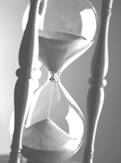
A sand clock is an even better clock. If you had fine dry sand in a glass shaped like the one in the picture, you would have what is called an hourglass. The sand in the hourglass goes from the top part to the bottom in exactly one hour. When the hourglass is turned over, the sand will take another hour to go back again
小题1: From the passage we can know there are _______ways to tell time besides the clock and watch.
A.3B.4C.5D.7
小题2:. The Eskimos in the far north can’t use the sun for a clock because________
A.they know very little about the sun
B.the sun there never goes down in winter
C.it’s too cold for them to go out to watch the sun
D.it has long dark winters and long light summers
小题3:. What does the underlined word “tides” mean in the passage?
A.洋流B.潮汐C.海啸D.波浪
小题4: In which page of newspaper can you probably read this passage?
A.NewsB.ScienceC.AdvertisementD.Sports
小题5: What is the best title for the passage?
A.Different Ways to Tell TimeB.How the Clock Was Invented
C.The Development of the ClockD.A Useful Machine to Tell Time

查看答案和解析>>

How could we tell time if there were no watches or clocks anywhere in the world?

The sun was probably the world’s first “clock”, except in the far north, where the Eskimos (爱斯基摩人) live.There, it’s dark most of the winter, and light most of the summer.But in most of the world, people have used the sun fooday, if you don’t have a clock that shows time, you still know that when the sun shines, it’s day, and when it’s dark, it’s night.The sun can not only tell you whether it’s day or night but also it’s morning, noon, or afternoon.When the sun is almost directly overhead, it’s noon.
People who live near the sea from the tides.In the daytime, for about six hours, the water rises higher and higher on the beach.And then it about six hours.The same thing happens again at night.There are two high tides

and two low tides every 24 hours.

Seamen on a ship tell time by looking at the moon and the stars.The whole sky is their clock.

In some places in the world the wind comes up at about the same

time every day or changes direction or stops blowing.In these places

the wind can be the clock.

A sand clock is an even better clock.If you had fine dry sand in a

glass shaped like the one in the sand will take another hour to go back again.

1.From the passage we can know there are _____ ways to tell time besides the clock and watch.

   A.3                             B.4                          C.5                                   D.7

2.The Eskimos in the far north can’t use the sun for a clock because ______.

  A.they know very little about the sun

  B.the sun there never goes down in winter

  C.it’s too cold for them to go out to watch the sun

  D.it has long day and long light summers

3.The underlined word “tide” in the passage means _______.

A.洋流                        B.潮汐                       C.海啸                             D.波浪

4.In which page of the newspapers probably read this passage?

   A.News.                   B.Science.               C.Advertisement                D.Sports.

5.What’s the best title for the passage?

   A.Different Ways to Tell Time                          B.How the Clock Was Invented

C.The Development of the Clock                       D.A Useful Machine to Tell Time      

查看答案和解析>>

Did you watch the 2012 London Olympic Games? If you did, you must know a person who changed men's swimming history of China and set a new world record for us. Yes, that's Sun Yang who gave us lots of surprise by winning two Olympic gold medals in swimming.
Sun Yang became the first Chinese male swimmer to earn a gold medal as he won the 400m freestyle with an Olympic record in London on July 28th, 2012.It is the first gold medal that a Chinese swimmer has ever won in the Olympic history. All of the Chinese are proud of him. He is the hero of the whole China.
Sun Yang was born on December 1st, 1991 in Zhejiang. He is 198cm tall and 89kg in weight. Sun Yang's hobbies are singing and reading. Sun Yang loved sports when he was very young. He kept training hard every day and that is why he has made such great achievements.
Now nearly every Chinese knows him. When he goes anywhere, he must be followed by his fans, which makes his life less convenient and difficult, but he is very rich. So do you want to be a person like him?
小题1:Where were the Olympic Games held in 2012?
A.London.B.Beijing.C.Athens.D.Sydney.
小题2:How many gold medals did Sun Yang win?
A.One.B.Two.C.Three.D.Four.
小题3:What does Sun Yang probably do in his free time?
A.Swimming and running.B.Singing and reading.
C.Playing chess and skating.D.Playing football and basketball.

查看答案和解析>>

阅读理解
阅读下面短文,从每题所给的A、B、C、D 四个选项中选出最佳选项。
     How could we tell time if there were no watches or clocks anywhere in the world?
     The sun was probably the world's first "clock",except(除了) in the far north,where the
Eskimos(爱斯基摩人) live.There,it's dark most of the winter,and light most of the summer.
But in most of the world,people have used ck.Even today,if you don't have a clock,you still
know that when the sun shines,it's day ,and when it's dark,it's night.the sun can also tell you
if it's morning,noon,or afternoon.
     People who live near the sea can tell time from the tides.In the day time,for about six hours,
the water rises higher and higher on the beach.And then it goes down and down for about six
hours.the same thing happens again at night.there are two high tides and two low tides every 24hours.
     Seaman on a ship learn how to tell time by looking at the moon and the stars.The whole sky is
their clock.
     In some places in the world the wind comes up at about the same time every day or changes
direction or stops blowing.In these places the wind can be the clock.
     A sand clcok is an even better clock.If you had fine dry sand in a glass shaped like the
one in the picture,you would have what is called an hour glass.The sand in the hourglass goes
from the top part to the bottom part in exactly an hour.When the hourglass is turned over,the
sand will take another hour to go back again.
1.According to the passage,there are _______ ways to tell time besides the clock and the watch.
A. 3      
B. 4    
C. 5    
D. 7
2.The Eskimos can't use the sun for a clock because ________.
A.they know very little about the sun      
B.the sun there never goes down in winter.
C.It's too cold for them to go out to watch the sun  
D.It has long dark winters and long light summers
3. "tides" in the passages means ________.
A. 洋流    
B. 潮汐  
C.  海啸
D. 波浪
4. In which page of a newspaper can you most probably read this passage?
A. news    
B. science    
C. business    
D. advertisement(广告)
5. What's the best title?
A.Different Ways to Tell Time
B.Useful Machine to Tell Time
C.The History of the Clock    
D.The Development of the Clock

查看答案和解析>>

阅读理解

  How could we tell time if there were no watches or clocks anywhere in the world?

  The sun was probably the world’s first“clock”, except in the far north, where the Eskimos(爱斯基摩人)live.There, it’s dark most of the winter, and light most of the summer.But in most of the world, people have used the sun fooday, if you don’t have a clock that shows time, you still know that when the sun shines, it’s day, and when it’s dark, it’s night.The sun can not only tell you whether it’s day or night but also it’s morning, noon, or afternoon.When the sun is almost directly overhead, it’s noon.

  People who live near the sea from the tides.In the daytime, for about six hours, the water rises higher and higher on the beach.And then it about six hours.The same thing happens again at night.There are two high tides and two low tides every 24 hours.

  Seamen on a ship leall time by looking at the moon and the stars.The whole sky is their clock.In some places in the world the wind comes up at about the same time every day or changes direction or stops blowing.In these places the wind can be the clock.

  A sand clock is an even better clock.If you had fine dry sand in a glass shaped like the one in the the sand will take another hour to go back again.

(1)

From the passage we can know there are ________ ways to tell time besides the clock and watch.

[  ]

A.

3

B.

4

C.

5

D.

7

(2)

The Eskimos in the far north can’t use the sun for a clock because ________.

[  ]

A.

they know very little about the sun

B.

the sun there never goes down in winter

C.

it’s too cold for them to go out to watch the sun

D.

it has long da and long light summers

(3)

The underlined word“tide”in the passage means ________.

[  ]

A.

洋流

B.

潮汐

C.

海啸

D.

波浪

(4)

In which page of the newspapost probably read this passage?

[  ]

A.

News.

B.

Science.

C.

Advertisement

D.

Sports.

(5)

What’s the best title for the passage?

[  ]

A.

Different Ways to Tell Time

B.

How the Clock Was Invented

C.

The Development of the Clock

D.

A Useful Machine to Tell Time

查看答案和解析>>


同步练习册答案