
题目列表(包括答案和解析)
When my family moved to America from a small village in Guangdong, China, we brought not only our luggage, but also our village rules, customs and culture. One of the rules is that young people should always respect(尊敬) elders. Unluckily, this rule led to my very first embarrassment in the United States.
I had a part-time job as a waiter in a Chinese restaurant. One time, when I was serving food to a middle-aged couple, the wife asked me how the food could be served so quickly. I told her that I had made sure they got their food quickly because I always respect the elderly. As soon as I said that, her face showed great displeasure. My manager, who happened to hear what I said, took me aside and gave me a long lecture about how sensitive(敏感) Americans are and how they dislike the description “old”. I then walked back to the table and apologized to the wife. After the couple heard my reason, they understood that the problem was caused by cultural differences, so they laughed and were no longer angry.
In my village in China, people are proud of being old. Not so many people live to be seventy or eighty, and people who reach such an age have the most knowledge and experience. Young people always respect older people because they know they can learn from their rich experience.
However, in the United States, people think “growing old” is a problem since “old” shows that a person is going to retire(退休) or that the body is not working well. Here many people try to keep themselves away from growing old by doing exercises or jogging, and women put on makeup, hoping to look young. When I told the couple in the restaurant that I respect the elderly, they got angry because this caused them to feel they had failed to stay young. I had told them something they didn’t want to hear.
After that, I changed the way I had been with older people. It is not that I don’t respect them any more; I still respect them, but now I don’t show my feelings through words.
【小题1】Jack brought the couple their food very fast because______.
| A.the manager asked him to do so | B.he respected the elderly |
| C.the couple wanted him to do so | D.he wanted more pay |
| A.people dislike being called “old” |
| B.people are proud of being old |
| C.many people reach the age of seventy or eighty |
| D.the elderly are the first to get food in restaurants |
| A.lost his job in the restaurant |
| B.made friends with the couple |
| C.no longer respected the elderly |
| D.changed his way with older people |
| A.The more Jack explained, the angrier the couple got. |
| B.Jack wanted to show his feelings through words after his experience. |
| C.The manager went back to the table and apologized to the couple. |
| D.From this experience, Jack learned more about American culture. |
| A. Different countries, different customs | B. Old people, old customs |
| C. Different restaurants, different services | D. Differences between old and young |
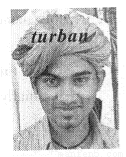
Six mornings a week, Rajendra Prasad gets on his bicycle and starts work. He puts on his postman’s uniform(制服), and takes 1. to the desert villages of Rajasthan. He wears a turban on his head because the desert sun is very hot. When he gets to a village, he rings the bell(按铃) on his bike and everybody 2. out. They don’t get many visitors 3. they’re excited. Today, Rajendra’s first stop is Geeta’s house. She’s got a postcard _4._ her cousin in Bangalore. Rajendra has to read it because Ceeta can’t read. The news is good, so she’s happy.
Rajendra doesn’t 5. take the mail. He also takes the pension(退休金) money for the old people. Today Sua gets her pension. She can’t 6. her name, so she has to give her fingerprint(指纹) intead. Rajendra has to 7. because she’s old. “I don’t know how 8. I am,” says Sua. “Maybe 50 or 60?” Her friends think she’s ahout 75.
Rajendra also takes a telephone becauae many of the villages don’t have phones. Today, Samundar wants to make a call. She 9. Rajendra the phone number and he dials(拨电话号码) for her. She speaks to her son Vishnu. “I told him to come home hecause I need some money,” she says.
At the end of the day, Rajendra does the paper work and thinks about his 10. . “Sometimes it’s difficult, but it’s a good job,” he says.
11.A. work B. mail C. food D. call
12.A. works B. takes C. runs D. stands
13.A. but B. so C. because D. or
14.A. with B. for C. from D. as
15.A. even B. also C. often D. only
16.A. write B. read C. say D. hear
17.A. help B. know C. make D. put
18.A. clever B. kind C. tall D. old
19.A. buys B. gives C. catches D. sends
20.A. travel B. study C. job D. life
There are many different kinds of cars in the world. My aunt thinks this is because cars are ____1 their drivers. She says, “Rich people have expensive cars, big people have large cars, and old people drive old cars.” But I don't 2 her.
My neighbour, Mrs. Hill, is 82 years old. She drives only on Tuesday, and she drives only to the bank. She 3 drives more than 30 kilometres an hour. Do you think Mrs. Hill has a very ___4 and small car? No, her car is new. It's very large, and it _5 go 200 kilometres for each hour!
My friend is 6 . He draws beautiful pictures with lots of colours. But his car is black! Mrs. Bates has a very, very old one. There is often something 7 with the car. Does she drive that kind of car because she is poor? No, she has four factories and 8 dollars in the bank. My aunt Mary has a very 9 car, though she drives to the country with her husband, her two children, her mother and their dog.
Now you have 10 my friends and their cars. Do you agree with my aunt? Maybe you have a car. Does it say anything about you?
| 【小题1】 |
|
| 【小题2】 |
|
| 【小题3】 |
|
| 【小题4】 |
|
| 【小题5】 |
|
| 【小题6】 |
|
| 【小题7】 |
|
| 【小题8】 |
|
| 【小题9】 |
|
| 【小题10】 |
|
| |||||
| A. With the help of B. complain about C. a good experience D. provided…with E. pick…up F. later on G. anybody else H. all the time I. in white J. woke up |
湖北省互联网违法和不良信息举报平台 | 网上有害信息举报专区 | 电信诈骗举报专区 | 涉历史虚无主义有害信息举报专区 | 涉企侵权举报专区
违法和不良信息举报电话:027-86699610 举报邮箱:58377363@163.com