
题目列表(包括答案和解析)
Every month, junior high schools in China choose one hero of the month. This person is a hero because he or she has done something to help protect animals in danger. Huang Jing decided to write a letter to the President of China.
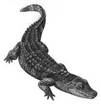
| Dear Mr. President, I have been doing a project at school recently about animals in danger. I think the situation all over the world is really terrible. I am writing to you to suggest what China should do to help protect animals more. I know that there are nearly 2,000 nature reserves in China, which is good. I live in Beijing and there are about 30 reserves outside the city. We visited one of them last month to see for ourselves. I feel so sorry for the giant panda. It’s one of the most popular animals in the world and a real symbol of China. We learned that pandas mainly live on bamboo, and that a panda can eat half its body weight of bamboo in 24 hours! That’s a lot of bamboo. I think we should try to do more to stop cutting down forests. Pandas are already a rare animal and it would be so sad if they became extinct (灭绝) forever. The other animal we should try to protect more is the Chinese alligator (扬子鳄). These creatures live in some parts of eastern China. These beautiful animals live in freshwater rivers and lakes but the water in some places isn’t clean enough for them to live in. It’s really dirty in fact. The government should stop factories polluting the lakes and rivers. If we protect these beautiful animals in China, more foreigners may wish to visit China to see them. They could be an important tourist attraction. It would be good if more people came to visit our beautiful country, especially to see the quieter areas in the country. Now most visitors just see the cities. I hope you will encourage more people to think about such an important subject. Sincerely yours, Huang Jing |
Last Friday, a Tibetan(藏族的) postman became the first woman postal worker to give a speech at the World Postal Meeting in Bern, the capital of Switzerland. She was Nima Lamu, a postwoman of Yunling Post office, Yunnan Province.
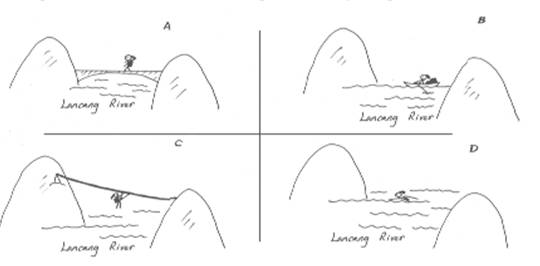
She said, “I had to cross the Lancang River along a steel wire. My younger brother nearly died in the river before. I felt so afraid when I was asked for the first time to cross the river. But when I reached the other side, I found that I was flying.”
Her area is locked in (封闭) two snowy mountains and three big rivers. She said, “:What worries me most is the snakes on the way. Sometimes, I throw little stones toward them and I often tell my self ‘Keep going’. ”
Ten years ago, it took Nima five days to finish each week’s mail. She had to face snowstorms, floods, snakes and loneliness on her 350-kilometer journey. Nima said, “The situation has developed a lot these years. Now we have a bridge that was built across the Lancang River in 2006.”
Nima never dreamed she would become famous one day when she first look up her job, 12 years ago. Changes have been seen in recent years as more tourists visit Nima’s hometown. But one thing remains unchanged: she is still the carrier of the villagers’ hopes and dreams.
1.Nima was invited to the meeting in Bern because she was _________.
A. the only Tibetan postman in China B. the first postwoman in the world
C. doing a hard job as a postwoman D. making her village famous overnight
2. What happened to her brother according to Nima Lamu?
A. he once fell into the river . B. He was killed by a snake.
C. He died when swimming in the river. D. He got hurt when building the bridge.
3.Which picture is TRUE about Nima’s crossing the river ten years ago?
4.What will Nima do if she finds a snake on the way?
A. Kill it with stones. B. Keep it off and go on.
C. Throw it away and leave. D. turn around and run.
5.What is RTUE about Nima?
A. She is building a bridge across the Lancang River.
B. She has realized all the villagers’ dreams.
C. She got her job as a post woman before 2000.
D. She doesn’t need to do her work now.
单词拼写。根据英语首字母或所给汉语提示写出短文中所缺单词的正确形式。()(每小题1分,共5分)
In North America, most students go to school on the school bus. Some students also walk or ride bikes to school. In other parts of the world, things are1. (不同的). In Japan, most students take trains to school, although others also walk or ride their bikes. In China, it2. (取决于) on where you are. In big3.c , such as Beijing, Shanghai, students usually ride bikes to school or take buses. And in places4.w there are rivers and lakes, like Hongshanhu and Kaishandao, students usually go to school by boat. That must be a lot5.m fun than taking a bus.
湖北省互联网违法和不良信息举报平台 | 网上有害信息举报专区 | 电信诈骗举报专区 | 涉历史虚无主义有害信息举报专区 | 涉企侵权举报专区
违法和不良信息举报电话:027-86699610 举报邮箱:58377363@163.com