
题目列表(包括答案和解析)
听力
第一节:(共
5小题,每小题1分,满分5分)听下面
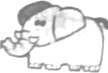
5段材料,根据所听内容,从题后所给A、B、C三幅图片中选出最佳选项。每段材料读两遍。1.What's Tom's favorite animal?
A.
B.

C.

2.What does the boy want to drink?
A.

B.

C.

3.What was Jim doing this time yesterday?
A.

B.

C.

4.When will Mary go shopping with the man?
A.

B.

C.

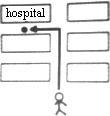
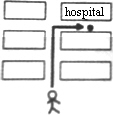
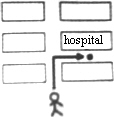
5.How can he get to the hospital?
A.
B.
C.
第二节(共
25小题,每小题1分,满分25分)听下面对话或独白,每段对话或独白后有几个小题,从题中所给的
A、B、C三个选项中选出最佳选项。每段对话或独白读三遍。听第
6段材料,回答第6-7题。6.What kind of TV programs does Wang Mei like?
A.Animals.
B.Music.
C.Sports.
7.Why does she like them?
A.Because they're interesting.
B.Because they're boring.
C.Because they're relaxing.
听第
7段材料,回答第8-10题。8.What picture is the woman showing the man?
A.A picture of the Great Wall.
B.A picture of Beijing Zoo.
C.A picture of the History Museum.
9.How many places did the woman visit besides the Great Wall?
A.Two.
B.Three.
C.Five.
10.What does the man say at the end of the dialogue?
A.He wants to visit Beijing next year.
B.He visited Beijing the year before.
C.He will visit Beijing this year.
听第
8段材料,回答第11-13题。11.What's wrong with the woman?
A.She has a headache.
B.Her back hurts.
C.She has a stomachache.
12.When did the woman start to feel that way?
A.This morning.
B.The day before yesterday.
C.Yesterday.
13.What's the man's advice?
A.To eat some food she likes.
B.To buy a warm coat.
C.To have a good rest.
听第
9段材料,回答第14-16题。14.Who are the two speakers?
A.Husband and wife.
B.Teacher and student.
C.Shopkeeper and customer.
15.What did the man buy?
A.Black trousers.
B.Brown trousers.
C.White trousers.
16.How much are the trousers?
A.$45.
B.$35.
C.$46.
17.
听第10段材料,回答第17-20题。17.The writer went to an old people's home to ________ last year.
A.look after them.
B.play the piano for them.
C.sing songs for them.
18.The old people felt ________ when they saw the children perform the play.
A.worried.
B.lonely.
C.happy.
19.The writer wants to be ________ when he grows up.
A.a doctor
B.a volunteer.
C.a teacher.
20.Peter should be allowed to volunteer at the newspaper office ________.
A.once a week
B.once a year
C.once a month
听第
11段材料,回答第21-25题。21.When did the Tree Planting Day start?
A.March 20th,1987.
B.March 12th,1987.
C.March 12th ,1978.
22.How did the students get to the park?
A.They walked there.
B.They took a bus there.
C.They rode a bike there.
23.How far is it from the school to the park?
A.It's very far.
B.It's very near.
C.It's five kilometers away.
24.Where did the students get water?
A.From the bus.
B.From a river.
C.From a well.
25.How many trees did they plant that day?
A.More than 150.
B.Less than 300.
C.More than 300.
听第
12段材料,回答第26-30题。26.Mr Black worked ________.
A.in a factory
B.in a big city.
C.in a small town.
27.Mr Black washed his new car ________.
A.on Sunday
B.on Saturday
C.on Friday
28.At that moment, a friend of his asked him if the car was ________.
A.Mr black's
B.new
C.nice
29.When there was ________, it was Mike's turn to use the car.
A.a basketball game
B.a football match
C.a party
30.Mr Black owned the car when the car ________.
A.needed washing
B.was clean
C.really looked nice
听力测试:(每小题1分,计30分)
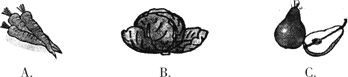
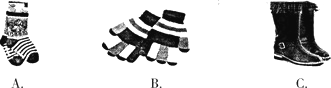
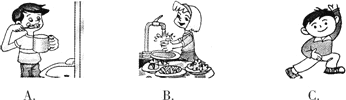
A.句子理解:听句子,从所给的三幅图中选出与你所听到的句子情景相同(相近)的图画。(每小题读两遍)(5分)
1.
2.
3.
4.
5.
B.情景反应:根据你所听到的句子,选择最恰当的答语。(每小题读两遍)(8分)
6.A.Good idea.
B.Good luck!
C.Yes,it is.
7.A.No way!
B.No hurry.
C.No,please don't.
8.A.Excuse me.
B.Never mind.
C.Oh,I'm sorry.
9.A.On Sunday.
B.No, he won't.
C.Yes, he will.
10.A.In five minutes.
B.Five minutes ago.
C.For five minutes.
11.A.He is kind.
B.He is tall.
C.He is in black.
12.A.Yes, I am.
B.No, you don't.
C.No, I'm not sure.
13.A.You shouldn't do that.
B.I'm going shopping.
C.Why? Are they out of style?
C.对话理解:根据你所听到的对话内容,选择最佳选项回答问题。(每段对话读两遍)(12分)
第一节 听第14至19段对话,回答14至19小题。
14.Where does the man come from?
A.Australia.
B.The USA.
C.England.
15.What does the man think of English?
A.A little boring.
B.A little easy.
C.A little hard.
16.Who will cook supper?
A.David.
B.David's sister.
C.David's mother.
17.How was the weather just now?
A.Fine.
B.Cloudy.
C.Rainy.
18.What festival are they talking about?
A.Mid-autumn Festival.
B.Dragon Boat Festival.
C.Spring Festival.
19.How many cats are there in total?
A.Two.
B.Four.
C.Six.
第二节 听下面两段对话,每段对话后各有三个问题,选择最佳选项回答问题。
听第20段对话,回答第20至22小题。
20.Where does the conversation probably happen?
A.At a party.
B.At home.
C.At a school.
21.What's the probable relationship between the two speakers?
A.Close friends.
B.Father and daughter.
C.Brother and sister.
22.What does Jack have to do?
A.To take out the rubbish.
B.To clean up his room.
C.To wash the dishes.
听第21段对话,回答第23至25小题。
23.What does the woman do?
A.An office worker.
B.A director.
C.A saleswoman.
24.Why does the man take the T-shirt back to the store?
A.Because it is too small.
B.Because it is too large.
C.Because his son doesn't like the color.
25.What does the man choose at last?
A.A blue T-shirt in Size M.
B.A blue T-shirt in Size L.
C.A white T-shirt in Size L.
D.表格填空:根据你所听到的对话内容,填写下面表格,每空填一词。(对话读三遍)(5分)

Ⅰ.听力测试:(每小题1分,计30分)
A.句子理解:听句子,从所给的三幅图中选出与你所听到的句子情景相同(相近)的图画。(每小题读两遍)
1.
A.
B.
C.
2.
A.
B.
C.
3.
A.
B.
C.
4.
A.
B.
C.
5.
A.
B.
C.
B.情景反应:根据你所听到的句子,选择最恰当的答语。(每小题读两遍)
6.
A.Good morning.
B.I'm very well.
C.Nice to meet you, too
7.
A.Good idea.
B.Thank you.
C.That's OK.
8.
A.Coffee.
B.Orange.
C.Water.
9.
A.No problem.
B.Not at all.
C.No hurry.
10.
A.It's sunny.
B.It's Sunday.
C.It's March.
11.
A.Sorry, I won't.
B.Certainly.
C.Never mind.
12.
A.It's my present.
B.I'd love to.
C.Sure, here you are.
13.
A.You can't miss it.
B.It's too long.
C.Five minutes' walk.
C.对话理解:根据你所听到的对话内容,选择最佳选项回答问题。(每段对话读两遍)
第一节 听第14至19段对话,回答14至19小题。
14.Whose blouse is this?
A.Linda's.
B.Nancy's.
C.The boy's.
15.What class is Kathy in?
A.In Class 2.
B.In Class 4.
C.In Class 6.
16.Where will the woman be in August?
A.In Australia.
B.In England.
C.In France.
17.Who can't come to have dinner?
A.Lily's aunt.
B.Lily's uncle.
C.Lily's father.
18.How many times did Maria go to the reading room last week?
A.Once.
B.Twice.
C.Three times.
19.When does the train leave?
A.At9∶00.
B.At9∶30.
C.At 10∶00
第二节 听下面两段对话,每段对话后各有三个问题,选择最佳选项回答问题。听第20段对话,回答第20至22小题。
20.What was the matter with Jane yesterday?
A.She had a backache.
B.She had a fever.
C.She had a stomachache
21.Where will Jane go soon?
A.To the classroom.
B.To the office.
C.To the hospital.
22.What's the relationship between the two speakers?
A.Classmates.
B.A doctor and a patient
C.A teacher and a student.
听第21段对话,回答第23至25小题。
23.Where will they have a party?
A.In their school.
B.At Carl's home.
C.At Lucy's home
24.What will Lucy do next Monday?
A.Take a test.
B.Have a match.
C.Have a meeting.
25.When will the party start?
A.At 7∶00.
B.At 7∶30.
C.At 8∶00.
D.表格填空:根据你所听到的对话内容,填写下面表格,每空填一词。(对话读三遍)

| A.改变水的宽容的特点,拒绝肮脏的侵害。 |
| B.提高民族道德水平,建立起人们的新观念:认识到节约比经济利益更重要。 |
| C.国家要加强节水的法律法规建设,地方要加强节水的制度建设。 |
| D.寻找、建立新的文明发展方式。 |
第一部分:听力
第一节:(共5小题;每小题1.5分,满分7.5分)
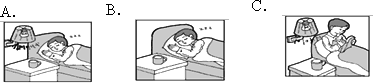
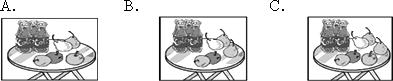
听下面5段对话。每段对话后有一个小题,从题中所给的A、B、C三幅图中,选出一个与你所听到的内容相符合的选项。每段对话读两遍。
1.Which is Jim’s house?

2.How did the boy sleep last night?
3.What are on the table?
4.How does Limei go to school every day?

5.Where does the boy’s father work?

第二节(共5小题;每小题1.5分,满分7.5分)
听下面5段对话。每段对话后有一个小题,从题中所给的A、B、C三个选项中选出最佳选项。每段对话读两遍
6.A.At a bus stop
B.At an airport
C.At a train station
7.A.Next to a supermarket.
B.Next to a post office.
C.Next to a bank
8.A.On Tuesday morning
B.On Thursday morning
C.On Saturday morning
9.A.By car.
B.By bus.
C.By train.
10.A.Under the table.
B.On the chair
C.Under the window
第三节(共10小题;每小题1.5分,满分15分)
听下面3段对话或独白。每段对话或独白后有几个小题,从题中所给的A、B、C三个选项中选出最佳选项。每段对话或独白读两遍。
听下面一段材料,回答11至13三个小题。
11.What is the girl doing now?
A.Studying.
B.Watching a game.
C.Writing a letter.
12.What do we know about the boy’s computer?
A.It’s old
B.It’s slow
C.It’s being mended.
13.Why does the girl often go to the library?
A.To do her part-time job
B.To meet her friends.
C.To waste the time.
听下面一段材料,回答14至16三个小题。
14.When is their mother’s birthday?
A.May 10.
B.May 11.
C.May 12.
15.What will they buy as a present for their mother?
A.A pair of shoes.
B.A handbag.
C.A cake.
16.Where will Sam wait for Mary after class?
A.At the school gate.
B.In the classroom.
C.On the playground.
听下面短文,回答17至20四个小题。
17.What was the weather like that day?
A.Rainy.
B.Snowy.
C.Sunny.
18.What was Tim doing when he met the speaker at first?
A.Having a holiday.
B.Studying abroad.
C.Going on a business trip.
19.Where does the speaker come from?
A.Germany.
B.America.
C.France
20.What was the relationship between the speaker and Tim later?
A.Good friends.
B.Husband and wife.
C.Workmates.
湖北省互联网违法和不良信息举报平台 | 网上有害信息举报专区 | 电信诈骗举报专区 | 涉历史虚无主义有害信息举报专区 | 涉企侵权举报专区
违法和不良信息举报电话:027-86699610 举报邮箱:58377363@163.com