
Do you have time now ? Please tell me . 查看更多


题目列表(包括答案和解析)

—Could you please tell me what time it is now?
—Sorry, I _______ know. I _______ a watch.

[     ]

A. don't, don't have
B. amn't; amn't
C. do; haven't
D. doesn't; doesn't

查看答案和解析>>

阅读理解。
     A long time ago, there was a huge (大的) apple tree. A little boy loved to come and play around it. He
climbed the tree, ate the apples… He loved the tree and the tree loved to play with him.
     Time went by…The little boy grew up and he no longer played around the tree.
     One day, the boy came back to the tree and looked sad. The boy told the tree that he wanted the toys
but he didn't have money. The tree asked the boy to pick all the apples and sell them. The boy did it and left
happily. He didn't come back after he picked the apples. Several years later, the boy returned again and said
he needed a house for his family. The tree asked the boy to cut off his branches (树枝) to build the house.
     Years later, the boy returned again. This time he wanted to go sailing but he didn't have a boat. The tree
said that the boy could use his trunk (树干) to make the boat. He went sailing and did not show up (露面)
for a long time.
     After many years, the boy returned. The tree said with tears, "Sorry, my boy. But I don't have anything
for you anymore. No more apples for you, No more trunk for you to climb on…Now the only thing left is
my dying roots (根)." "I don't have teeth to bite (咬) the apple and I am too old to climb the tree. I just need
a place to rest. I am tired after all these years," the boy replied. "Good! Old tree roots are the best place to
lean on (依靠) and rest. Come here, please sit down with me and have a rest." The boy sat down and the
tree was glad and smiled with tears… 
    This is everyone's story. The tree is our parent. When we are young, we love to play with Mom and Dad.
When we grow up, we leave them, and only come to them when we need something or when we are in
trouble. No matter what, parents will always be there and give everything they have to make us happy.
     You may think that the boy is cruel (残忍) to the tree but that's how all of us are treating (对待) our
parents.
1. How did the boy get the money to buy the toys?
[     ]
A. By picking the apples and selling them.
B. By cutting off the branches and selling them.
C. By making money on his own.
D. By helping the farmers pick the apples.
2. What did the tree do when he knew the boy wanted a boat for sailing?
[     ]
A. He asked the boy to cut off the branches to make a boat.
B. He asked the boy to use the trunk to make a boat.
C. He asked the boy to use the root to make boat.
D. He offered the apples to the boy and asked him to sell them
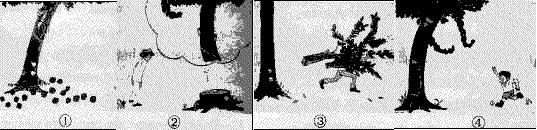
3. Put the pictures in the correct order according to the passage. The correct order is _______.
   
                   ①                       ②                                  ③                                   ④
[     ]
A. ①③②④
B. ④①③②
C. ④②①③
D. ①④③②
4. Which of the following is NOT the writer's idea?
[     ]
A. When children are young, they love to play with their parents.
B. When children grow up, they only come to them when they need something or they are in trouble.
C. Parents are always there and they are willing to (愿意) give everything to their children.
D. Children are always kind to their parents and they always like to stay with their parents.
5. The writer wanted to tell the children _______.
[     ]
A. to protect the environment
B. to plant more trees
C. to treat their parents kindly
D. to stay at home with their parents

查看答案和解析>>

Mrs Elise was my teacher in the fourth grade. One day at lunch time, I was getting ready to eat my tuna fish (金枪鱼) sandwich and suddenly Mrs Elise asked me if she could buy my sandwich from me. She explained that I could use the money to buy a hot hunch from the cafeteria (食堂).
I was excited. I never bought my lunch at the cafeteria. It was too expensive for my family, and I always carried my lunch and took the bag back home to use it again the next day. So you could understand my happiness when I had the chance to buy a hot lunch.
When we finished lunch that day, Mrs Elise took me aside and said she wanted to explain why she had bought my sandwich. I really didn’t care why, but it gave me a few minutes of her special attention, so I was quiet as she explained. She told me that she was a Catholic(天主教徒) and Catholics didn’t eat red meat on Fridays, they ate fish on Fridays.
Oh, I couldn’t wait to get home and tell my mother that from then on I wanted a tuna fish sandwich on Fridays. After my mother understood why, she gladly made tuna fish sandwiches for me on Fridays. She even made it with brown bread because she knew Mrs Elise liked brown bread. From then on, every Friday I could get in line with other kids for a hot lunch. I didn’t care how many of the kids complained about cafeteria food. It tasted divine to me!
I realize now that Mrs Elise could have made herself tuna fish sandwiches on Fridays. But she bought mine because she saw a little girl who was excited at the simple act of having a hot lunch.
I will never forget Mrs Elise for her pity for me and generosity (慷慨) and what I should do is to follow her example.
【小题1】 From this passage we know_______.

A.Mrs Elise was the best friend of the writer
B.the writer came from a poor family
C.many or the writer’s classmates liked cafeteria food
D.the writer like to eat tuna fish sandwiches on Fridays
【小题2】 Mrs Elise bought the writer’s sandwiches because_______.
A.she was tired of cafeteria food
B.she hated getting in line with kids
C.she liked the tuna fish sand writer’s made by the writer’s mother
D.she wanted to show care to the writer
【小题3】 The underlined word“divine”means“_____”.
A.perfectB.sweetC.unpleasantD.bad
【小题4】 Which of the following can we learn from this passage?
A.It is hard to please all.
B.Better to give than to receive.
C.Love makes the world go around.
D.The more you offer, the more you get.

查看答案和解析>>

Mrs Elise was my teacher in the fourth grade. One day at lunch time, I was getting ready to eat my tuna fish (金枪鱼) sandwich and suddenly Mrs Elise asked me if she could buy my sandwich from me. She explained that I could use the money to buy a hot hunch from the cafeteria (食堂).

I was excited. I never bought my lunch at the cafeteria. It was too expensive for my family, and I always carried my lunch and took the bag back home to use it again the next day. So you could understand my happiness when I had the chance to buy a hot lunch.

When we finished lunch that day, Mrs Elise took me aside and said she wanted to explain why she had bought my sandwich. I really didn’t care why, but it gave me a few minutes of her special attention, so I was quiet as she explained. She told me that she was a Catholic(天主教徒) and Catholics didn’t eat red meat on Fridays, they ate fish on Fridays.

Oh, I couldn’t wait to get home and tell my mother that from then on I wanted a tuna fish sandwich on Fridays. After my mother understood why, she gladly made tuna fish sandwiches for me on Fridays. She even made it with brown bread because she knew Mrs Elise liked brown bread. From then on, every Friday I could get in line with other kids for a hot lunch. I didn’t care how many of the kids complained about cafeteria food. It tasted divine to me!

I realize now that Mrs Elise could have made herself tuna fish sandwiches on Fridays. But she bought mine because she saw a little girl who was excited at the simple act of having a hot lunch.

I will never forget Mrs Elise for her pity for me and generosity (慷慨) and what I should do is to follow her example.

1. From this passage we know_______.

A.Mrs Elise was the best friend of the writer

B.the writer came from a poor family

C.many or the writer’s classmates liked cafeteria food

D.the writer like to eat tuna fish sandwiches on Fridays

2. Mrs Elise bought the writer’s sandwiches because_______.

A.she was tired of cafeteria food

B.she hated getting in line with kids

C.she liked the tuna fish sand writer’s made by the writer’s mother

D.she wanted to show care to the writer

3. The underlined word“divine”means“_____”.

A.perfect           B.sweet            C.unpleasant        D.bad

4. Which of the following can we learn from this passage?

A.It is hard to please all.

B.Better to give than to receive.

C.Love makes the world go around.

D.The more you offer, the more you get.


查看答案和解析>>

Mrs Elise was my teacher in the fourth grade. One day at lunch time, I was getting ready to eat my tuna fish (金枪鱼) sandwich and suddenly Mrs Elise asked me if she could buy my sandwich from me. She explained that I could use the money to buy a hot hunch from the cafeteria (食堂).
I was excited. I never bought my lunch at the cafeteria. It was too expensive for my family, and I always carried my lunch and took the bag back home to use it again the next day. So you could understand my happiness when I had the chance to buy a hot lunch.
When we finished lunch that day, Mrs Elise took me aside and said she wanted to explain why she had bought my sandwich. I really didn’t care why, but it gave me a few minutes of her special attention, so I was quiet as she explained. She told me that she was a Catholic(天主教徒) and Catholics didn’t eat red meat on Fridays, they ate fish on Fridays.
Oh, I couldn’t wait to get home and tell my mother that from then on I wanted a tuna fish sandwich on Fridays. After my mother understood why, she gladly made tuna fish sandwiches for me on Fridays. She even made it with brown bread because she knew Mrs Elise liked brown bread. From then on, every Friday I could get in line with other kids for a hot lunch. I didn’t care how many of the kids complained about cafeteria food. It tasted divine to me!
I realize now that Mrs Elise could have made herself tuna fish sandwiches on Fridays. But she bought mine because she saw a little girl who was excited at the simple act of having a hot lunch.
I will never forget Mrs Elise for her pity for me and generosity (慷慨) and what I should do is to follow her example.
小题1: From this passage we know_______.
A.Mrs Elise was the best friend of the writer
B.the writer came from a poor family
C.many or the writer’s classmates liked cafeteria food
D.the writer like to eat tuna fish sandwiches on Fridays
小题2: Mrs Elise bought the writer’s sandwiches because_______.
A.she was tired of cafeteria food
B.she hated getting in line with kids
C.she liked the tuna fish sand writer’s made by the writer’s mother
D.she wanted to show care to the writer
小题3: The underlined word“divine”means“_____”.
A.perfectB.sweetC.unpleasantD.bad
小题4: Which of the following can we learn from this passage?
A.It is hard to please all.
B.Better to give than to receive.
C.Love makes the world go around.
D.The more you offer, the more you get.

查看答案和解析>>


同步练习册答案