
题目列表(包括答案和解析)
| 阅读理解。 阅读下面短文,把A-D四个句子填入文中空缺处,使短文内容完整、正确,然后完成第1-5小题。 | |
| Once, a gentleman was traveling on a bus. He felt thirsty and got off at a station in search of water. However, before he got back to the bus, it left and he missed it. 1 He went to the nearby hotels to ask for a room but found none. At last he reached a hut (小屋). He asked the owner of the hut whether he could stay in his house for a day. The owner agreed. On that day the owner served him food and gave him a room to stay in, but did not ask for or expect anything in return. 2 The owner opened the door. A well-dressed man entered and asked the owner to pay his debts (债务). The gentleman came to know that the owner was in need of money. 3 When the owner saw the money, he found that there was also a note. It read," 4 Yesterday I heard the conversation between you and the stranger and came to know that you were in need of money. This is what you need." | |
| |
| 5. What does the passage mainly tell us? | |
| A. When you find others in need of money, give them some. B. When you help others, you are helped too. C. When you travel on a bus, don't get off before you reach the end. D. When you get help from others give them money in return. |
根据短文内容及首字母提示,填写所缺单词,使短文意思完整。
My family went to a restaurant for dinner one night. When we were walking to the restaurant from our car, a girl about my age and her mother c 1. towards us. They asked if we had any m 2. .My mom asked where they were l 3. . The girl said there were six of them staying in an o 4. black car. My mom gave them a few dollars. Then she sent me inside the restaurant w 5. my dad and my three sisters. H 6. ,my mom didn’t come. Later, I found out that she had gone h 7. and put all the food in our cupboard into a few bags. Then she brought that food over to the car and gave the bags to the poor f 8. . I wasn’t there when that part happened, yet I can i 9. the joy on their faces. After painting this picture in my mind, I understood w 10. my mom had done what she did that night. I will never forget this lesson in kindness from my mom.
| A.didn’t know how to plant trees at all |
| B.wasn’t good at his own medical job |
| C.had his own ways of planting trees |
| D.had nothing to do but plant trees |
| A.some weak trees would be easily found out at the beginning |
| B.he would choose the weak trees to water earlier |
| C.the weak trees would be sent to his patients later |
| D.he would not plant weak trees so early anymore |
| A.should beat his trees with a rolled-up newspaper |
| B.didn’t often water his trees |
| C.didn’t have a large field |
| D.took too much care of his trees |
| A.Watering trees |
| B.Growing roots |
| C.Doctor and his neighbor |
| D.Father and his children |
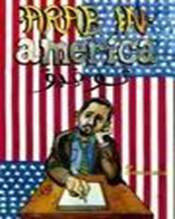
For many in the United States, Arab-Americans are an invisible part of the population. Though Arab-Americans as a community have made great contributions to American society in fields from literature to politics to medicine, many Americans know very little about Americans of Arab backgrounds.
Arab history in the United States goes back to the late 1800’s when large numbers of Arab immigrants first began making their journey to a land known simply as “Amreeka”.
Historians generally describe Arab immigration to America in two waves. The first wave took place between 1860 and 1924.The first wave consisted of Lebanese and Syrian, and some Egyptian immigrants. These new immigrants, who were mostly Christian, came to America in search of better opportunities. Even the doomed Titanic, which set sail for America in 1912,had close to a hundred Arab passengers aboard. The majority of Arab-Americans today are descendents of the first wave of immigrants; they are the third or more generation Americans.
The second wave of immigrants followed after World War Ⅱ,caused by political unrest in the Middle East. This second wave of immigrants consists of mainly Arab Muslims(穆斯林)and continues to this day.
Arab-Americans make up 3 million of the population in the United States, according to demographers. And quite different from popular belief, 64 percent of them are American-born. Eighty-two percent of Arab-Americans are US citizens.
Arab-Americans are beyond the national average in both education and income. Education is important among Arab-Americans; 82 percent have high school diplomas, 36 percent have bachelor’s degrees or higher, and 15 percent have graduate degrees. The-median(中位数的)average income among Arab-Americans is $39,580, which is higher than the US average.
【小题1】The first wave of immigrants took place because__________.
| A.all Arabs were Christian at that time |
| B.Arabs wanted to gain higher income |
| C.the Second World War broke out |
| D.Arabs wanted to hunt for a better development |
| A.to tell us that taking ship at that time was dangerous |
| B.because Titanic became a well-known disaster |
| C.to show us there were many Arabs flocking into America at that time |
| D.to inform us that Arabs are brave enough |
| A.Arab-Americans are much more clever than native Americans |
| B.the higher education you receive, the higher income you will get in America |
| C.Arab-Americans are hard-working people |
| D.The-median average income among Americans is $39,580 |
| A.Arab-Americans have made great contributions to American society only in literature. |
| B.Arab history in the United States is to the early 1800’s. |
| C.The first Arab immigration to America took place between 1860 and 1924. |
| D.Few of Arab-Americans are US citizens. |
| A.Arabs in America. |
| B.The Two Arab Immigration Waves to America. |
| C.Arab-Americans, Contributions to America. |
| D.Arab-Americans, Education and Income. |
短文填空 根据短文内容及首字母提示,补全空格内单词,使短文完整通顺。
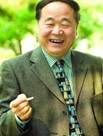
Mo Yan, the Chinese writer, won the 2012 Nobel Prize in literature on October 11,2012. The 57-year-old writer whose r__1.___name is Guan Moye, was born in 1955 and g___2.up in Shandong Province. Mo Yan is his pen name that means “Don’t s__3.___” in Chinese. Both of his parents were f___4.___. When he was twelve years old,he l ___5.___school to work, first on the farm and l__6.___in the factory. In 1976, he joined the army and b__7.___to study literature and write.
Most of his works are set in his o__8.___hometown, Gaomi County, Shandong in northeastern China. He is the f___9.__Chinese-language writer to win the award. Millions of Chinese people were e___10.____and proud of him after they heard this. His achievements push us students to do more reading.
湖北省互联网违法和不良信息举报平台 | 网上有害信息举报专区 | 电信诈骗举报专区 | 涉历史虚无主义有害信息举报专区 | 涉企侵权举报专区
违法和不良信息举报电话:027-86699610 举报邮箱:58377363@163.com