
establish; start 查看更多


题目列表(包括答案和解析)

根据所给首字母和英文释义填入一个正确的同义词组

1. c     : make someone happier

2. s     : establish, start

3. c     : think up

4. c     : make it clean and tidy

5. g     : give to each of several people
 

查看答案和解析>>

任务型阅读 阅读短文,按要求完成各题 (5分)
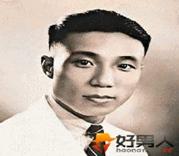
Sir Run Run Shaw, one of the pioneers (先锋)of the 20th century Chinese film industry, passed away at his home in Hong Kong at the age of 107.

Shaw was born in Ningbo, Zhejiang, China and raised in main land China, but received his education in American-run schools.   At the age of 19, during his summer vacation, he followed his third elder brother Run Me Shaw to Singapore to start a film market and establish Shaw Organization. Following that, he developed a deep interest in the movie business. He and his brother founded the South Seas Film studio in 1930, which later became Shaw Studios. In 1967, he set up TVB (Television Broadcasts Ltd.) in Hong Kong, growing it into a multi-billion dollar TV empire(帝国) ,  one of the top 5 television producers in the world today .
In fact, the legendary man was regarded as “the most familiar stranger” by many Chinese. We know him through his donations to thousands of projects around the country, including the most famous one, “Shaw Building.”
“The ‘Shaw building’was a mark carved on our school days,” said Ma Nini, a 30-year-old editor who graduated from a university in the northeast China city of Harbin.
“No matter whether a library or a science hall, the ‘Shaw building' was always the most advanced and well-equipped one on campus,” said Ma.
Shaw was enthusiastic for charity and donated more than 10 billion HK dollars (about 1.29 billion U.S. dollars), with a large sum went to the support of education in China's mainland. Since 1985, Shaw donated 4.5 billion HK dollars for over 6,000 projects on the Chinese mainland -- over eighty percent of them related to education. In 1988, Shaw donated about 20 million yuan to build the village's Shaw Center, which includes a kindergarten, senior center. They are still in use now.
“I always go to the Shaw building on my campus to study. We never met before, but I am so grateful to the old man," said a college student surnamed Li from Tsinghua University who rushed to the village from the Ningbo Airport.
As Li paid his respects to the “most familiar stranger," he said that he would keep in mind a quote from Shaw: “Coming from people, my wealth(财富) should benefit (有益于)the people."
小题1:根据短文内容完成句子填空(每空限填一个单词)。
From the first paragraph of the passage, we know      and        Sir Run Run Shaw passed away.
小题2:根据短文内容完成句子填空(每空限填一个单词)。
From the second paragraph of the passage,we know Sir Run Run Shaw           in the movie business very much.
小题3:把短文中画底线的句子译成汉语。
                                                                  
                                                           
小题4:根据短文内容回答问题。
Why was Shaw regarded as “the most familiar stranger” by many Chinese?
                                                              
小题5:根据短文内容用一个完整的英文句子(限10个词以内)回答问题。
What is the main idea of the passage?
                                                              

查看答案和解析>>

阅读理解。
     Summer camps started from the US. They are programs for teenagers during the summer months in
some countries. Teenagers who take part in summer camps are known as campers. The traditional summer
camp usually means hiking, game-playing and campfires. Now modern summer camps can offer campers
a great many activities. Among them, the intemational summer camp is quite popular, especially with Chinese
campers. 
     First of all, the intemational summer camp can bring campers unusual life experience. As we all know,
the experience in high school plays a very important role in life. The international summer camp is a great
way to establish (确立) the right values for life. Campers will experience the cultural difference-something
they can't get at home from their families. During the international summer camp, children will become more
independent and see new things. They can also leam more through talking with students from all over the
world.
     Making friends is another point. The intemational summer camp mixes (混合) Chinese students with
students from other countries in the world. No matter whether they live with a local family or live with other
students in dormitories (宿舍), they will all share experiences and cultures with persons from different
countries and cultural backgrounds, learn cross-culture communication skills by listening to others and
expressing themselves, and improve friendship over several weeks. They often stay in touch with each
other by email,MSN or QQ after the program finishes.
     The most exciting thing in the intemational summer camp is that Chinese campers can get excellent
chances to speak and use English in a real English world. Language is not only knowledge; it is a skill which
needs to be improved by using it. Campers from English-speaking countries are very friendly, warm-hearted
and helpful.
1. Did summer camps start from the US? 
    _________________________________________________
2. What can children get from the summer camp but not from their families? 
    _________________________________________________
3. How do campers communicate with each other after the program?
    _________________________________________________
4. What are campers from English-speaking countries like?
    _________________________________________________
5. What advantages of the intemational summer camp are mentioned in the passage? 
    _________________________________________________

查看答案和解析>>

完形填空(共15小题,计15分)

通读下面短文,掌握其大意,然后在各题所给的四个选项(A、B、C和D)中选出一个最佳选项。

Each of us fails from time to time. If we are wise, we accept these failures as a necessary   1  of the learning process. But too often as parents and teachers we deny this same right to our children. We convey(传达)  2   by words or by actions that failure is something to be ashamed of, that nothing but   3  performance pleases us.

  4 I see a child under this kind of pressure ,I think of Jack. He is a shy, nervous perfectionist. He   5 answered questions—he might be   6  .

I try my best to    7 his self-confidence. And I repeatedly  8  God for direction. But   9  changed until midterm, when Mary, a student teacher, came to our classroom.

One day we were working with math problems. Jack had copied the problems with care. 10  with his progress, I left the children with Mary .When I returned, Jack was in tears. He’d missed the third problem.

At that time, Mary got a box  11  with pencils from the desk we shared. “Look, Jack ! I’ve got something to show you.” she said.“ See these pencils, they belong to Mrs. Green and me. See how the erasers are   12  ? That’s because we make mistakes too. But we erase the mistakes and try   13  . That’s what you must learn to do, too.” Jack looked up with  14  in his eyes---the first time I’d see on his face that year.

Jack gradually believe him that it’s all  15 to make mistakes – as long as you erase them and try again.

1.                A.life            B.part            C.game     D.show


2.                A.neither         B.nor            C.either    D.or


3.                A.high           B.bad            C.top  D.big


4.                A.When          B.While          C.As   D.Although


5.                A.always         B.sometimes      C.ever D.seldom


6.                A.right           B.wrong          C.mistake   D.fail


7.                A.start           B.set            C.establish  D.build


8.                A.told           B.asked          C.said D.spoke


9.                A.something      B.nothing         C.anything D.everything


10.               A.Kind           B.Nice           C.Great D.Pleased


11.               A.filled           B.full            C.deal  D.do


12.               A.broke          B.new           C.good D.worn


13.               A.once          B.again          C.too   D.either


14.               A.disappointment B.sadness        C.fear  D.love


15.               A.right           B.OK            C.well  D.good


查看答案和解析>>

Each of us fails from time to time. If we are wise, we accept these failures as a necessary  31 of the learning process. But too often as parents and teachers we deny this same right to our children. We convey(传达) 32  by words or by actions that failure is something to be ashamed of, that nothing but  33  performance pleases us.

34 I see a child under this kind of pressure ,I think of Jack. He is a shy, nervous perfectionist. He  35 answered questions—he might be  36 .

I try my best to  37 his self-confidence. And I repeatedly  38  God for direction. But  39 changed until midterm, when Mary, a student teacher, came to our classroom.

One day we were working with math problems. Jack had copied the problems with care. 40 with his progress, I left the children with Mary .When I returned, Jack was in tears. He’d missed the third problem.

At that time, Mary got a box  41 with pencils from the desk we shared. “Look, Jack ! I’ve got something to show you.” she said.“ See these pencils, they belong to Mrs. Green and me. See how the erasers are  42  ? That’s because we make mistakes too. But we erase the mistakes and try  43 . That’s what you must learn to do, too.” Jack looked up with  44 in his eyes---the first time I’d see on his face that year.

Jack gradually believe him that it’s all  45 to make mistakes – as long as you erase them and try again.

31. A. life           B. part            C. game            D. show

32. A. neither         B. nor            C. either            D. or

33. A. high           B. bad            C. top              D. big

34. A. When         B. While           C. As              D. Although

35. A. always         B. sometimes       C. ever             D. seldom

36. A. right          B. wrong          C. mistake           D. fail

37. A. start          B. set             C. establish          D. build

38. A. told           B. asked           C. said             D. spoke

39. A. something      B. nothing          C. anything          D. everything

40. A. Kind          B. Nice            C. Great            D. Pleased

41. A. filled          B. full             C. deal             D. do

42. A. broke          B. new            C. good             D. worn

43. A. once          B. again           C. too              D. either

44. A. disappointment   B. sadness         C. fear             D. love

45. A. right          B. OK            C. well             D. good

查看答案和解析>>


同步练习册答案