
题目列表(包括答案和解析)
Mrs Black is sixty-nine years old. She has only a daughter named Sandra. Mr Black died twelve years ago. She was very sad and lived in her house alone. Two years later her daughter had a baby. The woman was busy all the time and no time to look after her son James. She asked her mother to live with with them.
The old woman had to sell her house and moved there. She was strong and could do all the housework. And the family liked her.
Last autumn Mrs Black went to do some shopping. A car hit her and her leg was hurt. She had to be in hospital for three months. She couldn’t do anything after she came back. At first her daughter was kind to her, but soon she began to tired (讨厌)of her. The old woman wanted to leave, but she had no money to buy a house and nobody could take care of her. She didn’t know what to do.
One morning Mrs Black broke a plate. It made her daughter angry. She told James to buy a wooden(木制的)for her grandma. That afternoon James came back with two wooden plates. She was surprised(惊讶的) and asked “Why did you buy two plates, son”
“One is for my grandma,” answered the boy. “The other is for you.” She cried for long. She’s kind to her mother as she did before.
【小题1】 Sandra asked her mother to live with them because________
| A.the old woman lived alone |
| B.she needed her help |
| C.the old woman couldn’t look after herself |
| D.the old woman could give her much money. |
| A.she was rich |
| B.she could watched their door |
| C.she could do the housework for them |
| D.she was friendly to them all |
| A.she had no house to live in |
| B.she couldn’t look after herself |
| C.Sandra couldn’t go to see her any more |
| D.she couldn’t buy a house and none takes care of her |
| A.her mother could broke another plate |
| B.her mother didn’t want to live |
| C.her husband could be tired of her mother |
| D.her mother couldn’t do anything at home |
| A.she knows she did wrong |
| B.she was afraid of her son |
| C.the old is poor |
| D.it’s her duty |
Reading Oliver James'Affluenza, I thought about what often happens at home. My 12-year-old daughter is in tears."I have so take a test tomorrow. I don't understand any of it," she cries out. After shouting and shutting her door, she calms down enough to go through her notes. The following dry I ask her how the test went and the just says "OK,I got a nine".
"Wow. well done!" I say, before she finishes with "But I never get a ten!"
According to James, this obsession with getting top marks has been a bad development, which encourages people to think of education in terms of work and money. To test this, I asked my daughter why she was so worried about her tests. She looked at me as if I was thick. "Well, if I don't get good grades, I won't be able to afford nice things like a car and stuff."
I was quite surprised, because I don't consider myself a pushy parent. But James suggests and it leaves students feeling failures even if they are very bright. He points to the Danish system(体制)of education as a better model. Creating happy citizens who have good social skills is seen as more important than high achievements at school or the needs of business.
For me, I cannot remember the last time I had to work out the area of a circle, recite a Shakespeare poem or grammar rules, yet I have lived a happy life. What I really needed to learn at school was how to make polite conversations, or how to avoid getting into debt or how to develop good personality.
This is in fact similar to what Oliver James really has in mind. And he is looking for schools where students are encouraged to find and follow their own interests, something more like Tongjon. Tongjon has been developed in some Korean private schools. It is quite different from the more rigid system of learning things by heart that is used in Korea, and indeed in many other school systems around the world.
As the Russian poet Pushkin said," Inspiration(灵感)is needed in geometry(几何学)just as much as in poetry ",and inspiration does not come from endlessly revising for tests or getting worried about them .
【小题1】What does the writer probably think of his/her daughter?
| A.She sets herself a goal too high to reach. |
| B.She should be more polite to her parents. |
| C.She is hard-working but not very bright. |
| D.She takes her grades much too seriously. |
| A.A plain and unavoidable fact. |
| B.A satisfied and very proud state. |
| C.A practical and widely-used way. |
| D.A fixed and often unreasonable idea. |
| A.Social skills are as important as high grades. |
| B.Interest in grades can shake self-confidence. |
| C.The writer regrets not having studied hard at school. |
| D.Danish educational system is for very smart students. |
| A.learning happily is the key to self-development. |
| B.top marks may be helpful to increase one's interest. |
| C.tests should be improved to give children inspiration. |
| D.education should meet one's needs for word and money. |
Reading Oliver James'Affluenza, I thought about what often happens at home. My 12-year-old daughter is in tears."I have so take a test tomorrow. I don't understand any of it," she cries out. After shouting and shutting her door, she calms down enough to go through her notes. The following dry I ask her how the test went and the just says "OK,I got a nine".
"Wow. well done!" I say, before she finishes with "But I never get a ten!"
According to James, this obsession with getting top marks has been a bad development, which encourages people to think of education in terms of work and money. To test this, I asked my daughter why she was so worried about her tests. She looked at me as if I was thick. "Well, if I don't get good grades, I won't be able to afford nice things like a car and stuff."
I was quite surprised, because I don't consider myself a pushy parent. But James suggests and it leaves students feeling failures even if they are very bright. He points to the Danish system(体制)of education as a better model. Creating happy citizens who have good social skills is seen as more important than high achievements at school or the needs of business.
For me, I cannot remember the last time I had to work out the area of a circle, recite a Shakespeare poem or grammar rules, yet I have lived a happy life. What I really needed to learn at school was how to make polite conversations, or how to avoid getting into debt or how to develop good personality.
This is in fact similar to what Oliver James really has in mind. And he is looking for schools where students are encouraged to find and follow their own interests, something more like Tongjon. Tongjon has been developed in some Korean private schools. It is quite different from the more rigid system of learning things by heart that is used in Korea, and indeed in many other school systems around the world.
As the Russian poet Pushkin said," Inspiration(灵感)is needed in geometry(几何学)just as much as in poetry ",and inspiration does not come from endlessly revising for tests or getting worried about them .
1.What does the writer probably think of his/her daughter?
A. She sets herself a goal too high to reach.
B. She should be more polite to her parents.
C. She is hard-working but not very bright.
D. She takes her grades much too seriously.
2.What does the word "obsession"in paragraph 3 mean?
A.A plain and unavoidable fact.
B.A satisfied and very proud state.
C.A practical and widely-used way.
D.A fixed and often unreasonable idea.
3.What can we infer from the passage?
A. Social skills are as important as high grades.
B. Interest in grades can shake self-confidence.
C. The writer regrets not having studied hard at school.
D. Danish educational system is for very smart students.
4.The writer wants to tell us that____.
A.learning happily is the key to self-development.
B. top marks may be helpful to increase one's interest.
C. tests should be improved to give children inspiration.
D. education should meet one's needs for word and money.
Once, in a small village, lived a family with eight children. Two of the children loved 31 very much, but the family was so poor that it was impossible to send 32 of them to study at the art college at the same time. After many discussions, the two boys finally 33 a plan. They would toss(抛) a coin. The loser would go 34 into the mines (煤矿) and, with his earnings(赚得的钱), 35 his brother studying at the college. Then, when the brother who won the toss finished his studies, after four years, he would support the other brother studying at the 36 .
James won the toss and Jack went down into the mines. James worked with all his heart and his paintings were much 37 than those of most of his teachers, and by the time he 38 , he was beginning to make a lot of money for his paintings.
39 James returned, the family held a big dinner for his great success. Soon after the meal began, James 40 up from his seat to drink a toast (举杯祝酒) to his dear 41 . He said, "Jack, now you can go to the art college and your 42 will come true. I will take care of you. "
But Jack said 43 , "Brother, the four years in the mines has done too much to my hands, so it' s too 44 . Now I can' t even hold a glass. "
To show his great love and respect, James drew his brother' s hands with 45 towards the sky.
He called his drawing "The Praying Hands", which became very famous years later.
1.A. paintingB. booksC. schoolD. money
2.A. anyB. allC. bothD. neither
3.A. looked outB. worked outC. took outD. got out
4.A. offB. awayC. upD. down
5.A. supportB. agreeC. followD. let
6.A. homeB. mineC. collegeD. school
7.A. betterB. worseC. cheaperD. older
8.A. arrivedB. graduatedC. walkedD. waited
9.A. BeforeB. WhenC. ThoughD. While
10.A. pickedB. turnedC. lookedD. stood
11.A. brotherB. sisterC. fatherD. mother
12.A. wayB. ideaC. dreamD. practice
13.A. happilyB. surprisedlyC. angrilyD. softly
14.A. earlyB. lateC. goodD. helpful
15.A. legsB. feetC. armsD. fingers
完形填空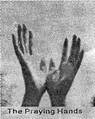
Once, in a small village, lived a family with eight children. Two of the children loved 1 very much, but the family was so poor that it was impossible to send 2 of them to study at the art college at the same time. After many discussions, the two boys finally 3 a plan. They would toss(抛) a coin. The loser would go 4 into the mines (煤矿) and, with his earnings(赚得的钱), 5 his brother studying at the college. Then, when the brother who won the toss finished his studies, after four years, he would support the other brother studying at the 6
James won the toss and Jack went down into the mines. James worked with all his heart and his paintings were much 7 than those of most of his teachers, and by the time he 8 , he was beginning to make a lot of money for his paintings.
9 James returned, the family held a big dinner for his great success. Soon after the meal began, James 10 up from his seat to drink a toast (举杯祝酒) to his dear 11 He said, "Jack, now you can go to the art college and your 12 will come true. I will take care of you. "
But Jack said 13 , "Brother, the four years in the mines has done too much to my hands, so it’s too 14 Now I can’t even hold a glass. "
To show his great love and respect, James drew his brother' s hands with 15 towards the sky.
He called his drawing "The Praying Hands", which became very famous years later.
| 【小题1】 |
|
| 【小题2】 |
|
| 【小题3】 |
|
| 【小题4】 |
|
| 【小题5】 |
|
| 【小题6】 |
|
| 【小题7】 |
|
| 【小题8】 |
|
| 【小题9】 |
|
| 【小题10】 |
|
| 【小题11】 |
|
| 【小题12】 |
|
| 【小题13】 |
|
| 【小题14】 |
|
| 【小题15】 |
|
湖北省互联网违法和不良信息举报平台 | 网上有害信息举报专区 | 电信诈骗举报专区 | 涉历史虚无主义有害信息举报专区 | 涉企侵权举报专区
违法和不良信息举报电话:027-86699610 举报邮箱:58377363@163.com