题目列表(包括答案和解析)
| |||||||||||||||||||||||||||||||||||||||||||||||||||||||||||||||||||||||||
| 完形填空。 | ||||
| Radio, telephone and television are widely used in the world. When you 1 the radio, you can listen. But when you use the telephone, not only you can listen to others 2 you can talk with them; however, you 3 see anything at all. Television is much better than 4 of them. People can watch TV and listen to it. But they can't take part in 5 they see. Today some people are using a kind of telephone called the picture phone or vision phone. 6 it two people who are talking can see each other. Picture phone can be very 7 when you have something to show the person you are calling. They may have other uses in the future. Some day you may be able to 8 a library and ask to read a book right over your picture phone. You may also be able to go shopping through it, too. When you 9 something in the newspaper that you think you want to buy, you may go to your picture phone and call the shop. The shop assistant will show you the thing that you're 10 in right over the phone. You'll be able to shop all over the town and never leave your home. | ||||
|
Traveling can be a fun way to get life experiences, especially during Spring Break—a week long school holiday in the United States.
But what will you do if you're a student and don't have enough money for a trip? Don't worry. Here are some useful tips.
Save: This may be the most important to prepare for traveling. Cut expenses(费用) and save money so you'll have more choices about where to go and how to get there.
Plan ahead: Don't wait until the last minute to plan your trip. Tickets may cost more when bought in a hurry. Giving yourself several months to get ready can mean security(安全) and savings.
Plan sensibly(合理地) : Write down what you expect to spend on food and hotels. keep your plan or you may not have enough money to cover everything.
Travel in groups: Find someone who is interested in visiting the same places. By traveling with others you can share costs and experiences.
Work as you go: Need more money for your trip? Look for a job in the places you visit.
Choose places: Tourist cities may be expensive. You may want to rethink your trip and go to a less—known area. Smaller towns can have many interesting activities and sights.
Pack necessary things: The most important things to take are not always clothes. Remember to take medicine and some food with you because you may be sick or you cannot find a cheap restaurant.
Use the Internet or travel books: No matter where you go, study the places you will visit first. Decide what to see. The Net can help to save money. Some useful websites include www. travelocity.com, www.bargains-lowestfare.com and www.economy-travel.com. Travel books will give you the information on the cheapest hotels and restaurants.
By planning sensibly, even students can enjoy the travel. Your travel experiences will be remembered for a lifetime.
1. How many tips are mentions in the passage?
A. Seven B. Eight C. Eleven D. Twelve
2. You may probably read the passage_________.
A. in a book about the Internet B. in a newspaper for business
C. in a magazine for students D. in an ad for shopping
3. The writer advises(建议) you_________.
A. to share costs with any other people B. not to go to well-known places
C. not to visit dangerous places D. to buy anything you want to buy
4. To prepare for your trip, you_________.
A. need a lot of medicine and clothes B. should look for work all the way
C. should make good use of the Internet and travel books
D. can't tell your friends about your trip
5. Which of the following can be used as the title of this passage?
A. Planning your trip cleverly! B. Traveling without much money!
C. Information decides all D. Security is above all while traveling!
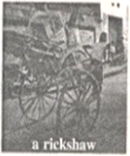
When I crossed a small road on my first day in Kolkata, I was surprised because I heard a bell-not a horn (喇叭), It was a tiny man pulling a rickshaw, He stopped and picked up two children from the front door of their house and pulled them to school. For many people, the rickshaw in Kolkata has many advantages. When the traffic is bad, rickshaws find a way through the traffic. If your miss your bus and there aren't any taxis, you can always find a rickshaw in Kolkata. Rickshaws are from your house to the market and waits for you. Then he loads (装载)all your things, drops you off outside your home and helps you unload, No other type of public transport offers this kind of service.
From June to September, Kolkata gets heavy rain. Sometimes it rains for 48 hours without a break. In some parts of the city, the roads flood (水淹), and anything with an engine(发动机) is useless, But the rickshaw drivers never stop working, even with water all around them.
But not everyone thinks rickshaws are a good thing. The local government want to ban rickshaws. They believe it is wrong for one man to pull another person when there is modern transport in the city. However, there is a problem with this plan. Many of the rickshaw drivers come from the countryside. The only job they can find in Kolkata is pulling a rickshaw, If the city bans rickshaws, these men won't have a job. So for the moment, the people of Kolkata still go by rickshaw.
【小题1】What is the main idea of Paragraph 1?
| A.The rickshaw drivers carry things for local people in Kolkata. |
| B.Parents need rickshaws for taking children to school in Kolkata. |
| C.Rickshaws can find a way through the bad traffic in Kolkata. |
| D.Rickshaws are very useful for the people's daily life in Kolkata. |
| A.A bus. | B.A taxi. | C.A car. | D.A rickshaw. |
| A.make | B.increase | C.forbid | D.collect |
| A.The rickshaws in Kolkata have loud horns. |
| B.The rickshaw is still a part of public transport in Kolkata. |
| C.The local government offer many other jobs to the rickshaw driven. |
| D.The people in Kolkata are supposed to take rickshaws instead of cars. |
湖北省互联网违法和不良信息举报平台 | 网上有害信息举报专区 | 电信诈骗举报专区 | 涉历史虚无主义有害信息举报专区 | 涉企侵权举报专区
违法和不良信息举报电话:027-86699610 举报邮箱:58377363@163.com