
题目列表(包括答案和解析)
A few days ago, I ran into (撞上) a stranger as he passed by. I said sorry to him, and he said, “Excuse me too, I wasn’t even watching for you.” We were very polite, this stranger and I. Then we went on our way after saying goodbye.
Later in the kitchen at home, as I cooked our meal, my daughter Betty walked up to me, very quietly. When I turned around (转身), I nearly knocked her down. “Get out of the way!” I shouted angrily. She ran away, crying.
That night, when I lay in bed, my husband said to me, “You were so rude to Betty. Go and look around on the kitchen floor, and you’ll find some flowers there. Betty brought those for you. She picked them herself ¾ pink, yellow, and your favourite blue.”
When I heard this, I thought deeply: “While meeting with a stranger, I was calm and polite; but with my daughter, I was not patient (耐心的). I felt sad and tears began to fall.
I quietly went to Betty’s bed, “Wake up, my dear,” I said, “Are these the flowers you picked for me?” She smiled, “t found them by the tree. I knew you’d like them, especially the blue.” I said, “I am so sorry that I treated (对待) you that way today.” And she whispered (悄声说), “Mommy, that’s okay ¾ I still love you anyway.” I kissed her and said, “I love you too and I do love the flowers.”
That day Betty gave me a lesson on how to get along with each other in the family. I spent much time on work before and didn’t realize how important family life was. I decided to do better in the future.
1.The writer ___________ to a stranger when she ran into him.
2.When the writer nearly knocked Betty down, she _________ at her.
3.The writer’s ______ told her Betty had picked those flowers for her.
4.The writer felt sad and began to cry because ___________.
5.The writer decided to ___________.
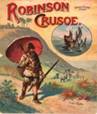
During all this time I never stopped thinking about escape. When I traveled across to the other side of the island, I could see the other islands, and I said to myself, “Perhaps I can get there with a boat. Perhaps I can get back to England one day.”
So I decided to make myself a boat. I cut down a big tree, and then began to make a long hole in it. It was hard work, but about six months later, I had a very fine canoe (独木舟). Next, I had to get it down to the sea. How silly I was! Why didn’t I think before I began work? Of course, the canoe was too heavy. I couldn’t move it! I pulled and pushed and tried everything, but it didn’t move. I was very unhappy for a long time after that.
That happened in my fourth year on the island. In my sixth year I did make myself a smaller canoe, but I did not try to escape in it. The boat was too small for a long journey, and I did not want to die at sea. The island was my home now, not my prison, and I was just happy to be alive. A year or two later, I made myself a second canoe on the other side of the island. I also built myself a second house there, and so I had two homes.
My life was still busy from morning to night. There were always things to do or to make. I learnt to make new clothes for myself from the skins of dead animals. They looked very strange, it is true, but they kept me dry in the rain.
I kept food and tools at both my houses, and also wild goats. There were many goats on the island, and I made fields with high fences to keep them in. They learnt to take food from me, and soon I had goats’ milk to drink every day. I also worked hard in my corn fields. And so many years went by.
1.The purpose of making a canoe on the island was to _____________.
A. escape in it
B. get to the other side of the island[来源
C. use it for food
D. go around the island
2.To survive, the writer _____________.
A. kept goats for milk
B. made clothes from animal skins
C. worked in the cornfields
D. did all the above
3.Why didn’t the writer use his first canoe?
A. Because it was too small for a long journey.
B. Because it was too heavy to get down to the sea.
C. Because there was something wrong with it.
D. Because the writer was busy building a second house.
4.From the story, we can learn that _____________.
A. the writer tried to make his stay comfortable on the island
B. the writer had nothing to do on the wild island
C. the writer tried to escape in the second canoe, but failed
D. the writer was in prison on the island, losing his freedom
用方框中所给词语的适当形式填空,使短文正确、通顺、连贯(每词限用一次)。
| home, work, happy, try, cross, six, before, too, make, I |
 During all this time I never stopped thinking about escape. When I traveled 【小题1】 to the other side of the island (岛屿), I could see the other islands, and I said to 【小题2】, “Perhaps I can get there with a boat. Perhaps I can get back to England one day.”
 ove it! I pulled and pushed and 【小题6】 everything, but it didn’t move. I was very 【小题7】 for a long time after that.
| 【小题1】 |
|
| 【小题2】 |
|
| 【小题3】 |
|
| 【小题4】 |
|
| 【小题5】 |
|
| 【小题6】 |
|
| 【小题7】 |
|
| 【小题8】 |
|
| 【小题9】 |
|
| 【小题10】 |
|
用方框中所给词语的适当形式填空,使短文正确、通顺、连贯(每词限用一次)。
|
home, work, happy, try, cross, six, before, too, make, I |
 During
all this time I never stopped thinking about escape. When I traveled 1. to the other side of the island (岛屿), I could see the other
islands, and I said to 2. , “Perhaps I can get there with a
boat. Perhaps I can get back to England one day.”
During
all this time I never stopped thinking about escape. When I traveled 1. to the other side of the island (岛屿), I could see the other
islands, and I said to 2. , “Perhaps I can get there with a
boat. Perhaps I can get back to England one day.”
So I decided 3. myself a boat. I cut down a big tree, and then began to make a long hole in it. It was hard 4. , but about six months later, I had a very fine canoe (独木舟). Next, I had to get it down to the sea. How silly I was! Why didn’t I think 5. I began work? Of course, the canoe was too heavy. I couldn’t move it! I pulled and pushed and 6. everything, but it didn’t move. I was very 7. for a long time after that.
That happened in my fourth year on the island. In my 8. year I did make myself a smaller canoe, but I did not try to escape in it. The boat was 9. small for a long journey, and I did not want to die at sea. The island was my 10. now, not my prison, and I was just happy to be alive.
湖北省互联网违法和不良信息举报平台 | 网上有害信息举报专区 | 电信诈骗举报专区 | 涉历史虚无主义有害信息举报专区 | 涉企侵权举报专区
违法和不良信息举报电话:027-86699610 举报邮箱:58377363@163.com