
题目列表(包括答案和解析)
Farmer John and Farmer Bob were neighbours. For more than 30 years, they had been getting along very well.
Then their good relationship broke. It began with a small thing, then bitter words, and then weeks of silence. One morning Farmer John woke up to find a stream between the two farms. “It must be Bob,” John thought.
Then one day there was a knock on John’s door. He opened it to find a carpenter(木匠) standing at the doorway.
“I’m looking for a few days’ work,” the carpenter said.
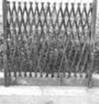
“I do have a job for you,” John said. “Look across the stream at that farm. That’s my neighbour Bob. He dug a stream between the two farms. I want you to build a fence—an 8-foot fence. I don’t want to see his place or his face any more. I don’t have such a neighbour!”The carpenter said, “I think I know what to do, sir, and I’ll be able to do a job that pleases you.” Farmer John helped the carpenter get the materials ready and then he was off for the day. About sunset when the farmer returned, the carpenter had just finished his job. The farmer’s eyes opened wide. There was no fence there at all!
It was a bridge! And the neighbour, Bob, was coming across, with his hand outstretched(伸出). “Hi, John! You’re quite a fellow to build this bridge!”
Then they met in the middle, taking each other’s hands. “I’m terribly sorry for what I have said and done. We should be good to each other.” said Farmer Bob. Then they turned to see the carpenter, who was ready to go. “No, wait! Stay a few days. I have a lot of other jobs for you,” said Farmer John. “I’d love to stay,” the carpenter said, “but I have more bridges to build.”
【小题1】What does the sentence “You’re quite a fellow to build this bridge!” mean?
| A.John was great to build this bridge. |
| B.John was not good at building bridges. |
| C.John was foolish to build such a bridge. |
| D.John should build the bridge earlier. |
| A.Shy. | B.Wise. | C.Proud. | D.Careless. |
| A.What a Big Fence! | B.A Strong Bridge. |
| C.Three Kind Men | D.A Fence or a Bridge ? |
In the 13th century, the famous Italian traveler, Marco Polo, traveled a long way to China. During his stay in China, he saw many wonderful things. One of the things he discovered was that the Chinese used paper money. In Western countries, people did not use paper money until the 15th century. However, people in China began to use paper money in the 7th century.
A Chinese man called Cai Lun invented paper almost 2000 years ago. He made it from wood. He took the wood from trees and made it into paper. He then put these pieces of paper together and made them into a book.
Now paper still comes from trees. We use a lot of paper every day. If we keep on wasting so much paper, there will not be any trees left on the earth. If there are no trees, there will be no paper. Every day, people throw away about 2,800 tons of paper in our city. It takes 17 trees to make one ton of paper. This means that we are cutting nearly 48,000 trees every day. Since it takes more than 10 years for a tree to grow, we must start using less paper now. If we don’t, we will not give enough time to grow more trees to take the place of those we use for paper.
So how can we save paper? We can use both sides of every piece of paper, especially then we are making notes. We can choose drinks in bottles instead of those in paper packets. We can also use cotton handkerchief and not paper ones. When we go shopping, we can use fewer paper bags. If the shop assistant does give us a paper, we can save it and reuse it later.
Everyone can help to save paper. If we all think carefully, we can help protect trees. But we should do it now, before it is too late.
【小题1】 When he was in China, Marco Polo ________.
| A.saw many wonderful things |
| B.read a lot of books |
| C.discovered Cai Lun invented paper |
| D.learned to make paper |
| A.48,000 | B.1,700 | C.2,000 | D.2,800 |
| A.To use cotton handkerchiefs instead of paper ones. |
| B.To grow more trees. |
| C.To use both sides of very piece of paper. |
| D.To use the paper bags from shops more than once. |
| A.About 48,000 trees can be used to make 2,800 tons of paper. |
| B.If we keep on wasting paper, we will have no paper to use. |
| C.The Chinese used paper money much earlier than the people in western countries. |
| D.It is never too late to plant trees for paper. |
| A.Cotton Handkerchiefs Back Again |
| B.Cai Lun, the Great Inventor |
| C.Saving Paper |
| D.The history of Paper |
| |||||||||||||||

Reader’s Digest is a monthly magazine. Before the 1980s, it belonged to a privately held company, which was started in 1922 by Lila Bell Wallace and Dewitt Wallace. This magazine is small and easy to carry, just half the size of most American magazines, which caused a phrase in 2005, “America in your pocket.” It is the best selling magazine in the USA. At present, its circulation(发行量) in the USA has reached 10 million copies and the number of the readers there is 38 million. Its global circulation outside the USA has reached 40 million people throughout more than 70 countries in 21 languages.
This magazine’s focus(焦点) is not news but more of cultural views because the editors think people now can get timely news from somewhere else. They hope this magazine can give readers something that is about special personal experiences, something the readers can share with their families. In different countries, this magazine provides a window to the world for the local readers. Some parts of the magazine are about the local customs and interests of the local readers. The other parts give the local readers information from all over the world.
This magazine actually used to be a family business until the Wallaces died in the 1980s. Because they had no children, there was no one to take over the company. Sixteen years ago, this company went public and became a public company.
【小题1】How often does Reader’s Digest come out in the USA?
| A.Once a year. | B.Once a month. | C.Once a week. | D.Once a day. |
| A.38 million. | B.40 million. | C.78 million. | D.108 million. |
| A.something about the timely news |
| B.some special personal experiences |
| C.some information from all over the world |
| D.the local customs and interests of the local readers |
Do you still remember the disaster(灾难)several years ago? In Indonesia (印度尼西亚) thousands of people were killed by the tsunami(海啸) that washed people out to sea and pulled children out of their parents’ arms. “The weather was fine with no clouds .There was no warning and suddenly the sea water just hit the city. In some parts the water was as high as two meters.” a man in the city said. “Sadli, an official at the hospital, said many of the dead in the city were children under the age of ten.” “Maybe the children were being carried by their hold but they fell over in the water and couldn’t hold on to their children .All the dead children drawed.” said Sadli. Officials said hundreds of houses had been swept away the force (力量) of five –meter –high waves across Aceh, which lies on the northern tip (末端)of Sumatra Island . “Tens of people saw the rushing water and didn’t run to high ground .Instead, they kept watching it .Several of my workmates are missing.” Lelana said by telephone.
【小题1】According to the passage, ______were missing in the tsunami.
| A.some officials |
| B.some of Sadli’s friends |
| C.some children under the age of ten |
| D.some of Lelana’s workmates |
| A.huge waves | B.strong winds |
| C.heavy rain | D.rushing river water |
| A.they couldn’t run fast |
| B.the ground was too high to reach |
| C.they didn’t know they were in danger |
| D.the rushing water stopped them from running. |
湖北省互联网违法和不良信息举报平台 | 网上有害信息举报专区 | 电信诈骗举报专区 | 涉历史虚无主义有害信息举报专区 | 涉企侵权举报专区
违法和不良信息举报电话:027-86699610 举报邮箱:58377363@163.com