
题目列表(包括答案和解析)
“Who did this?” asked my teacher. Thirty children tried to think about not only what they had done, but also what our teacher might have found out.
“Who did this?” she asked again. She never became angry, but she was this time. She held up a piece of broken glass and asked, “Who broke this window?”
“Oh, oh,” I thought. I was the one who broke the window. I did not do it on purpose (故意). It was caused by a bad throw of a baseball. Why did it have to be me?
If I admitted (承认) it, I would be in a lot of trouble. How would I be able to pay for a big window like that? “My father is going to get angry at me,” I thought. I didn’t want to raise (举起) my hand, but something much stronger than me pulled it up.
“I did it,” I said. Then I was silent. It was hard enough saying what I had.
My teacher went to one of our bookshelves and took down a book. She then began walking towards my desk. I had never known my teacher to strike (打) a student, but I feared she was going to start with me.
“I know how you like birds,” she said as she stood looking down at my face. “Here is the field guide about birds (鸟类野外指南) that you always check out from our school library. It is yours now. We have got a new one for the school. You will not be punished (惩罚). But remember, it’s only for your honesty.”
I couldn’t believe it! I wasn’t being punished and I was getting my own bird field guide, the one that I had been saving up all my money to buy.
【小题1】How did the writer feel when he saw his teacher walking towards him with a book from bookshelves?
| A.Relaxed. | B.Pleased. | C.Frightened. | D.Guilty. |
| A.lend | B.borrow | C.test | D.buy |
| A.The writer’s teacher often hit her students. |
| B.The writer broke the window when he was catching a bird. |
| C.The writer was seriously punished after he admitted his mistake. |
| D.The writer didn’t want to admit his mistake at the beginning. |
| A.he who is honest is wise | B.better late than never |
| C.practice makes perfect | D.a friend in need is a friend indeed |
 The first Earth Hour was held in 2007 in Sydney, Australia when 2.2 million individuals(个体) and more than two thousand businesses turned their lights off for one hour to take a stand against climate change. Only a year later Earth Hour had grown into a global event with more than 50 million people across 35 countries and territories(行政区)participating(参加). Global landmarks such as the Sydney Harbour Bridge, CN Tower in Toronto, Golden Gate Bridge in San Francisco, and Rome’s Colosseum, all stood in darkness, as symbols of hope for a cause that grows more urgent(紧急) by the hour. In March 2009, millions of people took part in the third Earth Hour. Over 4000 cities in 88 countries and territories have promised their official support for the event. On Saturday 27 March, Earth Hour 2010 became the biggest Earth Hour. A record said 128 countries and territories joined the global display of climate action.
| A.The climate change is one of the greatest threats facing wild life and nature. |
| B.Everyone can make a difference. |
| C.Earth Hour has brought about some new changes to our lives. |
| D.Tell the source(起源) of Earth Hour and its importance. |
| A.全球性的 | B.地域性的 | C.官方性的 | D.海洋性的 |
| A.The first Earth Hour started in 2007 in Australia. |
| B.Earth Hour is hold to reduce the bad effect on climate. |
| C.The writer thought that big changes start with small steps. |
| D.More than one hundred countries and territories supported the action last year. |
| A.the WWF | B.Earth Hour in Australia |
| C.Climate Action | D.Earth Hour |
One midnight, a little girl woke up to pass water. She by herself got up and down her bed, walked to the bedroom door and opened it. She looked outside and walked back, for it was so dark in the hall that she feared.
Her mother said, “Don’t be afraid, honey. Take courage!”“What’s courage?” she asked, running to her mother’s bed. “Courage is the brave breath,” her mother answered. “Mum, do you have courage?”“Certainly.” The girl held out her little hands, saying, “Mum, blow some of your breath of courage to me.”
After her mother blew out two mouthfuls of breath into her little cold hands, the little girl clenched her fists(握拳) nervously, afraid that the “breath of courage” would run away. Then with her fists clenched, she walked out of the bedroom towards the bathroom with nothing to fear.
Her mother said to herself, “It will be nice if someone can blow some kind of ‘breath’ to me. Then I can hold it in my hands too when I feel terrified or lost.”
In fact, mostly, what we are terrified of is nothing but the fear in our mind. Who we should defeat(战胜) is nobody but ourselves.
【小题1】The girl walked back because _______.
| A.the bathroom was too far away. | B.her mother wouldn’t go with her |
| C.she was too afraid of the dark | D.the bedroom door was locked |
| A.the girl went to the bathroom by herself |
| B.the girl pretended to be terrified of nothing |
| C.the girl’s mother was able to blow brave breath |
| D.the girl’s mother was very proud of herself |
| A.held out her little hands | B.clenched her fists |
| C.talk to her mother | D.held her own breath |
| A.adults are always brave enough |
| B.children learn to be brave quickly |
| C.the fear in one’s mind is the real problem |
| D.the mother can deal with anything with breath |
| A.The Fearless Mother | B.One Lonely Girl |
| C.One midnight | D.The Breath of Courage |
India is the home of tigers. Every year many people are killed by tigers. The tiger, however, doesn’t always eat men. It likes wild animals better. It is only when the tiger is old enough or wounded (受伤的) that it eats men. But when it tastes the meat of men, it will go on killing men for food. When a man-eater like this is discovered (发现)people are very afraid. They have to stop working in the fields.
There are many ways to put an end to such dangerous animals. One way is that some men with long guns (枪) ride on elephants while other men drive the tiger towards them.
For a hunter another way is to sit in a tree near the place where a tiger has eaten somebody. If the tiger returns for another meal, the hunter will kill it in the hiding place. A goat may be tied to the tree for the tiger to kill.
The most dangerous way is to hunt a tiger on foot. But the man must be brave and can shoot well or he would be killed by the tiger.
1.Where is the home of tiger?
_________________________________________________________________
2.which does the tiger like better to eat, men or wild animals?
_________________________________________________________________
3.What will the tiger do when it tastes the meat of men?
_________________________________________________________________
4.Are there any ways to put an end to such dangerous animals?
_________________________________________________________________
5.What is the most dangerous way to hunt a tiger?
_________________________________________________________________
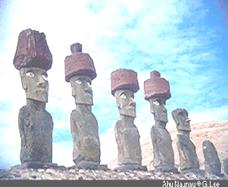
| A.the discovery of Easter Island | B.the statues on Easter Island |
| C.the history of Easter Islanders | D.the earliest population on Easter Island |
| A.c-d-a-b | B.d-b-a-c | C.a-c-b-d | D.d-a-b-c |
| A.Easter Island is the most distant island in the world |
| B.Easter is the name of a holiday |
| C.not all the statues were placed in a line |
| D.the island was once rich in natural resources |
| A.mysterious | B.lost |
| C.unknown to the world | D.with no people living there |
湖北省互联网违法和不良信息举报平台 | 网上有害信息举报专区 | 电信诈骗举报专区 | 涉历史虚无主义有害信息举报专区 | 涉企侵权举报专区
违法和不良信息举报电话:027-86699610 举报邮箱:58377363@163.com