
B 第二段至第五段分别介绍了学习的方法. 查看更多


题目列表(包括答案和解析)

听力测试(25分)

Ⅰ.听句子选择图片:你将听到五个句子,请根据听到的内容,选出五幅相关的图片。每个句子后你有5秒钟的答题时间。听一遍。共5小题,计5分。

A.
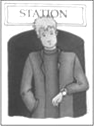
B.
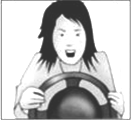
C.
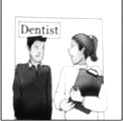
D.
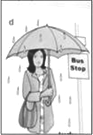
E.
F.
Ⅱ.听对话回答问题:你将听到七段对话,每段对话之后你将看到一个或几个问题。请根据听到的对话内容,选择能回答所提问题的最佳答案。每段对话之后你有5至10秒钟的答题时间。听两遍。共10小题,计10分。

请听第一段至第五段对话,回答第6至第10五个小题。

6.Why does the woman like the pandas?

A.They' re clever.

B.They're beautiful.

C.They're ugly.

7.Whose hair is shorter?

A.Sam's.

B.Maria's.

C.Tom's.

8.What does James do?

A.A basketball player.

B.An actor

C.A pilot.

9.What is Cindy going to do tomorrow?

A.Go to see her father.

B.Go shopping.

C.Go to Wuhan.

10.What's the price of the sweater?

A.5 dollars.

B.15 dollars.

C.50 dollars.

请听第六段对话,回答第11至第12两个小题。

11.What is June doing?

A.Listening to the radio.

B.Watching the MP3.

C.Learning to sing.

12.What does Jack want to do?

A.To listen to the MP3.

B.To learn English.

C.To have a new MP3.

请听第七段对话,回答第13至第15三个小题。

13.What's the matter with Alicia?

A.She didn't write to her friend.

B.She argued with her friend.

C.She said sorry to her friend.

14.Where did Ben ask Alicia to go?

A.To her friend's house.

B.To the cinema.

C.To the post office.

15.What will Alicia finally do?

A.Give a telephone call.

B.Buy a ticket.

C.Write an e-mail.

Ⅲ.听短文选择答案:你将听到一段短文,然后你将看到5个问题。请根据听到的短文内容选择能回答所提问题的最佳答案。听完短文之后你有1分钟的答题时间。听两遍。共5小题,计5分。

16.What's Jack's biggest problem?

A.He has much time to play.

B.He's too busy.

C.He must get up late and go to bed early.

17.Where is Jack everyday now?

A.In the park.

B.At home.

C.At school.

18.When can Jack have a good rest?

A.On Sunday afternoon.

B.On Saturday evening.

C.On Sunday morning.

19.Who did Jack play games with when he was young?

A.His parents.

B.His friends.

C.His classmates.

20.What does Jack have to do in the evening now?

A.Study.

B.Chat.

C.Play.

Ⅳ.听短文填写表格:你将听到一段短文。请根据短文内容,完成表格中的有关信息。听完短文之后你有1分钟的答题时间。听两遍。共5小题,计5分。

查看答案和解析>>

对话理解。听下面7段对话,每段对话后有一个或几个小题,从题中所给的A、B、C三个选项中选出
最佳选项。每段对话读两遍。
听第一段对话,回答第1小题。
1. What kind of animal does Michael like best?
[     ]
A. Pandas.
B. Dogs.
C. Cats.
听第二段对话,回答第2小题。
2. Where was Ann last night?
[     ]
A. At home.
B. In the hospital.
C. At school.
听第三段对话,回答第3小题。
3. What's the relationship (关系) between the two speakers?
[     ]
A. Teacher and student.
B. Husband and wife.
C. Father and daughter.
听第四段对话,回答第4小题。
4. What does Bob want to have for breakfast?
[     ]
A. Noodles.
B. Sandwiches.
C. Dumplings.
听第五段对话,回答第5小题。
5. What does the man want to buy?
[     ]
A. Some new pens.
B. Some new books.
C. Some New Year's cards.
听第六段对话,回答第6、7小题。
6. What's the matter with the woman?
[     ]
A. She has a cold.
B. She has a toothache.
C. She has a cough.
7. What did the doctor ask her to do?
[     ]
A. Stay in hospital.
B. Take a rest.
C. Take some medicine.
听第七段对话,回答第8至10小题。
8. What will Jane do this weekend?
[     ]
A. Join a club.
B. Go to a concert.
C. See a movie.
9. How much does a ticket cost?
[     ]
A. ¥20.
B. ¥40.
C. ¥60.
10. What will the speakers do to raise money for the concert?
[     ]
A. Sell newspapers.
B. Sell flowers.
C. Ask their parents for help.

查看答案和解析>>

阅读下面一篇文章,从每小题所给出的A、B、C、D中找出第二至第五段各段的最恰当的大意。
    I know what you're thinking: pizza (比萨饼)? For breakfast? But the truth is that you can have last
night's leftovers in the a.m. if you want to.
    I know lots of women who skip breakfast (不吃早餐), and they have a ton of different excuses for
doing it. Some say they don't have time, others think they're "saving" calories (卡路里, 热量单位), still
others just don't like breakfast food.
    But the bottom line is that eating in the morning is very important when you're trying to lose weight.
"Eating just about anything from 300 to 400 calories would be better than nothing at all," says Katherine
Brooking, R.D., who developed the super-easy eating plan for this year's "SELF CHALLENGE". And
even pizza can be healthy if it's loaded with vegetables, and you stick to one small piece.
    Breakfast is one meal I never miss, and the same goes for most weight loss success stories. Research
shows that eating breakfast keeps you from overeating later in the day. Researchers at the University of
Southern California found that breakfast skippers have a bigger chance of gaining weight than those who
regularly have a morning meal.
    So eat something in the morning, anything. I know plenty of friends who end up having no breakfast
altogether, and have just coffee or orange juice. I say, try heating up last night's leftovers-it may sound
crazy, but if it works for you, do it! I find if I tell myself, "You can always eat it tomorrow," I put away
the leftovers, instead of eating more that night. Try it … you may save yourself some pre-bedtime calories.
And watch your body gain the fat-burning effects.
1. Paragraph 2:
[     ]
A. Women skipping breakfast.
B. Saving calories.
C. Excuses of not having breakfast.
D. Breakfast is overlooked.
2. Paragraph 3:
[     ]
A. The bottom line in the morning.
B. Breakfast is necessary.
C. SELF CHALLENGE.
D. Pizza loaded with vegetables.
3. Paragraph 4:
[     ]
A. Breakfast prevents people from overeating.
B. Weight loss success stories.
C. University of Southern California.
D. Breakfast skippers in California.
4. Paragraph 5:
[     ]
A. Friends without breakfast.
B. Leftover is some good kind of breakfast.
C. Eat it tomorrow.
D. Save pre-bedtime calories.

查看答案和解析>>

听第一段对话,回答第1小题。
1. What kind of food does the girl prefer?
[     ]
A. American food.
B. Chinese food.
C. Indian food.
听第二段对话,回答第2、3小题。
2. What place is the man probably in?
[     ]
A. A shop.
B. A cinema.
C. A restaurant.
3. How much does the man have to pay?
[     ]
A. 13 pounds.
B. 15 pounds.
C. 30 pounds.
听第三段对话,回答第4、5小题。
4. Why did the girl look tired?
[     ]
A. Because she was ill.
B. Because she did her homework until late.
C. Because she didn't sleep last night.
5. What was the trouble with her brother?
[     ]
A. He had a bad cold.
B. He fell from the chair and broke his leg.
C. He didn't sleep last night.
听第四段对话,回答第6、7小题。
6. What's her mother's advice?
[     ]
A. Jane should have a rest.
B. Jane should see a doctor.
C. Jane should go to sleep.
7. What should Jane drink now?
[     ]
A. Milk.
B. Juice.
C. Water.
听第五段对话,回答第8、9小题。
8. When is Jenny leaving?
[     ]
A. On Sunday.
B. On Saturday.
C. On Monday.
9. Jenny will get a             as a gift.
[     ]
A. car
B. skirt
C. scarf
听第六段对话,回答第10-12小题。
10. The day after tomorrow is            .
[     ]
A. September, 10th
B. October, 9th
C. September, 9th
11. What's Ms Wang's job?
[     ]
A. An English teacher.
B. A Chinese teacher.
C. A math teacher.
12. What will the boy buy?
[     ]
A. A watch.
B. A flower.
C. A book.
听第七段对话,回答第13-15小题。
13. How will Kathy get to the airport?
[     ]
A. By bus.
B. By plane.
C. By taxi.
14. How soon can they get to the airport?
[     ]
A. In 15 minutes.
B. In 25 minutes.
C. In 30 minutes.
15. — Why does the man go to the airport? 
      — Because he needs to            .
[     ]
A. meet his friends.
B. take a plane.
C. have a meeting

查看答案和解析>>

听力

Ⅰ.听句子选择图片:你将听到五个句子。请根据听到的内容,选出五幅相应的图片。每个句子后你有5秒钟的答题时间。听一遍。共5小题,计5分。
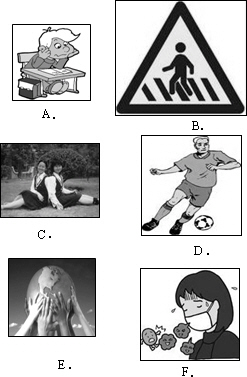
1.________ 2.________ 3.________ 4.________ 5.________

Ⅱ.听对话回答问题:你将听到六段对话,每段对话之后你将看到一个或几个问题。请根据听到的对话内容,选择能回答所提问题的最佳答案。每段对话之后你有5至10秒钟的答题时间。听两遍。共10小题,计10分。

请听第一段对话,回答第6小题。

6.What does the man do?

A.A policeman.

B.A nurse.

C.A waiter.

请听第二段对话,回答第7小题。

7.What does the woman know about the accident?

A.It happened this morning.

B.It happened because of the driver.

C.It was reported on TV last night.

请听第三段对话,回答第8小题。

8.What is Lucy going to do this evening?

A.Take a rest.

B.Take an exam.

C.Take a new course.

请听第四段对话,回答第9至10两个小题。

9.What are they talking about?

A.Their interests.

B.Their plan for the summer holiday.

C.Their visit to the World Expo.

10.How many times has Sarah ever been to Shanghai?

A.Once.

B.Twice.

C.Never.

请听第五段对话,回答第11至12两个小题。

11.When did the woman’s toothache start?

A.Three days ago.

B.Last night.

C.Today

12.What did the doctor ask the woman to do?

A.Keep her mouth open.

B.Not to eat anything hard.

C.Pull out the tooth.

请听第六段对话,回答第13至15三个小题。

13.Where are they talking now?

A.In the bookshop.

B.In the library.

C.In the classroom.

14.Why did the man give up reading the book?

A.Because his English was poor.

B.Because the book was too difficult.

C.Because the words were difficult to see clearly.

15.What did the man decide to do?

A.Give up reading English storybooks.

B.Read another book with bigger words.

C.Buy another English storybook.

Ⅲ.听短文选择答案:你将听到一段短文,然后你将看到5个问题。请根据听到的短文内容选择能回答所提问题的最佳答案。听完短文之后你有一分钟时间回答所提问题。听两遍。共5小题,计5分。

16.Where did the driver meet the young man?

A.At the Red Hotel.

B.At the bus station.

C.At the train station.

17.How did the driver feel when he knew where the young man was going?

A.Disappointed.

B.Excited.

C.Anxious.

18.Why did the driver take the young man through several streets?

A.Because the Red Hotel was far.

B.Because he wanted to get more money.

C.Because there were no passengers on the streets.

19.How much would the young man like to pay?

A.Three dollars.

B.Thirteen dollars.

C.Fifteen dollars.

20.What did the young man think of the driver?

A.He was clever.

B.He was friendly.

C.He was dishonest.

Ⅳ.听短文填写表格:你将听到一段短文。请根据短文内容,完成表格中的有关信息。听完短文之后你有一分钟时间填写表格内空缺内容。听两遍。共5小题,计5分。
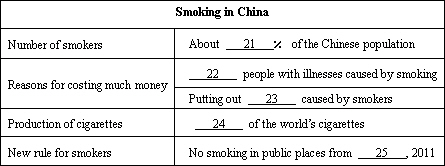
查看答案和解析>>


同步练习册答案