
题目列表(包括答案和解析)
| 阅读理解 |
| Martha's Vineyard (葡萄园) got its name from its discoverer, Artholomew Gasbnold, who named it after his wife Martha, and it was also in memory of the thick growth of wild vines (葡萄) on the land. The island of Martha's Vineyard lies south of Cape Cod off the Southern eastern coast of Massachusetts, United States. It is nearly 20 miles long and runs from 2 to 10 miles in width. There are wide, hard beaches on the southern side. The north is hilly, but in the south and eastern parts there are wide areas of open land covered with wild flowers. The island was discovered early in the 17th cen-tury. The Indians were quiet and friendly, and the newcomers fished for a living, making a lot of money from whaling (捕鲸). With the decline (衰落) of whaling and sailing ships, Martha's Vineyard was almost for-gotten until about 60 years ago when people began to buy the old houses of the whaling captains and the sheds of the fishermen near the beaches. Now people go there year after year for their summer holidays. |
| 1. In this passage the writer doesn't tell us ______. |
| A. how the island got its name B. the population of the island C. the scenery of the island D. the value of the island |
| 2. One of the reasons why Martha's Vineyard was al-most forgotten is that ______. |
| A. the hunting of whales became less productive B. ship building industry developed rapidly C. most of the Vineyard lay waste D. a lot of fishermen left the island |
书面表达
根据下列图画,用英语写出“狐狸与葡萄”的故事,要求图文一致,情节完整。
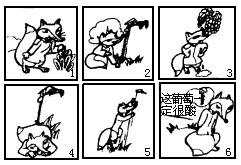
这是一篇寓言故事,六幅图构成一个完整的故事情节。属记叙文体裁。文中时态用过去时态。
Leaves are nature’s food factories. Plants take water from the ground through their roots. They take a gas called carbon dioxide (CO2) from the air. Plants use sunlight to turn water and CO2 into glucose(葡萄糖).Glucose is a kind of sugar. Plants use glucose as food for energy to grow. The way plants turn water and CO2 into glucose is called photosynthesis (光合作用).That means “putting together with light .” A chemical called chlorophyll helps make photosynthesis happen. Chlorophyll is green. It gives plants their green colour. As summer ends and autumn comes, the days get shorter and shorter. This is how the trees “know” to begin getting ready for winter.
During winter, there is not enough light or water for photosynthesis .The trees will rest, and live on the food they have stored during the summer. They begin to close their food-making factories. The green Chlorophyll disappears from the leaves. Then, we begin to see yellow and orange colours. A few of these colors stay in the leaves all the time. We just can’t see them in the summer, because they are covered up by the green Chlorophyll.
Red and purple colors we see in leaves are made mostly in the autumn. In some trees, like maples, glucose is stored in the leaves after photosynthesis stops. Sunlight and the cool nights of autumn turn this glucose into red. The brown color of trees like oaks is made from wastes left in the leaves.
The underlined word “chlorophyll” in the first Para means in Chinese.
A 叶绿素 B 氧气 C 胡萝卜素 D 蛋白质
The way is called photosynthesis.
A. plants get CO2 from the air
B. plants take water from the ground
C. plants turn water and CO2 into glucose.
D. Plants use glucose as food for energy to grow.
The gas called carbon dioxide is from the
A ground B roots C air D sunlight
Which of the following is not true?
A. when autumn and winter come, the days get shorter and shorter.
B. During winter trees rest and live on the food they store during the summer.
C. During winter small amounts of yellow and orange colors are kept in the leaves all the time.
D. Trees begin to stop making food in summer.
Leaves are nature’s food factories. Plants take water from the ground through their roots. They take a gas called carbon dioxide (CO2) from the air. Plants use sunlight to turn water and CO2 into glucose(葡萄糖).Glucose is a kind of sugar. Plants use glucose as food for energy to grow. The way plants turn water and CO2 into glucose is called photosynthesis (光合作用).That means “putting together with light .” A chemical called chlorophyll helps make photosynthesis happen. Chlorophyll is green. It gives plants their green colour. As summer ends and autumn comes, the days get shorter and shorter. This is how the trees “know” to begin getting ready for winter.
During winter, there is not enough light or water for photosynthesis .The trees will rest, and live on the food they have stored during the summer. They begin to close their food-making factories. The green Chlorophyll disappears from the leaves. Then, we begin to see yellow and orange colours. A few of these colors stay in the leaves all the time. We just can’t see them in the summer, because they are covered up by the green Chlorophyll.
Red and purple colors we see in leaves are made mostly in the autumn. In some trees, like maples, glucose is stored in the leaves after photosynthesis stops. Sunlight and the cool nights of autumn turn this glucose into red. The brown color of trees like oaks is made from wastes left in the leaves.
1. The underlined word “chlorophyll” in the first Para means in Chinese.
A 叶绿素 B 氧气 C 胡萝卜素 D 蛋白质
2.The way is called photosynthesis.
A. plants get CO2 from the air
B. plants take water from the ground
C. plants turn water and CO2 into glucose.
D. Plants use glucose as food for energy to grow.
3.The gas called carbon dioxide is from the
A ground B roots C air D sunlight
4.Which of the following is not true?
A. when autumn and winter come, the days get shorter and shorter.
B. During winter trees rest and live on the food they store during the summer.
C. During winter small amounts of yellow and orange colors are kept in the leaves all the time.
D. Trees begin to stop making food in summer.
Leaves are nature’s food factories. Plants take water from the ground through their roots. They take a gas called carbon dioxide (CO2) from the air. Plants use sunlight to turn water and CO2 into glucose(葡萄糖).Glucose is a kind of sugar. Plants use glucose as food for energy to grow. The way plants turn water and CO2 into glucose is called photosynthesis (光合作用).That means “putting together with light .” A chemical called chlorophyll helps make photosynthesis happen. Chlorophyll is green. It gives plants their green colour. As summer ends and autumn comes, the days get shorter and shorter. This is how the trees “know” to begin getting ready for winter.
During winter, there is not enough light or water for photosynthesis .The trees will rest, and live on the food they have stored during the summer. They begin to close their food-making factories. The green Chlorophyll disappears from the leaves. Then, we begin to see yellow and orange colours. A few of these colors stay in the leaves all the time. We just can’t see them in the summer, because they are covered up by the green Chlorophyll.
Red and purple colors we see in leaves are made mostly in the autumn. In some trees, like maples, glucose is stored in the leaves after photosynthesis stops. Sunlight and the cool nights of autumn turn this glucose into red. The brown color of trees like oaks is made from wastes left in the leaves.
52 the underlined word“chlorophyll” in the first Para means_________in Chinese.
A 叶绿素 B 氧气 C 胡萝卜素 D 蛋白质
53 The way _________is called photosynthesis.
A Plants get CO2 from the air B plants take water from the ground
C plants turn water and CO2 into glucose. D Plants use glucose as food for energy to grow.
54 The gas called carbon dioxide is from the_________
A ground B roots C air D sunlight
55 Which of the following is not true?
A. when autumn and winter come, the days get shorter and shorter.
B. During winter trees rest and live on the food they store during the summer.’
C. During winter small amounts of yellow and orange colors are kept in the leaves all the time.
D. Trees begin to stop making food in summer.
湖北省互联网违法和不良信息举报平台 | 网上有害信息举报专区 | 电信诈骗举报专区 | 涉历史虚无主义有害信息举报专区 | 涉企侵权举报专区
违法和不良信息举报电话:027-86699610 举报邮箱:58377363@163.com