
题目列表(包括答案和解析)
We all know that if we want to keep our body in good shape we have to do physical exercise regularly as well as be careful with what we eat. What we tend to forget is that this goes for our eyes as well. Medical science confirms that a diet rich in carotenoids (类胡萝卜素) can help maintain good vision(维持好视力) and prevent against a number of eye diseases. Here's some advice about how to choose the right diet to keep your eyes healthy.
— Eat orange food. Fruits and vegetables with orange flesh are rich in carotenoids. In addition to carrots,oranges,pumpkins and sweet potatoes are also available. All of these contain high levels of carotenoids,which help to maintain good vision.
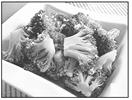
— Include dark green vegetables,such as spinach (菠菜) and broccoli (西兰花) in your diet, to act as natural sunglasses. Recent scientific studies have shown that these vegetables can help block (阻挡) the damaging UV radiation(紫外线辐射)from the sun's rays.
— Prevent some eye diseases with orange juice, yellow corn, whole milk, nuts and leafy vegetables. These foods are good sources of vitamins A, C, D and E. All of these are necessary to good eye health.
— Increase your intake of omega3 with some sea fish, and some other seafood. Omega3 helps build cell walls and is especially beneficial to keeping eyes healthy .It also helps regulate the eye's internal pressure and helps the eye dry up excess fluid.
1.We can learn from the first paragraph that healthy food .
A.keeps eyes healthy
B.means you don't need exercise
C.can help cure eye diseases efficiently(有效地)
D.means people don't have to wear glasses
2.Why should people eat orange food according to the text?
A.It is beneficial to building cell walls in eyes.
B.It is more delicious than other food.
C.It is good for eyesight.
D.It is rich in various vitamins.
3.Which of the following can help block the damaging UV radiation from the sun's rays?
A.Pumpkins. B.Juice. C.Nuts. D.Broccoli.
4.The purpose of the text is to tell people how to .
A.keep their body in good shape
B.choose a healthy diet for their eyes
C.prevent serious eye diseases
D.get natural sunglasses from food
The Queen’s English is now sounding less upper-class, a scientific study of the Queen’s Christmas broadcasts has found. Researchers have studied each of her messages to the Commonwealth countries since 1952 to find out the change in her pronunciation from the noble Upper Received to the Standard Received.
Jonathan Harrington, a professor at Germany’s University of Munich, wanted to discover whether accent changes recorded over the past half century would take place within one person. “As far as I know, there just is nobody else for whom there is this sort of broadcast records,” he said.
He said the noble way of pronouncing vowels (元音) had gradually lost ground as the noble upper-class accent over the past years. “Her accent sounds slightly less noble than it did 50 years ago. But these are very, very small and slow changes that we don’t notice from year to year.”
“We may be able to relate it to changes in the social classes,” he told The Daily Telegraph, a British newspaper. “In 1952 she would have been heard saying ‘thet men in the bleck het’. Now it would be ‘that man in the black hat’. Similarly, she would have spoken of ‘the citay’ and ‘dutay’, rather than ‘citee’ and ‘dutee’, and ‘hame’ rather than ‘home’. In the 1950s she would have been ‘lorst’, but by the 1970s ‘lost’.”
The Queen’s broadcast is a personal message to the Commonwealth countries. Each Christmas, the 10-minute broadcast is put on TV at 3 pm in Britain as many families are recovering from their traditional turkey lunch (传统火鸡午餐).
The results were published (发表) in the Journal of Phonetics.
1.What is the text mainly about?
|
A.The relationship between accents and social classes. |
|
B.The Queen’s Christmas speeches on TV. |
|
C.The changes in a person’s accent. |
|
D.The recent development of the English language. |
2.The Queen’s broadcasts were chosen for the study mainly because ______.
|
A.she has been Queen for many years |
|
B.she has a less upper-class accent now |
|
C.her speeches are familiar to many people |
|
D.her speeches have been recorded for 50 years |
3.Which of the following is an example of a less noble accent in English?
|
A.“dutay” |
B.“citee” |
C.“hame” |
D.“lorst” |
4.We may infer from the text that the Journal of Phonetics is a magazine on ______.
|
A.speech sounds |
B.Christmas customs |
|
C.TV broadcasting |
D.personal messages |
Winners Club
You choose to be a winner!
The Winners Club is a bank account specially designed for teenagers. It has been made to help you better manage your money. The Winners Club is a transaction account(交易账户)where you receive a keycard so you can get to your money 24/7—that’s 24 hours a day, 7 days a week!
It’s a club with impressive features for teenagers:
● No account keeping fees!
You’re no millionaire so we don’t expect you to pay large fees. In fact, there are no account keeping or transaction fees!
● Excellent interest rates!
You want your money to grow. The Winners Club has a good rate of interest which gets even better if you make at least two deposits without taking them out in a month.
● Convenient
Teenagers are busy — we get that. You may never need to come to a bank at all. With the Winners Club you can choose to use handy tellers and to bank from home using the phone and the Internet...You can have money directly deposited into your Winners Club account. This could be your pocket money or your pay from your parttime job!
● Mega magazine included
Along with your regular report, you will receive a FREE magazine full of good ideas to make even more of your money. There are also fantastic offers and competitions only for Winners Club members.
The Winners Club is a great choice for teenagers. And it is so easy to join. Simply fill in an application form. You will have to get permission from your parent or guardian (so we can organize that cool keycard)but it is easy. We can’t wait to hear from you. It’s the best way to choose to be a winner!
1.The Winners Club is a bank account intended for________.
A. parents B. teenagers C. winners D. adults
2.Which of the following is TRUE about the Winners Club?
A.Special gifts are ready for parents.
B.The bank opens only on work days.
C.Services are convenient for its members.
D.Fees are necessary for the account keeping.
3.The Winners Club provides magazines which________.
A.encourage spending
B.are free to all teenagers
C.are full of adventure stories
D.help to make more of your money
4.If you want to be a member of the Club,you must________.
A.be an Internet user B.be permitted by your parent
C.have a big sum of money D.be in your twenties
5.What is the purpose of this text?
A.To set up a club.
B.To provide parttime jobs.
C.To organize keycards.
D.To introduce a new banking service.
In ancient Egypt, the pharaoh(法老)treated the poor message runner like a prince when he arrived at the palace, if he brought good news. However, if the exhausted runner had the misfortune to bring the pharaoh unhappy news, his head was cut off.
Shades of that spirit spread over today’s conversations. Once a friend and I packed up some peanut butter and sandwiches for an outing. As we walked light-heartedly out the door, picnic basket in hand, a smiling neighbor looked up at the sky and said, ”Oh boy, bad day for a picnic. The weatherman says it’s going to rain.”I wanted to strike him on the face with the peanut butter and sandwiches. Not for his stupid weather report, for his smile.
Several months ago I was racing to catch a him As I breathlessly put my handful of cash across the Grey hound counter, the sales agent said with a broad smile ,”Oh that bus left five minutes ago.”Dreams of head-cutting!
It’s not the news that makes someone angry. It’s the unsympathetic attitude with which it’s the unsympathetic attitude with which it’s delivered. Everyone must give bad news from time to time, and winning professionals do it with the proper attitude. A doctor advising a patient that she needs an operation does it in a caring way. A boss informing an employee he didn’t get the job takes on a sympathetic tone. Big winners know, when delivering any bad news, they should share the feeling of the receiver.
Unfortunately, many people are not aware of this. When you’re tired from a long flight, has a hotel clerk cheerfully said that your room isn’t ready yet? When you had your heart set on the toast beef, has your waiter mainly told you that he just served the last piece? It makes you as traveler or diner want to land your fist right on their unsympathetic faces.
Had my neighbor told me of the upcoming rainstorm with sympathy, I would have appreciated his warming .Had the Greyhound salesclerk sympathetically informed me that my bus had already left, I probably would have said, ” Oh, that’s all right I’ll catch the next one.” Big winners, when they bear bad news ,deliver bombs with the emotion the bombarded(被轰炸的)person is sure to have.
1.In Paragraph 1,the writer tells the story of the pharaoh to ____.
A. make a comparison B. describe a scene
C. introduce a topic D. offer an argument
2.From “Dreams of head-cutting!”(Paragraph3),we learn that the writer___.
A. was mad at the sales agent
B. was reminded of the cruel pharaoh
C. wished that the sales agent would have had dreams
D. dreamed of cutting the sales agent’s head that night.
3.What is the main idea of the text?
A. Learning ancient traditions can be useful.
B. Receiving bad news requires great courage.
C. Helping others sincerely is the key to business success.
D. Delivering bad news properly is important in communication.
Now let us look at how we read. When we read a printed text, our eyes move across a page in short, jerky (急动的)movement. We recognize words usually when our eyes are still when they fixate. Each time they fixate, we see a group of words. This is known as the recognition span(范围)or the visual span. The length of time of which the eyes stop ---the duration of the fixation (定位)----varies considerably from person to person. It also varies within any one person according to his purpose in reading and his familiarity with the text. Furthermore, it can be affected by such factors as lighting and tiredness.
Unfortunately, in the past, many reading improvement courses have concentrated too much on how our eyes move across the printed page. As a result of this misleading emphasis on the purely visual aspects of reading, numerous exercises have been devised to train the eyes to see more words at one fixation. For instance, in some exercises, words are flashed on to a screen for, say, a tenth or a twentieth of a second. One of the exercises has required students to fix their eyes on some central point, taking in the words on either side. Such word patterns are often constructed in the shape of rather steep pyramids so the reader takes in more and more words at each successive (连续的) fixation. All these exercises are very clever, but it’s one thing to improve a person’s ability to see words and quite another thing to improve his ability to read a text efficiently. Reading requires the ability to understand the relationship between words. Consequently (因此), for these reasons, many experts have now begun to question the usefulness of eye training, especially since any approach which trains a person to read isolated (孤立的) words and phrases would seem unlikely to help him in reading a continuous text.
1.The time of the recognition span can be affected by the following facts except ________ .
|
A.one’s familiarity with the text |
|
B.one’s purpose in reading |
|
C.the length of a group of words |
|
D.lighting and tiredness |
2.The author may believe that reading ______.
|
A.requires a reader to take in more words at each fixation |
|
B.requires a reader to see words more quickly |
|
C.demands an deeply-participating mind |
|
D.demands more mind than eyes |
3.What does the author mean by saying “but it’s one thing to improve a person’s ability to see words and quite another thing to improve his ability to read a text efficiently.” in the second paragraph?
|
A.The ability to see words is not needed when an efficient reading is conducted. |
|
B.The reading exercises mentioned can’t help to improve both the ability to see and to comprehend words. |
|
C.The reading exercises mentioned can’t help to improve an efficient reading. |
|
D.The reading exercises mentioned has done a great job to improve one’s ability to see words. |
4.Which of the following is NOT true?
|
A.The visual span is a word or a group of words we see each time. |
|
B.Many experts began to question the efficiency of eye training. |
|
C.The emphasis on the purely visual aspects is misleading. |
|
D.The eye training will help readers in reading a continuous text. |
5.The tune of the author in writing this article is ________
|
A.critical (批评的) |
B.neutral (中立的) |
|
C. pessimistic (悲观的 ) |
D.optimistic |
湖北省互联网违法和不良信息举报平台 | 网上有害信息举报专区 | 电信诈骗举报专区 | 涉历史虚无主义有害信息举报专区 | 涉企侵权举报专区
违法和不良信息举报电话:027-86699610 举报邮箱:58377363@163.com