
题目列表(包括答案和解析)
They say that the real marathon begins at 35 kilometers — the rest is just a warm up. And sure enough, in 2009, at around the 36 kilometer point of the Beijing Marathon I experienced what runners call “hitting the wall”. I had been doing well until that point, but suddenly I felt a sharp pain in my leg. My pace slowed down dramatically and every brain cell in my head seemed to be screaming “stop!!!”
The last 5 kilometers were not fun; in fact, they were really hard work. Keeping motivated to run those last few kilometers was one of the hardest things I had ever done. But that is what makes running a marathon such a rewarding experience — if it were easy everyone would do it.
????????????? I have to admit it is sometimes not even easy to find the motivation to get out of bed, pull on your running shoes and head out into the morning to go for another run. These last two weeks of training for the Muztagata climb have been a little tough. I have been following my training plan for about three months but now I find that my original enthusiasm (热情) has all been used up. Day after day of going to the gym is beginning to wear me down and there still seems so much longer to keep this up. I have begun to doubt that I am actually making any progress or getting any fitter and even thought that I might be going backwards!
These are all very common experiences for people who are working towards challenging, longer term goals and I have learned to recognize these “highs” and “lows” in my energy and enthusiasm. Over the years I have learned a number of tricks that help me to deal with the days when my early motivation seems to have abandoned me for good.
1.Many runners say that the real marathon begins at 35 kilometers because it is at this point that __________.
A. runners begin to enjoy running the marathon race
B. runners are worn out as if they are breaking down
C. the rest part is just the preparation for the race
D. the race is a rewarding experience for runners
2.When people are working extremely hard towards challenging, _________.
A. they can keep themselves motivated all the time
B. they will never hesitate to continue carrying out their plan
C. they sometimes feel as if they stop making progress
D. they will fail to keep their spirits up
3.What is the author going to talk about in the following passage?
A. How to get trained.????????????? ????????????? ????????????? ????????????? ?????????????
B. Tips for becoming a marathon runner.
C. How to meet challenges. ????????????? ????????????? ???????
D. Tips for keeping motivation high.
Want to know more about how World Food Programme helps women all over the world? Here is a quick look at the valuable things it has done.
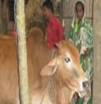 Investing(投资) In Bulls, Woman Begins To Escape From Poverty
In Shahinoor’s household there were days when she struggled to put even one meal on the family table. She and her husband are among Bangladesh’s poorest: those with no land, no wealth and little hope of breaking out of hunger and poverty. But a new programme to unlock the entrepreneurial(创业的) spirit of Bangladeshi women has transformed her life.
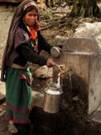 Food Aid Brings Fresh Water To Nepalese Village
Kanukura, 33, says that carrying water up the mountain slopes to her village used to be the hardest part of her day. It’s a job that mainly fell to women in this part of Nepal, who faced a difficult and tiring climb when they needed water. But that’s changed now, thanks to a new village tap, from which women like Kanukura can get clean drinking water whenever they need it.
In Colombia, Food Assistance Is Part Of Response To Violence Against Women
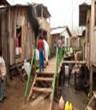 In Colombia, WFP assists many victims of sexual and gender-based violence, providing them with food assistance as they recover. As part of her work for WFP, Mariangela Bizzarri recently visited a town on Colombia’s Pacific coast to meet some of these women and to assess the effect of the violence they have experienced. She sent us this personal account of one day of meetings.
Afghanistan Diary - Day Six
 On the final day of Silke’s trip to central Afghanistan, she meets three women, each of whom impresses her with their determination to improve their own lives, and those of their families and their community. One of them is thrilled at simply having a job in a government office. As a child the idea of working outside her home had seemed impossible.
60. Who lives in a place where water used to be difficult to get according to the passage?
A. Silke B. Kanukura C. Shahinoor D. Mariangela
61. We learn from the passage that women in Colombia ________.
A. may give birth to 5 children
B. can’t go to school all their life
C. have to work in a government office
D. are more likely to get harmed than men
62. Women in Bangladesh now become not so poor as they used to be by ________.
A. raising bulls with the help of WFP
B. working more hours in the fields
C. doing part-time jobs in the evening
D. receiving money from the government
63. Which of the following is TRUE according to the passage?
A. There are many victims of sexual violence in Nepal.
B. Getting clean drinking water is easier in Bangladesh.
C. The social position of women in Afghanistan has greatly changed.
D. Children in Colombia sometimes have only one meal a day.
I am one of those people who are terrible at saying no. I take on too many projects at once, and spend too much of my time doing things I’d rather not be doing. I get stuff done, but it’s not always the best I can do, or the best way I could spend my time.
That’s why my newest goal, both as a professional and a person, is to be a quitter.
Being a quitter isn’t being someone who gives up, who doesn’t see important things through to the end. I desire to be the opposite of that. The quitter I want to be is someone who gets out when there’s no value in what he’s doing, or when that value comes at the expense of something more important.
We get involved in something, realize we don’t want to be a part of it, but keep on going. We say “Well, I’ve already invested so much time in this, I might as well stick it out.” A friend of mine once told me, “I knew I was an adult when I could stop reading a book, even after getting 500 pages into it.” Odd though it sounds, we all tend to do this.
I propose the opposite: quit as often as possible, regardless of project status or time invested. If you’re reading a book, and don’t like it, stop reading. Cut your losses, realize that the smartest thing to do is stop before your losses grow even more, and quit. Instead of reading an entire book you hate, read half of a bad one and half of a good one. Isn’t that a better use of your time?
Step back for a second. Let’s learn how to say “no” at the beginning, or in the middle, and free up more of our time to do the things we’d like to be doing, and the things actually worth doing.
Saying no is hard, and admitting a mistaken yes is even harder. But if we do both, we’ll start to make sure that we’re spending our time creating value, rather than increasing our losses. Let’s be quitters together.
【小题1】The author wants to be a quitter, because he/she .
| A.wishes to have more time for relaxation |
| B.hopes to improve his/her personality |
| C.expects to make more efficient use of his/her time |
| D.has found it hard to do several things at one time |
| A.When you know a task cannot be finished. |
| B.When you feel tired and need a rest. |
| C.When you meet with difficulties along the way. |
| D.When you realize what you are doing is not worth the time. |
| A.learn to say no | B.create more value |
| C.live your life to the fullest | D.stop doing many things at a time |
I am one of those people who are terrible at saying no. I take on too many projects at once, and spend too much of my time doing things I’d rather not be doing. I get work done, but it’s not always the best I can do, or the best way I could spend my time.
That’s why my newest goal, both as a professional and a person, is to be a quitter.
Being a quitter isn’t being someone who gives up, who doesn’t see important things through to the end. I desire to be the opposite of that. The quitter I want to be is someone who gets out when there’s no value in what he’s doing, or when that value comes at the expense of something more important.
A friend of mine once told me, “I knew I was an adult when I could stop reading a book, even after getting 500 pages into it.” Strange though it sounds, we all tend to do this. We get involved in something, realize we don’t want to be a part of it, but keep on going. We say “Well, I’ve already invested (投入) so much time in this. I might as well stick it out.”
I propose the opposite: quit as often as possible, regardless of project status or time invested. If you’re reading a book, and don’t like it, stop reading. Cut your losses, realize that the smartest thing to do is to stop before your losses grow even more, and quit. Instead of reading an entire book you hate, read half of a bad one and half of a good one. Isn’t that a better use of your time?
Step back for a second. Let’s learn how to say “no” at the beginning, or in the middle, and free up more of our time to do the things we’d like to be doing, and the things actually worth doing. Saying no is hard, and admitting a mistaken yes is even harder. If we do both, we’ll start to make sure that we’re spending our time creating value, rather than increasing our losses. Let’s be quitters together.
60. The author wants to be a quitter, because he ______.
A. hopes to improve his personality.
B. wishes to have more time for relaxation
C. has found it hard to do several things at one time.
D. expects to make more efficient use of his time.
61. In what circumstances does the author suggest quitting is a good idea?
A. When you feel tired and need a rest.
B. When you know a task cannot be finished.
C. When you realize what you are doing is not worth the time.
D. When you meet with difficulties along the way in your life.
62. If you stop reading a book you hate, the author might think that ______.
A. it’s pity that you have wasted so much time.
B. you are wise to cut your losses.
C. you should finish a book that you have started.
D. you should regret choosing the wrong book.
63. The message the author tries to convey is to _______.
A. create more value B. live your life to the fullest
C. learn to say no D. stop doing many things at once.
I am an elementary school teacher. I think homework should be done by the child and it should take only about a half an hour. Parents should write a note if they had to help a lot, this tells the teacher that the day’s lesson needs more review. Some things are more easily learned if they are practiced at home. Students should develop independence and organization. I send home fairly simple homework because I do not wish to see how creative mom, dad, the neighbors and grandma are with large projects... what is this teaching the child? Independence? Creativity?
Many readers are noticing the alarming trend to test, test, test. These new tests are not like the ones we remember. They are really difficult and abstract. Besides the usual math problems, third and fourth grade tests now ask about probability, tessellations and flips, slides, turns. Some teachers have had to increase the pace of their instruction to cover all the topics that will appear on the tests, thus, they send home homework that kids may not fully understand or send more homework home so they can, they hope, cover more content faster. It’s not a good idea, but the trend of testing has driven teachers to push, push, push. Parents should be concerned about the testing that is such an important issue. I would advice parents to talk to the teacher if they find the homework too hard. Is the child not getting work done at school, or is it simply too much? Some teachers will change the amount of work. And yes, I have been on the other side of the blackboard and had to make my son and daughter do their homework. I was a stickler for not doing it for them.
1. The passage might be an opinion posted on the internet under the title _________.
A. How Should Homework Done Independently by Students
B. Should Parents Contribute to Kids’ Homework
C. Should You Say No to Homework
D. How Should Test Papers Be Written
2. According to the writer, __________.
A. reasonable amount of easy homework is necessary
B. neighbors are not creative and independent enough
C. homework is good to children and teachers
D. parents are placed too much burden by teachers
3. The tests referred to by the author ________.
A. are questioned about the possibilities to solve the math problems
B. catch up with the increasing number of topics
C. are the result of teachers’ pushing
D. include much more demanding problems
4. Which of the following would the author most likely agree?
A. It is advisable for parents to pay enough attention to their kids’ lessons.
B. It is a good idea for teachers to send some difficult assignments home.
C. It is encouraging for parents to help with their children’s homework.
D. It’s practical for parents to leave their children’s homework with the teachers
湖北省互联网违法和不良信息举报平台 | 网上有害信息举报专区 | 电信诈骗举报专区 | 涉历史虚无主义有害信息举报专区 | 涉企侵权举报专区
违法和不良信息举报电话:027-86699610 举报邮箱:58377363@163.com