
题目列表(包括答案和解析)
听力部分(共2节,满分15分)
第一节:听力理解(共10小题;每小题1分,满分10分)
每段播放两遍。各段后有几个小题,各段播放前每小题有5秒钟的阅题时间。请根据各段播放内容及其相关小题,从题中所给的A、B、C项中,选出最佳选项。
听第1段材料,回答第1~2小题。
1.When should the woman get there?
A.At 2∶00 pm.
B.At 2∶20 pm
C.At 1∶20 pm.
2.What will the two speakers do next?
A.Watch a movie
B.Go home
C.Go shopping
听第2段材料,回答第3~5题。
3.Where is the woman going?
A.To the movie theater.
B.To the library
C.To the lab.
4.What do we know about the man?
A.He finds doing lab experiments easier than writing term papers.
B.He has a lot of reports to write this term.
C.Term papers are easy for him.
5.what kind of movie would the woman like to watch?
A.Comedy.
B.Murder mystery.
C.Romance.
听第3段材料,回答第6~8题。
6.When does Emily have to finish her homework every night?
A.By 9∶00.
B.By 8∶00.
C.By 10∶00.
7.What does Emily have to do on Saturday morning?
A.Do her homework.
B.Learn to dance.
C.Clean her room.
8.Why is Emily worried now?
A.Because her father knew about her secrets.
B.Because she did not do well in her math test.
C.Because her teacher was angry with her..
听第4段材料,回答第9~10题。
9.What's the probable relationship between the two speakers?
A.Workmates.
B.Driver and passenger.
C.Boss and secretary.
10.What can we learn from the conversation?
A.The woman may come to the place for the first time.
B.The woman should pay two dollars at last.
C.The woman should take bus number 1.
第二节 听取信息(共5小题;每小题1分,满分5分)
听下面一段独白。请根据题目要求,从所听到的内容中获取必要的信息,填入答题纸标号为11~15的空格中。

听力(共两节,满分30分)
第一节:听独白或对话(共15小题;每小题1.5分,满分22.5分)?
听下面5段对话。每段对话后有几个小题,从题中所给的A、B、C三个选项中选出最佳选项。听每段对话前,你将有时间阅读各个小题,每小题5秒钟;听完后,各小题将给出5秒钟的作答时间。每段对话读两遍。
听第1段对话,回答第1~3题。
1.What are they talking about?
A.Buying dresses.
B.Making dresses.
C.Borrowing dresses.
2.What kind of dress do they like for spring?
A.A woolen dress.
B.A cotton dress.
C.A silk dress.
3.What color does the woman prefer?
A.Yellow.
B.Green.
C.White.
听第2段对话,回答第4~6题。
4.What kind of cakes did the customer take?
A.Chinese rice cakes.
B.French cakes.
C.American cakes.
5.What's inside these cakes?
A.Nothing.
B.Bean jam.
C.Peanut jam.
6.How many cakes did the customer take?
A.5.
B.6.
C.12.
听第3段对话,回答第7~9题。
7.How did the man spend his weekend?
A.He went to his uncle's farm.
B.He planted some trees in his backyard.
C.Both A and B.
8.Why didn't he get some trees in the town?
A.Because there were only apple trees in the town.
B.Because there were only cedar trees in the town.
C.Because the trees sold in the town were expensive.
9.What did he bring home from his uncle's farm?
A.Some apples.
B.Some young trees.
C.Both A and B.
听第4段对话,回答第10~12题。
10.Who is the woman probably calling?
A.A policeman.
B.Her neighbor.
C.Her friend.
11.What is the address?
A.14 Spring Vale.
B.44 Spring Vale.
C.16 Spring Vale.
12.What will the woman do before leaving for the seaside?
A.She will cancel the milk and papers.
B.She will leave a ladder about.
C.She will tell her neighbor that she will leave.
听第5段对话,回答第13~15题。
13.Where does the conversation take place?
A.In a restaurant.
B.In an airplane.
C.On a ship.
14.Which of the following is true?
A.The man have traveled a lot on business before.
B.The man used to be a teacher.
C.The man was perhaps a soldier during the First World War.
15.What is the man going to do?
A.Visit his grandson.
B.Fetch his wife.
C.Travel around the world.
第二节:听取信息(共5小题;每小题1.5分,满分7.5分)
听下面1段对话。请根据题目要求,从所听到的内容中获取必要的信息,填入标号为16~20的空格中。听录音前,你将有10秒钟的阅题时间,录音读两遍。你有80秒钟的作答时间。
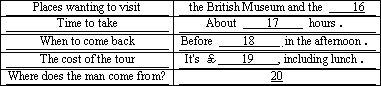
听力
第一节 听独白或对话(共15小题;每小题1.5分,满分22.5分)
听下面5段对话或独白。每段对话或独白后有几个小题,从题中所给的A、B、C三个选项中选出最佳选项,听每段对话或独白前,你将有时间阅读各个小题,每小题5秒钟;听完后,各小题将给出5秒钟的作答时间。每段对话或独白读两遍。
听第1段对话,回答第1~3题。
1.What are they talking about?
A.the Ocean Park.
B.the visit to the Ocean Park.
C.the museum and the restaurants.
2.When will the man go to the Ocean Park?
A.That afternoon.
B.The next morning.
C.The next afternoon.
3.Where will all the visitorssurely go?
A.The Science Museum.
B.The Ocean Park.
C.Restaurants.
听第2段对话,回答第4~6题。
4.What is the possible relationship of the two speakers?
A.Strangers.
B.Husband and wife.
C.Teacher and student.
5.Why do English people like to talk about weather with strangers?
A.Because it is interesting.
B.Because they feel friendly by doing this.
C.Because they want to know the weather condition.
6.What will happen if strangers talk about politics?
A.They may not agree with each other.
B.They may not be safe.
C.They may have to stop their talk soon.
听第3段对话,回答第7~9题。
7.What is the average depth?
A.About 16 meters.
B.About 20 meters.
C.About 10 meters.
8.How long will it take to get to the capital from the Canal?
A.Only three hours.
B.About four hours.
C.Nearly five hours.
9.How far is it from the capital to the Canal?
A.About 15 kilometers.
B.About 115 kilometers.
C.About 150 kilometers.
听第4段对话,回答第10~12题。
10.When did he go to Indonesia?
A.In 1960.
B.At the age of eighteen.
C.In 1961.
11.What has he not been so far?
A.An novelist.
B.An actor.
C.A farmer.
12.How many novels are mentioned here?
A.One.
B.Two.
C.Three.
听第5段对话,回答第13~15题。
13.What will the boy most probably do tomorrow?
A.Go to school.
B.See a doctor.
C.Stay at home.
14.Howmany times did the boy take the medicine before he saw the doctor?
A.Twice a day.
B.Three times a day.
C.Once a day.
15.How many days will have the boy stay out of the school?
A.Three days.
B.Less than three days.
C.More than three days.
第二节 听取信息(共5小题;每小题2分,满分10分)
听下面一段对话。请根据题目要求,从所听到的内容中获取必要的信息,填入标号为16~20的空格中。听录音前,你将有10秒钟的阅题时间,录音读两遍。你有80秒钟的作答时间。
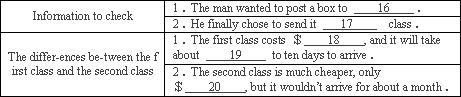
information to check
1.The man wanted to post a box to 16 .
2.He finally chose to send it 17 class.
the differences between the first class and the second class
1.The first class costs $ 18 , and it will take about 19 to ten days to arrive.
2.The second class is much cheaper, only $ 20 , but it wouldn’t arrive for about a month.
听力(共两节,满分30分)
第一节:听独白或对话(共15小题;每小题1.5分,满分22.5分)
听下面5段对话。每段对话后有几个小题,从题中所给的A、B、C三个选项中选出最佳选项。听每段对话前,你将有时间阅读各个小题,每小题5秒钟;听完后,各小题将给出5秒钟的作答时间。每段对话读两遍。
听第1段对话,回答第1~3题。
1.What are they talking about?
A.The Ocean Park.
B.The visit.
C.The museum and the restaurants.
2.When will the man go to the Ocean Park?
A.That afternoon.
B.The next morning.
C.The next afternoon.
3.Where will all the visitors surely go?
A.The Science Museum.
B.The Ocean Park.
C.Restaurants.
听第2段对话,回答第4~6题。
4.What is the possible relationship of the two speakers?
A.Strangers.
B.Husband and wife.
C.Teacher and student.
5.Why do English people like to talk about weather with strangers?
A.Because it is interesting.
B.Because they feel friendly by doing this.
C.Because they want to know the weather condition.
6.What will happen if strangers talk about politics?
A.They may not agree with each other.
B.They may not be safe.
C.They may have to stop their talk soon.
听第3段对话,回答第7~9题。
7.What is the average depth?
A.About 16 meters.
B.About 20 meters.
C.About 10 meters.
8.How long will it take to get to the capital from the Canal?
A.Only three hours.
B.About four hours.
C.Nearly five hours.
9.How far is it from the capital to the Canal?
A.About 15 kilometers.
B.About 115 kilometers.
C.About 150 kilometers.
听第4段对话,回答第10~12题。
10.When did he go to Indonesia?
A.In 1960.
B.At the age of eighteen.
C.In 1961.
11.What has he not been so far?
A.An novelist.
B.An actor.
C.A farmer.
12.How many novels are mentioned here?
A.One.
B.Two.
C.Three.
听第5段对话,回答第13~15题。
13.What will the boy most probably do tomorrow?
A.Go to school.
B.See a doctor.
C.Stay at home.
14.How many times did the boy take the medicine before he saw the doctor?
A.Twice a day.
B.Three times a day.
C.Once a day.
15.How many days will the boy stay out of the school?
A.Three days.
B.Less than three days.
C.More than three days.
第二节:听取信息(共5小题;每小题1.5分,满分7.5分?)
听下面1段对话。请根据题目要求,从所听到的内容中获取必要的信息,填入标号为16~20的空格中。听录音前,你将有10秒钟的阅题时间,录音读两遍。你有80秒钟的作答时间。
There seems never to have been a civilization(文明) without toys, but when and how they developed is unknown. They probably came about just to give children something to do.
In the ancient world, as is today, most boys play with some kinds of toys and most girls with another. In societies where social roles are strictly determined, boys pattern their play after the activities of their fathers and girls after the tasks of their mothers. This is true because boys and girls are being prepared, even in play, to step into the roles and responsibilities of the adult world.
What is remarkable about the history of toys is not so much how they changed over the centuries but how much they have remained the same. It is the universality of toys about their development in all parts of the world and their continuing to the present that is amazing. In Egypt, the Americas, China, Japan and among the Arctic peoples, generally the same kinds of toys appeared. Nearly every civilization had dolls, little weapons, toy soldiers, tiny animals and vehicles.
Because toys can be generally regarded as a kind of art form, they have not been subject to (服从于) technological progress that characterizes inventions for adult use. The progress from the wheel to the oxcart to the automobile is a direct line of advancement. The progress from a rattle (拨浪鼓) used by a baby in 3,000 BC to one used by an infant today, however, is not characterized by inventiveness. Each rattle is the product of the artistic tastes of the times and subject to the limitations of materials then ready for use. (words: 285 ; time : 5ms)
1. The reason why the toys most boys play with are different from those that girls play with is that ________ .
A. their social roles are strictly determined
B. most boys would like to follow their fathers' jobs
C. boys like to play with their fathers while girls with their mothers
D. they like challenging activities.
2. "The universality of toys" lies in the fact that ________ .
A. technological advances have greatly improved the making of toys
B. the improvement of techniques in making toys depends on the efforts of universities
C. the exploration of the universe has led to the creation of new kinds of toys
D. the basic characteristics of toys are the same all over the world
3. Regarded as a kind of art form, toys ________.
A. follow a direct line of development
B. also greatly interest adults
C. are not characterized by progress in technology
D. show the pace of social progress
(C)篇
1. A。由原文第二段第二句可知。
2. D。根据文章第三段第一句和第三句可知,玩具的基本的特征变化不大。
3. C。由文章最后一段第一句可知,玩具作为一种艺术形式,不因科技变化而变化。
湖北省互联网违法和不良信息举报平台 | 网上有害信息举报专区 | 电信诈骗举报专区 | 涉历史虚无主义有害信息举报专区 | 涉企侵权举报专区
违法和不良信息举报电话:027-86699610 举报邮箱:58377363@163.com