
题目列表(包括答案和解析)
It was the last day of the final exam in a college. On the steps of building, a group of engineering students were waiting for the last exam. On their faces was confidence(自信的).
They knew the exam would be easy. The professor (a teacher at a college) had said they could bring any books or notes during the test.
Right after they came into the classroom. The professor handed out the papers. There were only five questions on it.
Three hours passed. Then the professor began to collect the papers. The students no longer looked confident. On their faces was nervous expression(表情). The professor watched the worried faces before him, and then asked, “How many of you have finished all five questions?” No hand was raised. “How many of you have answered four?” Still no hands. “Three? Two?” The students moved restlessly in their seats. “One, then? Certainly somebody has finished one.” But the class kept silent. The professor said, “That is exactly what I expected. I just want to make you know clearly that even though you have completed four years of engineering. There are still many things about the subject you don’t know. These questions you could not answer are common in everyday practice.” Then, smiling, he added, “You will all pass this course, your education has just begun.”
The years have obscured the name of this professor, but not the lesson he taught.
1. Why did the students think the exam was easy at first?
|
A.Because it was their last exam in the college. |
|
B.Because they knew there were only five questions. |
|
C.Because they thought they were clever and talented. |
|
D.Because they were allowed to bring any books and notes during the text. |
2.What does the underlined word “obscured” mean in the last paragraph?
|
A.模糊 |
B.回忆 |
C.提醒 |
D.改变 |
3.. What’s the best title for the article?
|
A.Some Confident Students. |
B.An Engineering Exam. |
|
C.An Interesting Professor. |
D.An Unforgettable Lesson. |
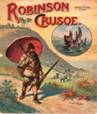
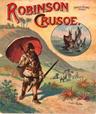
During all this time I never stopped thinking about escape. When I traveled across to the other side of the island, I could see the other islands, and I said to myself, “Perhaps I can get there with a boat. Perhaps I can get back to England one day.”
So I decided to make myself a boat. I cut down a big tree, and then began to make a long hole in it. It was hard work, but about six months later, I had a very fine canoe (独木舟). Next, I had to get it down to the sea. How silly I was! Why didn’t I think before I began work? Of course, the canoe was too heavy. I couldn’t move it! I pulled and pushed and tried everything, but it didn’t move. I was very unhappy for a long time after that.
That happened in my fourth year on the island. In my sixth year I did make myself a smaller canoe, but I did not try to escape in it. The boat was too small for a long journey, and I did not want to die at sea. The island was my home now, not my prison, and I was just happy to be alive. A year or two later, I made myself a second canoe on the other side of the island. I also built myself a second house there, and so I had two homes.
My life was still busy from morning to night. There were always things to do or to make. I learnt to make new clothes for myself from the skins of dead animals. They looked very strange, it is true, but they kept me dry in the rain.
I kept food and tools at both my houses, and also wild goats. There were many goats on the island, and I made fields with high fences to keep them in. They learnt to take food from me, and soon I had goats’ milk to drink every day. I also worked hard in my corn fields. And so many years went by.
1.The purpose of making a canoe on the island was to _____________.
A. escape in it
B. get to the other side of the island
C. use it for food
D. go around the island
2.To survive, the writer _____________.
A. kept goats for milk
B. made clothes from animal skins
C. worked in the cornfields
D. did all the above
3.Why didn’t the writer use his first canoe?
A. Because it was too small for a long journey.
B. Because it was too heavy to get down to the sea.
C. Because there was something wrong with it.
D. Because the writer was busy building a second house.
4.From the story, we can learn that _____________.
A. the writer tried to make his stay comfortable on the island
B. the writer had nothing to do on the wild island
C. the writer tried to escape in the second canoe, but failed
D. the writer was in prison on the island, losing his freedom
| A.escape in it | B.get to the other side of the island |
| C.use it for food | D.go around the island |
| A.keeping goats for milk | B.making clothes from animal skins |
| C.working in the cornfields | D.going fishing in the sea |
| A.Because it was too small for a long journey. |
| B.Because it was too heavy to get down to the sea. |
| C.Because there was something wrong with it. |
| D.Because the writer was busy building a second house. |
| A.the writer tried to make his stay comfortable on the island |
| B.the writer had nothing to do on the wild island |
| C.the writer tried to escape in the second canoe, but failed |
| D.the writer was in prison on the island, losing his freedom |
When Mr. David retired(退休), he bought a small house in a village near the sea. He liked it and hoped to live a quiet life in it.
But to his great surprise, many tourists came to see his house in summer holidays, for it was the most interesting building in the village. From room morning to night there were tourists outside the house. They kept looking into the rooms through the windows and many of them even went into Mr. David's garden. This was too much for Mr. David. He decided to drive the visitors away. So he put a notice on the window. The notice said: "If you want to satisfy your curiosity(好奇心), come in and look around. Price; twenty dollars." Mr. David was sure that the visitors would stop coming, but he was wrong. More and more visitors came and Mr. David had to spend every day showing them around his house. "I came here to retire, not to work as a guide." he said angrily. In the end, he sold the house and moved away.
【小题1】Mr. David's house was ________that many tourists came to see it.
| A.so small | B.so quiet | C.so interesting | D.so big |
| A.to drive the visitors away |
| B.to satisfy the visitors' curiosity |
| C.to let visitors come in and look around |
| D.to get some money out of the visitors |
| A.more interested in his house | B.lose interest in his house |
| C.angry at the unfair price | D.feel happy about the price |
| A.the visitors didn’t come any longer |
| B.fewer and fewer visitors came to see his house |
| C.more and more tourists came for a visit |
| D.no tourist would pay the money for a visit |
| A.he did not like it at all |
| B.he could not work as a guide |
| C.he made enough money and wanted to buy a new expensive house |
| D.he could not live a quiet life in it |
Before you go to another country it is a great help if you know the language and some of the customs of the country.
When people meet each other for the first time in Britain, they say, “How do you do? ”and shake hands. Usually they do not shake hands when they just meet or say goodbye. But they shake hands after they haven’t met for a long time or when they will be away from each other for a long time.
Last year a group of German students went to England for a holiday. Their teacher told them that the English people hardly shake hands. So when they met their English friends at the station, they kept their hands behind their backs. The English students had learned that the Germans shake hands as often as possible, so they put their hands in front and got ready to shake hands with them. It made both of them laugh.
1.It is ____ if you know the language and some of the customs of the country.
|
A.not useful |
B.not helpful |
|
C.very helpful |
D.very bad |
2.English people usually shake hands when they ______.
|
A.meet every time |
|
B.meet for the first time |
|
C.say goodbye to each other |
|
D.say hello to each other |
3.Usually English people don’t shake hands _______.
|
A.when they will be away for a long time |
|
B.when they say “How do you do? ” |
|
C.when they just meet or say goodbye |
|
D.after they haven’t met for a long time |
4.Which of the statement(陈述)is right?
|
A.German people shake hands as often as possible. |
|
B.English people like shaking hands very much. |
|
C.German people hardly shake hands. |
|
D.Neither English people nor Germans like shaking hands. |
5.This story is about _______.
|
A.shaking hands |
|
B.customs |
|
C.languages |
|
D.languages and customs |
湖北省互联网违法和不良信息举报平台 | 网上有害信息举报专区 | 电信诈骗举报专区 | 涉历史虚无主义有害信息举报专区 | 涉企侵权举报专区
违法和不良信息举报电话:027-86699610 举报邮箱:58377363@163.com